


ARC Raiders What to Recycle: A Smart Loot Guide
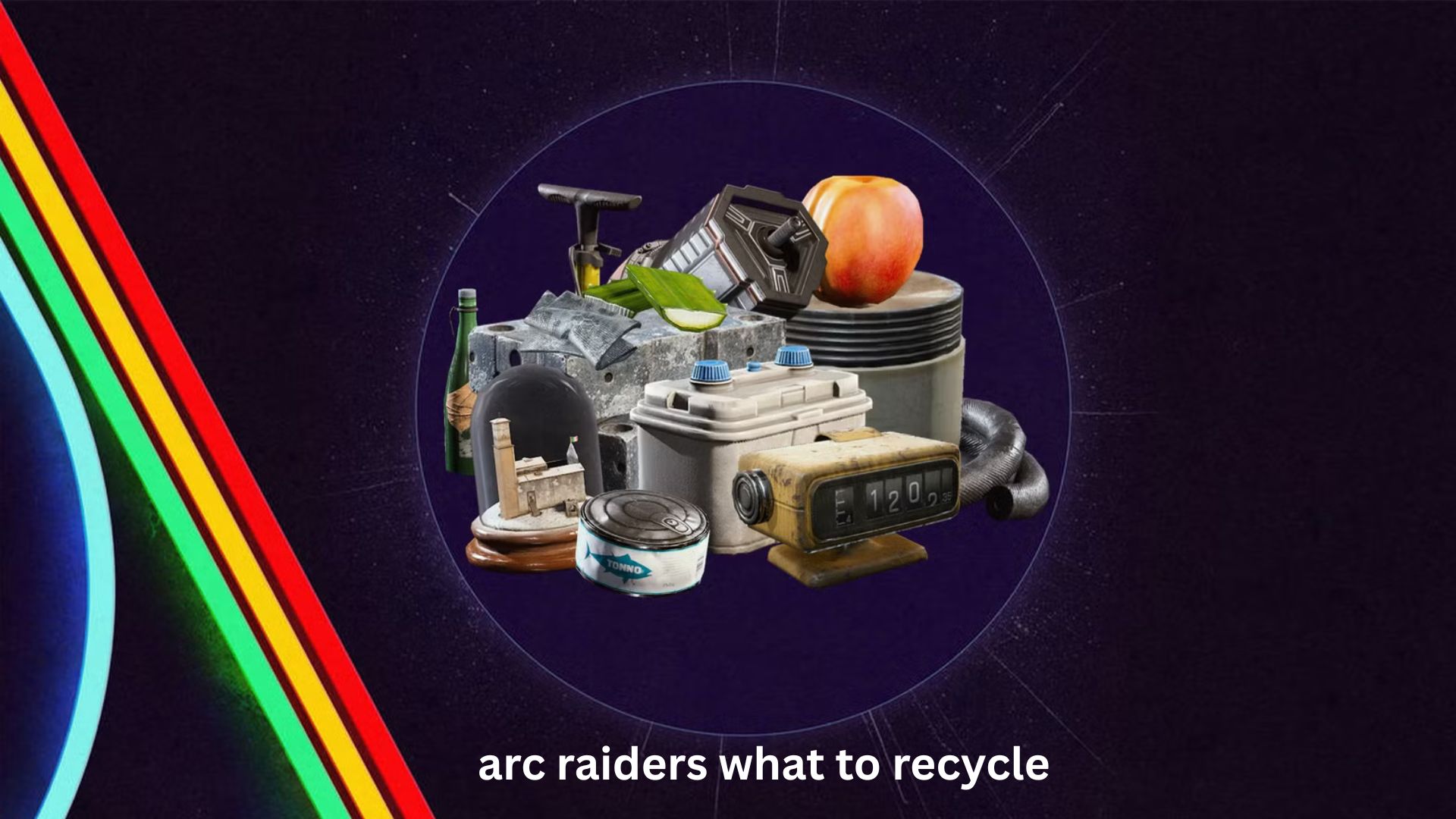
If your stash in ARC Raiders is constantly full, the problem usually is not that you are finding too much loot. The real problem is that you are keeping the wrong loot in the wrong form. After a few successful runs, it becomes surprisingly easy to accumulate broken electronics, rubber parts, random household objects, ARC components, trinkets, and duplicate gear without knowing what should actually stay in storage.
That is where knowing ARC Raiders what to recycle becomes important. Recycling is not simply a way to throw away junk. It is one of the main ways to turn otherwise awkward loot into the materials needed for crafting, repairs, weapons, upgrades, ammunition, and workshop progression. At the same time, blindly recycling everything can create a different problem: you may destroy an item you later need for a quest, expedition, or upgrade.
The safest approach is to stop thinking of loot as simply “good” or “bad.” Instead, ask what the item is worth right now: crafting materials, Credits, a future quest requirement, or valuable stash space. Once you use that system, inventory management becomes much faster.
What Should You Recycle in ARC Raiders?
As a general rule, recycle items that are clearly marked Recyclable and that you do not need for a current quest, workshop upgrade, expedition requirement, or planned crafting recipe.
Common recyclable loot can provide materials such as:
- Metal Parts
- Rubber Parts
- Plastic Parts
- Chemicals
- Fabric
- Wires
- Electrical Components
- Mechanical Components
- Steel Springs
- Other crafting resources
The important distinction is that recyclable does not automatically mean “recycle immediately.” Some items have a useful secondary purpose, while others are much more valuable when sold.
For example, a broken electronic object might look worthless, but recycling it could produce a material you desperately need for a weapon upgrade. Conversely, a valuable trinket may be better sold for Credits rather than dismantled.
The game gives you three broad choices:
- Keep it if you need the item itself.
- Recycle it if its materials are more useful than the item.
- Sell it if Credits are more valuable to you than its recycling output.
That simple three-way decision is the foundation of good stash management.
The Best Items to Recycle
The best recycling targets are generally ordinary loot whose main purpose is to become crafting materials.
ARC components you already have plenty of
If you have accumulated more of a recyclable ARC component than you realistically need, converting the excess into basic crafting resources can be worthwhile.
Examples include items such as:
- ARC Coolant
- ARC Flex Rubber
- ARC Performance Steel
- ARC Synthetic Resin
- ARC Thermo Lining
These types of items can provide substantial quantities of useful materials when recycled. ARC Coolant, for instance, can provide Chemicals, while ARC Flex Rubber produces Rubber Parts.
The key word is excess.
Do not empty your entire stash simply because a guide says an item is safe to recycle. Keep a reasonable working reserve, especially while your workshop and crafting needs are still changing.
Damaged and broken equipment
Broken technology is another excellent recycling category.
You will encounter objects such as:
- Broken Flashlights
- Broken Handheld Radios
- Broken Guidance Systems
- Broken Tasers
- Damaged ARC components
- Burned ARC circuitry
These objects are often more useful as sources of crafting materials than as items worth keeping intact.
If you are short on a particular component, check what the object produces before recycling it. That turns random scavenging into targeted resource gathering.
Duplicate low-value loot
If you already have several copies of the same recyclable object, there is rarely a good reason to let every copy consume a stash slot.
This is especially important for common materials.
A stash full of ten different objects that all eventually become basic crafting resources is often less useful than a smaller stash containing the actual materials you need.
That is one of the biggest inventory-management lessons in ARC Raiders: sometimes recycling is really a form of inventory compression.
What You Should NOT Recycle Too Quickly
The biggest mistake new players make is treating the recycling tag as a guarantee that the item is disposable.
Before dismantling something, check whether it has another purpose.
Quest-related items
Some apparently useless objects can become important later.
Players have discovered that items that look like ordinary household junk can be connected to quests or progression requirements. Community-maintained lists have repeatedly warned players to avoid clearing every trinket simply because it does not look valuable.
A good early-game habit is:
Keep at least one copy of unfamiliar or unusual items until you understand their purpose.
Once you know an item has no quest, upgrade, expedition, or crafting role, you can be much more aggressive about clearing duplicates.
Expedition requirements
Expeditions create another reason to avoid completely emptying your stash.
For example, documented expedition preparation requirements have included quantities of materials such as Metal Parts, Rubber Parts, ARC Alloy, Steel Spring, Durable Cloth, Wires, Electrical Components, Batteries, Sensors, and specific named items. Requirements can change with game updates, so treat exact numbers as a planning reference rather than permanent rules.
This creates an important rule:
Do not recycle your last copies of unusual materials simply because you do not need them for today’s loadout.
If you are approaching an expedition milestone, your definition of “junk” should become much stricter.
Recycle vs Sell: Which Is Better?
This is where many ARC Raiders players overcomplicate things.
Recycling and selling solve different problems.
| Situation | Better choice |
|---|---|
| You need crafting materials | Recycle |
| You need Credits | Sell |
| Item has a quest use | Keep |
| Item is needed for an upgrade | Keep |
| Item is common and easily replaced | Recycle if useful |
| Item has strong selling value but weak material output | Sell |
| You are unsure what an item does | Keep temporarily |
| Your stash is full of duplicates | Recycle or sell the excess |
Trinkets deserve special attention because some are primarily valuable for their selling price rather than their recycling output. Some named items can be sold directly and should not automatically be treated as crafting material.
A useful mental calculation is:
“What do I need more right now: materials or Credits?”
If your workshop is blocked because you are missing Mechanical Components, recycling is probably the better move.
If your crafting supplies are healthy but you cannot afford something that requires Credits, selling may be smarter.
The Most Important Recycling Trick: Don’t Salvage Too Early
One of the less obvious mechanics in ARC Raiders is the difference between salvaging an item during a raid and recycling it after bringing it back to Speranza.
This matters because the two actions can produce different quantities or even different material combinations.
Community testing has highlighted examples where an item such as Rusted Tools can provide a narrower, smaller return when salvaged during a raid than when taken home and recycled at Speranza.
This leads to a very practical rule:
If you can safely extract, extract the item.
Do not automatically break down a valuable recyclable item just because your inventory is getting crowded.
Instead, consider whether another low-value item can be discarded or salvaged.
A useful priority during a raid is:
- Protect quest-critical items.
- Protect rare or high-value loot.
- Keep items with unusually good recycling yields.
- Salvage low-value filler if necessary.
- Extract whenever practical.
- Perform your serious recycling at Speranza.
Guides tracking recycling yields also report that recycling at Speranza can provide better returns than field salvage for some items.
A Better Way to Think About Stash Space
Here is an insight that is easy to miss:
Stash space is itself a resource.
Suppose you have six different objects that all recycle into materials you frequently use. Keeping the objects individually may consume more organizational space and make it harder to understand what you actually have.
Once recycled, those resources may stack efficiently.
That means recycling is not merely about obtaining materials. It can make your entire inventory easier to manage.
However, this does not mean “always recycle immediately.”
Some items are better left intact because their individual form has value, particularly when you are preparing for quests, expeditions, or specific crafting requirements.
The best player behavior is therefore not maximum recycling.
It is selective recycling.
What to Recycle When Your Stash Is Full
Imagine you have just returned from a successful raid.
Your stash contains:
- Several broken electronics
- Multiple common recyclable objects
- Extra weapons
- Duplicate attachments
- Some ARC components
- A few unusual trinkets
- Quest items
- Basic crafting materials
Do not start deleting items randomly.
Instead, use this five-step cleanup.
Step 1: Protect unique items
Anything unfamiliar, quest-related, or difficult to replace should stay.
Do not gamble a quest objective for a few inventory slots.
Step 2: Remove duplicate equipment
If you have several weapons or attachments you are not planning to use, consider recycling the excess.
Extra gear can often become useful base materials.
Step 3: Check your bottleneck
Look at what your current crafting or workshop progression actually requires.
If you have plenty of Rubber Parts but almost no Electrical Components, recycling another rubber-producing item may not help much.
This is a major improvement over simply recycling the rarest-looking item first.
Step 4: Convert obvious recyclable junk
Broken and damaged objects that have no special use can usually be turned into their component materials.
Step 5: Sell rather than recycle valuable trinkets
If an item exists mainly to provide Credits, selling it can be more efficient than destroying it for relatively unhelpful materials.
This five-step process takes only a few seconds once you become familiar with your inventory.
A Practical Early-Game Recycling Strategy
During the early hours, I recommend playing conservatively.
You are still learning:
- Which materials your workshop consumes
- Which items are connected to quests
- Which trinkets are valuable
- Which resources are difficult to find
- Which materials you constantly run out of
Your first goal should not be a perfectly optimized stash.
Your goal should be avoiding irreversible mistakes.
A sensible early strategy is to keep one copy of unfamiliar items and recycle obvious duplicates. Players discussing inventory management commonly recommend keeping small reserves until quests and workbench requirements become clearer.
Once you understand your progression path, you can become much more aggressive.
Mid-Game: Start Recycling With a Purpose
Once you know which materials you consume regularly, your recycling decisions should become more specific.
For example, suppose you repeatedly need:
- Metal Parts for crafting
- Rubber Parts for equipment
- Electrical Components for upgrades
- Mechanical Components for more advanced crafting
Now your loot has a different value.
An ordinary object that produces one of those materials may be more useful to you than a visually impressive item that produces something you already have hundreds of.
This creates a second important insight:
The best recyclable item is not necessarily the item with the highest theoretical yield. It is the item that solves your current resource bottleneck.
That distinction can save a surprising amount of time.
Common ARC Raiders Recycling Mistakes
Recycling every “Recyclable” item
The tag tells you that an item can be broken down. It does not tell you that you should do it immediately.
Always consider quests, upgrades, expeditions, and future crafting.
Selling everything that looks like junk
Some objects are worth more to you as crafting materials than as Credits.
Check their output before selling.
Recycling rare materials because you need space
This is usually backwards.
Rare materials are often the things you should protect when storage is limited. Clear common duplicates first.
Salvaging valuable loot in the field
If an item can safely make it back to Speranza, bringing it home can produce a better recycling outcome than immediately salvaging it.
Keeping too many finished items
Crafting something “just in case” can consume stash space unnecessarily.
If raw materials stack better and the finished item is easy to create later, storing the raw materials may be the more efficient option.
Ignoring your actual crafting needs
Do not recycle based only on rarity or appearance.
Recycle based on utility.
A Simple Loot Decision System
When you pick up an item, ask these questions in order:
1. Is it needed for a quest?
If yes, keep it.
2. Is it needed for an upcoming upgrade or expedition?
If yes, keep an appropriate reserve.
3. Is it something I actively use?
If yes, keep it.
4. Does it sell for useful Credits?
If yes, compare its selling value with its recycling value.
5. Does recycling produce a material I currently need?
If yes, recycle it.
6. Is it common and replaceable?
If yes, you can be much more aggressive about clearing it.
If the answer to all six is essentially “no,” that item is probably occupying space without providing enough value.
Advanced Insight: Recycling Is About Opportunity Cost
The most experienced way to approach ARC Raiders inventory management is to think in terms of opportunity cost.
Every stash slot has a purpose.
Every item has a potential future use.
Every recycling decision trades the original item for a collection of materials.
So instead of asking:
“Can I recycle this?”
ask:
“What am I giving up by recycling this?”
That question is much more powerful.
If the answer is “nothing except an easily replaceable household object,” recycle it.
If the answer is “a rare item that might be required later,” keep it.
If the answer is “the ability to sell this for a large amount of Credits,” compare the two options.
This approach turns stash management from guesswork into a resource-management system.
FAQ
What should I recycle first in ARC Raiders?
Start with duplicate, clearly recyclable items that have no quest, upgrade, expedition, or crafting role. Broken electronics and excess common materials are often good candidates because they can be converted into useful crafting components. Avoid recycling unfamiliar unique items until you know what they are used for.
Should I recycle or sell items in ARC Raiders?
It depends on what you need. Recycle when you need crafting materials, particularly materials blocking an upgrade or recipe. Sell when the item has strong Credit value and its recycling output is less useful to you. Trinkets are especially worth checking before dismantling because some are primarily valuable as sellable items.
Is it better to recycle at Speranza or salvage during a raid?
When possible, bring recyclable loot back to Speranza and recycle it there. Field salvage can provide fewer or different resources for some items compared with recycling after extraction. This makes extraction particularly valuable when you are carrying an item with a strong recycling yield.
Should I keep one of every item in ARC Raiders?
For the early game, keeping one copy of unfamiliar items is a sensible safety strategy. Some seemingly useless objects can be relevant to quests, upgrades, or longer-term progression. Once you understand the item’s purpose and know it has no remaining use, you can safely reduce your stock.
What is the biggest recycling mistake in ARC Raiders?
The biggest mistake is recycling based purely on the item’s appearance or the fact that it has a Recyclable tag. The correct decision depends on your current crafting needs, quests, progression, Credits, and available stash space. A common item can sometimes be more valuable to you than a rare one if it produces a material you urgently need.
How do I manage a full stash in ARC Raiders?
First protect quest and progression items, then remove duplicate gear and unnecessary finished items. Next, identify the materials you are currently short on and recycle suitable junk into those resources. Finally, sell valuable trinkets or excess loot when Credits are more useful than the recycling output.
Final Takeaway
Knowing ARC Raiders what to recycle is less about memorizing a giant list of junk items and more about understanding why each item has value.
Recycle obvious duplicates and unwanted recyclable loot. Keep anything connected to quests, upgrades, expeditions, or uncertain progression. Sell items when Credits are more useful than their material output. And when you have the option, remember that bringing valuable recyclable loot back to Speranza can be better than immediately salvaging it in the field.
The biggest upgrade to your inventory management is changing the question from “Is this junk?” to “What does this item help me accomplish?”