
Pansage: Complete Guide to the Grass Monkey Pokémon
If you have come across Pansage while playing Pokémon, searching the Unova Pokédex, or looking through older Pokémon games, you may wonder what makes this small Grass-type Pokémon useful. At first glance, Pansage can seem like a simple early-game creature, but its design, ability, evolution method, and role in the Unova story give it more significance than its modest stats suggest.
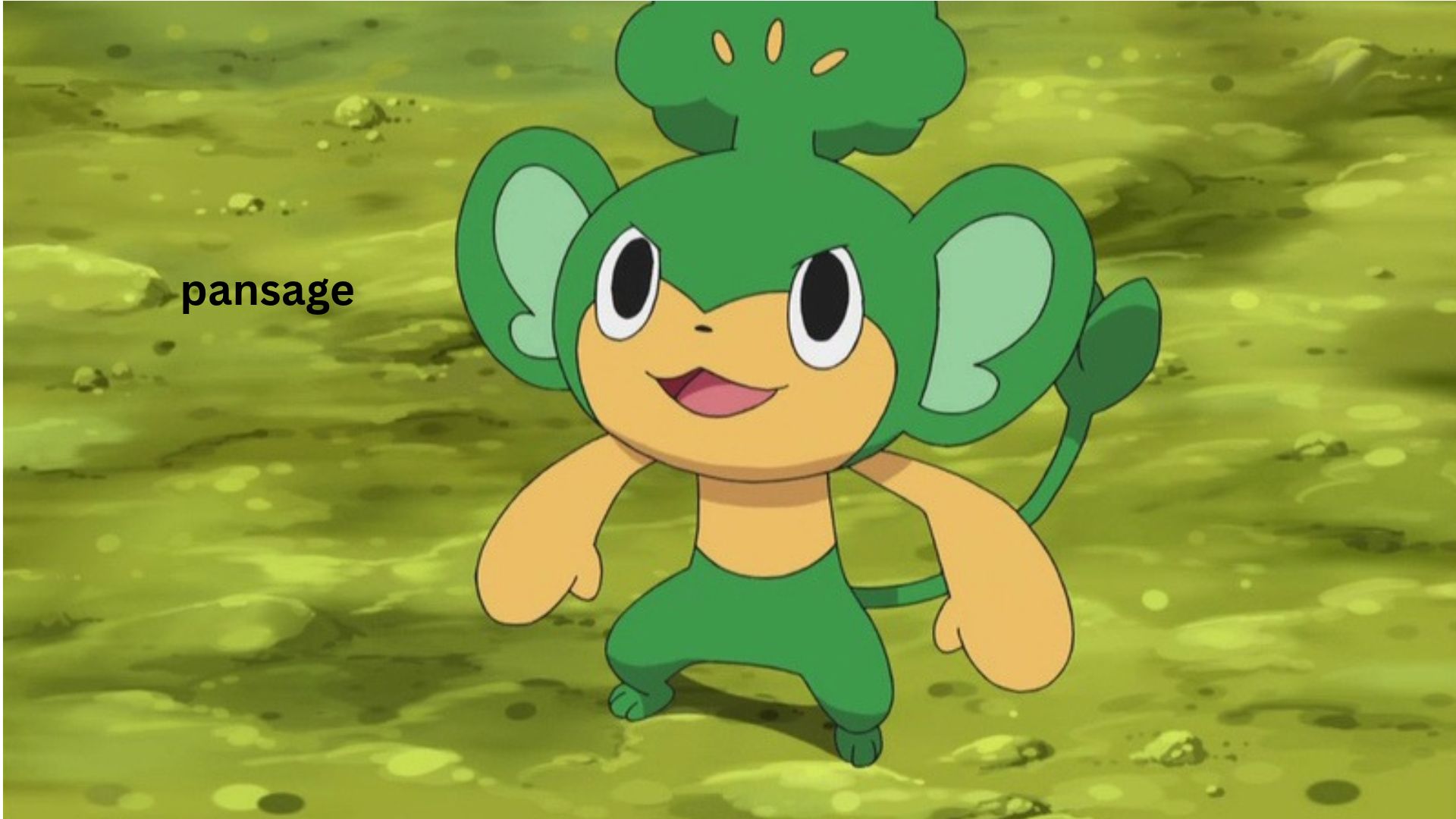
Pansage is a Grass-type Pokémon introduced in Generation V. It is Pokédex number 511 and belongs to the Grass Monkey category. The official Pokédex describes it as a Pokémon that searches for berries, shares them with friends, and uses the leaves on its head to help relieve stress. It evolves into Simisage when exposed to a Leaf Stone.
This guide explains what Pansage is, how its evolution works, where it fits into the Pokémon universe, how its ability affects gameplay, and why it remains an interesting member of the Unova generation.
What Is Pansage?
Pansage is a small, green, monkey-like Pokémon with a distinctive leafy growth on top of its head. It is classified as a Grass-type Pokémon and was introduced alongside the other members of the elemental monkey trio: Pansear and Panpour.
The three Pokémon were designed around different elemental types:
- Pansage — Grass
- Pansear — Fire
- Panpour — Water
Pansage is therefore the Grass representative of this trio.
According to the official Pokédex, Pansage stands 0.6 meters tall and weighs 10.5 kilograms. Its ability is Gluttony, which changes when it consumes a held Berry at low HP.
One detail that is easy to overlook is Pansage’s personality. It is not portrayed simply as an aggressive wild Pokémon. Its Pokédex description emphasizes its willingness to gather berries and share them with friends. That makes its design unusually friendly compared with many Pokémon built around combat.
Pansage Type, Ability, and Weaknesses
Pansage has only one type:
Grass
This gives it the strengths and weaknesses associated with the Grass type.
According to the official Pokédex, Pansage is weak to:
- Fire
- Bug
- Flying
- Poison
- Ice
Understanding these weaknesses is important when deciding whether Pansage should remain on your active team for a particular battle.
Pansage’s Ability: Gluttony
Pansage’s listed ability is Gluttony.
Normally, certain held Berries activate only when a Pokémon’s HP becomes very low. Gluttony causes the Pokémon to consume an applicable Berry earlier, when its HP falls to half or less.
This can be more useful than it initially sounds.
For example, imagine Pansage is carrying a Berry designed to restore HP at a critical point. With Gluttony, Pansage can activate that Berry sooner instead of waiting until its health becomes extremely low.
The practical lesson is that Pansage’s ability becomes more interesting when you build around held-item management, rather than simply treating it as a passive ability.
Pansage Evolution: How Does It Evolve?
One of the most common questions about Pansage is how to evolve it.
Pansage evolves into Simisage when exposed to a Leaf Stone. It does not evolve simply by reaching a particular level. The Pansage evolutionary line is:
Pansage → Simisage
The evolution-family data identifies the Leaf Stone as the evolution method.
This is an important distinction if you are playing a Pokémon game in which you are waiting for Pansage to evolve naturally.
If your Pansage has reached a level where you expected an evolution but nothing happened, that is not a bug. You need the appropriate evolution stone.
Should You Evolve Pansage Immediately?
Not necessarily.
A useful approach is to consider three things:
- Do you need stronger overall battle performance?
- Does Pansage still have a move you specifically want before evolving?
- Are you playing casually or optimizing your team?
For a normal playthrough, evolving Pansage into Simisage can make sense once you have a reason to want the stronger evolved Pokémon.
For players who care about specific moves, however, it can be worth checking the relevant game’s move-learning options before using the Leaf Stone.
This is one of the practical differences between simply asking “When does Pansage evolve?” and asking “When should I evolve Pansage?”
Pansage vs. Simisage
Pansage is the first stage of the evolutionary line, while Simisage is its evolved form.
The official Pokédex lists Simisage as a Grass-type Thorn Monkey Pokémon. It is considerably larger, standing 1.1 meters tall and weighing 30.5 kilograms. Like Pansage, it has the Gluttony ability and shares the same five listed type weaknesses.
The biggest practical difference is therefore not a change of type.
Both remain Grass-type Pokémon.
Instead, evolution gives you a more developed Pokémon with a different stat profile and battle role.
This makes Pansage a good example of an evolutionary line where the evolution is primarily about improving the Pokémon rather than changing its fundamental identity.
Why Pansage Was Important in Pokémon Black and White
Pansage has an especially interesting role in the Unova games.
The elemental monkeys were connected to the early Gym challenge, where their types helped introduce players to type advantages.
Pansage’s Grass typing makes it particularly relevant to the early portion of the Unova adventure. For newer players, this helped communicate one of Pokémon’s most important concepts: choosing a type that works well against your opponent.
That teaching role is easy to underestimate.
Pansage was not simply another Pokémon added to a large Pokédex. It helped introduce a type-based strategy to players early in their journey.
Pansage’s Battle Strengths and Weaknesses
Pansage is not generally considered a powerhouse compared with many later-game Pokémon. Its value comes from what it can contribute at the right stage of a game.
Where Pansage Can Work Well
Pansage can be useful when you need a Grass-type Pokémon capable of dealing with certain Water-, Ground-, and Rock-type opponents.
Grass-type attacks can be particularly valuable against Pokémon that are vulnerable to Grass.
Pansage can therefore make sense on an early or balanced team when you do not already have another Grass-type performing the same job.
Where Pansage Struggles
Its five type weaknesses create plenty of dangerous matchups.
A careless player can easily send Pansage into a Fire-, Flying-, Bug-, Poison-, or Ice-type attack and lose momentum quickly.
The important lesson is not simply “Pansage is weak.”
Rather, Pansage rewards matchup awareness.
If you switch it into situations where Grass is advantageous, it can contribute effectively. If you leave it against an opponent that directly exploits its weaknesses, its limitations become obvious.
Pansage in the Pokémon Trading Card Game
Pansage has also appeared on multiple Pokémon Trading Card Game cards.
For example, the Darkness Ablaze version of Pansage is a Basic Pokémon with 60 HP and attacks including Seed Bomb and Bite.
Older versions differ in their attacks and exact statistics. In the original Black & White Card-Dex, for instance, Pansage was listed with 60 HP, Scratch, and Vine Whip.
This is worth remembering if you are researching Pansage cards for collecting or gameplay: the Pansage name does not mean every card has the same abilities, attacks, or competitive value.
Always evaluate the specific card rather than assuming the video-game Pokémon mechanics apply directly.
A Useful Way to Think About Pansage
One interesting perspective is to separate Pansage into three roles:
1. The beginner-friendly Pokémon
Its elemental identity is easy to understand, making it suitable for learning type matchups.
2. The evolutionary stepping stone
Pansage is ultimately designed to lead toward Simisage, so its value should be considered as part of an evolutionary line rather than entirely on its own.
3. The utility-focused Pokémon
Its berry-related Pokédex description and Gluttony ability give it a small connection to resource management.
That third point is particularly interesting. Pansage is not just about throwing Grass-type attacks at opponents. Its concept also involves gathering, sharing, and consuming resources.
Three Overlooked Details About Pansage
Its Pokédex personality is unusually cooperative
The official Pokédex specifically describes Pansage as gathering berries and sharing them with friends. That is a meaningful character detail because it contrasts with the assumption that every Pokémon’s defining trait must revolve around fighting.
Its evolution does not change its elemental identity
Pansage becomes Simisage, but both remain Grass-type Pokémon. This means you should think of the evolution as an upgrade within the same strategic category rather than a complete redesign.
Gluttony is more useful with deliberate item choices
Many players see Gluttony and immediately move on. But its usefulness depends heavily on the Berry being held. A carefully selected Berry can make the ability considerably more meaningful than it appears in a basic Pokédex description.
Common Mistakes When Using Pansage
Mistake 1: Waiting for a level-based evolution
Pansage does not evolve simply by reaching a particular level. The evolution uses a Leaf Stone.
Mistake 2: Ignoring its weaknesses
Grass is useful, but Pansage has five listed weaknesses. Sending it into unfavorable matchups repeatedly can make it look weaker than it actually is.
Mistake 3: Treating every Pansage as identical
The main-series Pokémon and Trading Card Game versions work differently. Even different Pansage cards can have different attacks and statistics.
Mistake 4: Evolving without considering your plans
Using a Leaf Stone is simple, but timing can matter if you are interested in particular moves or building a specific type of team.
Is Pansage Worth Using?
The answer depends on what you want from your team.
For a casual playthrough, Pansage can be a useful Grass-type option, particularly if your team lacks coverage against opponents vulnerable to Grass attacks.
For competitive-focused players, the question becomes more complicated. You need to consider the specific game, available moves, abilities, stats, ruleset, and alternatives available to you.
For collectors and fans, however, Pansage has a different appeal. It is one of the recognizable Pokémon introduced with Unova’s elemental monkey trio and has appeared across multiple Trading Card Game releases.
In other words, Pansage does not need to be the strongest Pokémon in the game to be worth remembering.
Practical Tips for Using Pansage
If you decide to use Pansage, keep these principles in mind:
- Use its Grass typing strategically. Look for matchups where Grass attacks provide an advantage.
- Watch for its five weaknesses. Fire, Bug, Flying, Poison, and Ice attacks can create serious problems.
- Understand Gluttony. Its value depends on the Berry you give it.
- Plan the Leaf Stone evolution. Do not assume Pansage will evolve automatically through leveling.
- Check the specific game. Moves, availability, and mechanics can differ between Pokémon titles.
- Treat the TCG separately. Card statistics and attacks are not interchangeable with main-series game mechanics.
- Think about team balance. Pansage is most useful when it fills a role your team actually needs.
FAQ
What type of Pokémon is Pansage?
Pansage is a Grass-type Pokémon from Generation V. It is known as the Grass Monkey Pokémon and is Pokédex number 511. Its listed ability is Gluttony, and it is weak to Fire, Bug, Flying, Poison, and Ice.
How does Pansage evolve into Simisage?
Pansage evolves into Simisage when you use a Leaf Stone on it. It is not a level-based evolution, so simply training Pansage to a higher level will not trigger the evolution.
Is Pansage a good Pokémon to use?
Pansage can be useful when you need a Grass-type Pokémon, especially during parts of a game where Grass attacks have favorable matchups. However, its five type weaknesses mean that switching and matchup awareness are important. Whether it is a good choice ultimately depends on the particular game and the rest of your team.
What is Pansage’s hidden or main ability?
Pansage’s listed ability is Gluttony. Gluttony allows a Pokémon holding a suitable Berry to consume it at half HP or less rather than waiting until its HP is very low. This can provide earlier recovery or another Berry-based effect depending on the item.
What Pokémon does Pansage evolve into?
Pansage evolves into Simisage, another Grass-type Pokémon. The evolution is triggered with a Leaf Stone, and Simisage is the final form of the Pansage evolutionary line.
Is Pansage available in the Pokémon Trading Card Game?
Yes. Pansage has appeared on multiple Pokémon TCG cards, including cards from sets such as Black & White and Darkness Ablaze. Individual cards can have different HP values and attacks, so their usefulness should be evaluated separately.
Conclusion
Pansage may look like a straightforward Grass-type monkey, but there is more to it than its appearance suggests. It is a Generation V Pokémon built around Grass typing, berry gathering, and the Gluttony ability, while its evolution into Simisage requires a Leaf Stone rather than ordinary leveling.
Its real value comes from using it intelligently. Understand its weaknesses, take advantage of favorable Grass-type matchups, consider its held Berry, and think about when evolution makes sense for your particular game.
For players revisiting Unova, building a themed team, or simply trying to understand the Pokémon behind the name, Pansage is a small Pokémon with a surprisingly thoughtful design.