


GRID Legends: Is It Still Worth Playing?
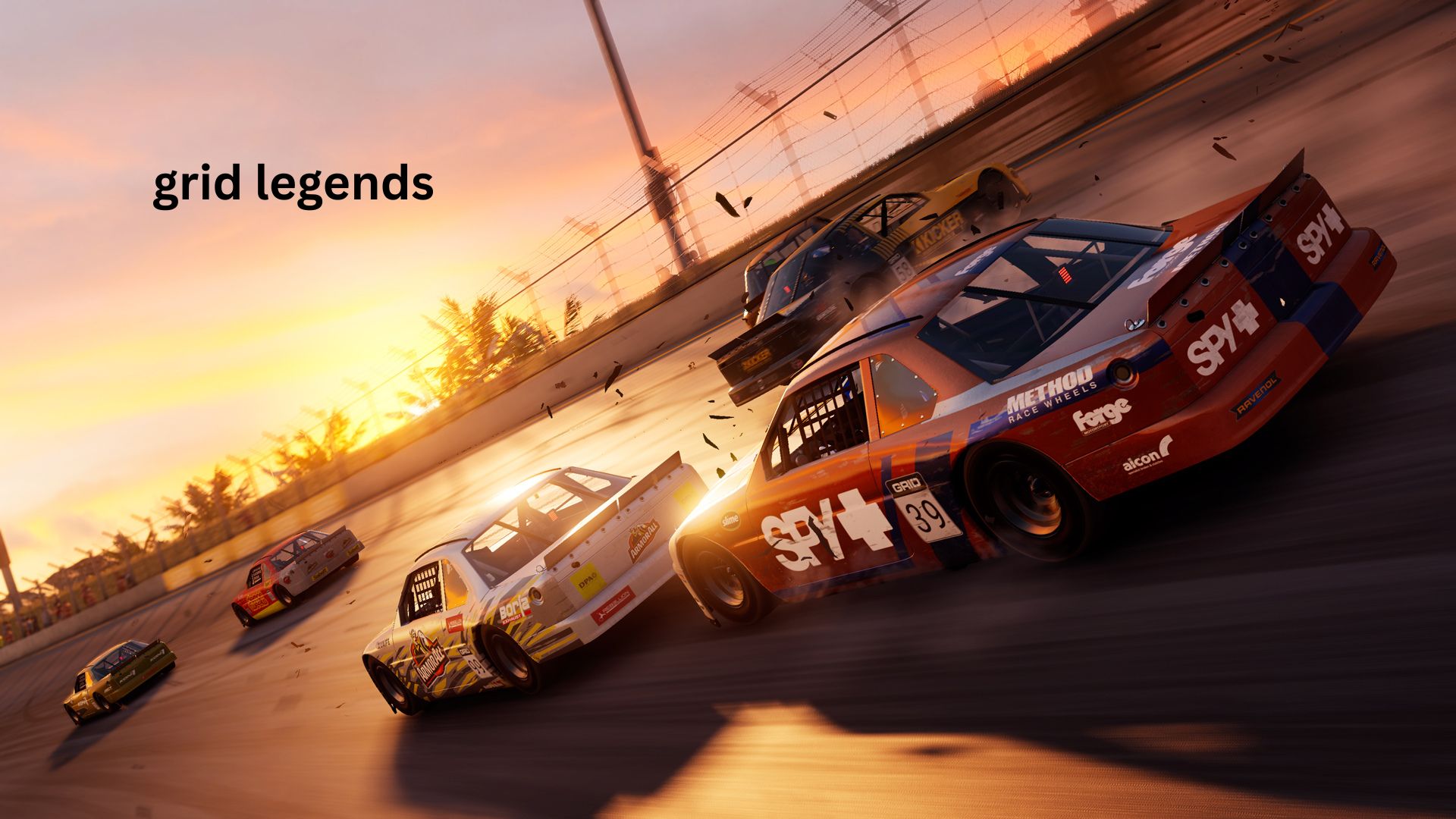
If you are searching for GRID Legends because you want a racing game that feels exciting without demanding the precision of a full simulator, you are looking at one of Codemasters’ more interesting modern racers. Released in February 2022, GRID Legends was designed around accessible, aggressive motorsport: fast cars, close racing, contact, rivalries, career events, multiplayer, and a cinematic story mode.
But there is a practical question that matters more today than it did at launch: is GRID Legends still worth playing in 2026?
The answer depends heavily on what you expect from it. If you mainly want single-player racing, career progression, and the game’s unusual Driven to Glory story, there is still plenty to experience. If online multiplayer is the main reason you want the game, however, timing matters because EA has announced that online services for the PlayStation and Xbox versions are scheduled to be retired on September 11, 2026.
This guide explains what makes GRID Legends different, how its driving model works, which modes deserve your time, where the game falls short, and what prospective players should know before buying or returning to it.
What Is GRID Legends?
GRID Legends is an arcade-leaning racing game developed by Codemasters and published by Electronic Arts. It belongs to the long-running GRID series and was released for PC, PlayStation 4, PlayStation 5, Xbox One, and Xbox Series X|S. EA’s current game information also lists Steam, PC, PlayStation, and Xbox among its platforms.
The simplest way to understand its driving philosophy is this:
GRID Legends sits between an arcade racer and a serious racing simulator.
It does not attempt to reproduce motorsport with the uncompromising realism of a hardcore simulation. At the same time, it has enough vehicle behavior, braking sensitivity, cornering technique, racing lines, and mechanical variation to reward players who actually learn how to drive.
That middle ground is important.
A casual player can pick up a controller and start racing quickly, while a more experienced player can improve lap times by learning braking points, managing corners and understanding how different vehicle types behave.
What Makes GRID Legends Different?
Several features distinguish GRID Legends from conventional racing games.
1. It prioritizes close racing
The game is built around wheel-to-wheel competition rather than simply driving alone against the clock.
Cars can make contact, opponents fight for position, and mistakes can quickly change the order. The result is a style of racing that often feels more dramatic than a perfectly clean simulator race.
This also means that aggressive driving can work—but reckless driving eventually becomes a problem.
A useful practical approach is to think of contact as a tool rather than the entire strategy. A controlled bump can help you maintain position; repeatedly throwing the car into opponents usually costs more time than it saves.
2. The handling is accessible
GRID Legends does not require a steering wheel to be enjoyable.
With a controller, steering, braking and throttle inputs are relatively easy to understand. That makes the game particularly approachable for people who find dedicated simulation racers intimidating.
However, accessibility should not be confused with simplicity.
At higher levels, small differences in braking and corner entry can determine whether you gain or lose several positions.
3. It offers considerable variety
GRID Legends includes multiple vehicle categories and event types rather than focusing on one form of motorsport.
That variety changes the experience considerably.
A vehicle that feels comfortable on a conventional circuit may behave very differently on a street course. Likewise, a player who becomes confident with one class cannot automatically expect the same driving technique to work perfectly with another.
This is one reason the game can remain entertaining beyond the first few hours.
Driven to Glory: The Story Mode
One of GRID Legends’ most distinctive features is Driven to Glory, its documentary-style story campaign.
Instead of simply giving players a sequence of races with short text introductions, Codemasters built a fictional motorsport drama around the GRID World Series. The player takes the role of Driver 22, an inexperienced competitor attempting to establish themselves against established teams and rivals.
The mode combines live-action footage, interviews and racing sequences.
Ncuti Gatwa is also part of the cast, adding an unusual television-style quality to the campaign.
Is the story actually good?
That depends on your expectations.
If you expect a realistic documentary about professional motorsport, some of the dramatic elements may feel exaggerated. The story is intentionally theatrical and uses familiar racing-drama conventions.
But that is also what makes it memorable.
Rather than treating racing as a menu of disconnected events, Driven to Glory attempts to give the player a reason to care about the championship, competitors and rivalries.
For someone who primarily plays racing games for competition, it may not become the main attraction. For players who enjoy a campaign with personality, it is one of GRID Legends’ more distinctive features.
Career Mode: Where Most Players Will Spend Their Time
For long-term single-player enjoyment, the Career mode is arguably more important than the story.
Career events give you a broader selection of racing challenges and allow you to build experience across different types of cars and events.
A common mistake is to approach every event with exactly the same driving style.
Instead, pay attention to:
- The car’s acceleration characteristics
- Braking behavior
- Corner entry speed
- Track width
- Surface and layout
- Opponent aggression
- Whether the event rewards consistency or outright pace
If you are struggling with an event, simply driving harder is rarely the best solution.
Try braking earlier and accelerating earlier.
That sounds slower, but it often produces faster lap times because maintaining a stable car through the middle of a corner is more valuable than entering too quickly and losing momentum.
Race Creator and Multiplayer
One of the game’s more flexible features is Race Creator, which allows players to build customized racing events. EA positioned it as a way to create personalized combinations of cars, locations and event conditions.
GRID Legends also launched with cross-platform multiplayer and a “hop-in” approach designed to get players into races without lengthy lobby waiting.
That made the game particularly appealing for groups of friends who wanted straightforward racing rather than a complicated competitive ecosystem.
The important 2026 warning
This is where the current situation becomes important.
EA and Codemasters have announced that online services for GRID Legends on PlayStation 4, PlayStation 5, Xbox One and Xbox Series X|S are scheduled to be retired on September 11, 2026. The PlayStation Store specifically states that cross-platform play, online multiplayer, Quick Race, Dynamic Events, leaderboards and other online-dependent features will no longer be available on those versions after that date.
This does not mean the entire game suddenly becomes unplayable.
The same PlayStation notice says players can continue enjoying the story and the game’s core racing experience.
For anyone considering GRID Legends today, this distinction is critical:
Buying it primarily for offline content is a very different proposition from buying it for long-term console multiplayer.
How Good Is the Driving?
The driving is arguably GRID Legends’ strongest feature.
It rewards momentum without requiring the precision of a dedicated simulator.
The most satisfying races tend to happen when you stop treating every corner as an opportunity to brake as late as possible.
Instead:
- Brake in a straight line.
- Turn the car smoothly.
- Avoid excessive steering input.
- Get the vehicle pointed toward the exit.
- Apply throttle progressively.
- Use the full track where appropriate.
This approach sounds basic, but it produces a surprisingly large improvement in consistency.
A useful trick for beginners
If you repeatedly spin or run wide, reduce your entry speed rather than immediately changing difficulty settings.
Many players interpret a cornering problem as a problem with the car.
Often, it is simply a problem with entering the corner too quickly.
Once you can complete several consecutive laps without major mistakes, increase your pace gradually.
That method teaches you the track rather than encouraging trial-and-error driving.
GRID Legends vs. More Serious Racing Sims
GRID Legends makes more sense when viewed as a middle-ground racing game.
| Area | GRID Legends | Hardcore racing simulator |
|---|---|---|
| Accessibility | High | Lower |
| Controller support | Excellent fit | Often less ideal |
| Realism | Moderate | Very high |
| Casual play | Excellent | Variable |
| Competitive depth | Moderate | Often very high |
| Learning curve | Manageable | Steep |
| Cinematic presentation | Strong | Usually secondary |
| Quick races | Excellent | Depends on game |
If your goal is learning detailed racing techniques that translate closely to real-world simulation, a dedicated simulator may be better.
If your goal is to sit down after work, choose a car, race aggressively for 20 minutes and have fun, GRID Legends makes a strong case for itself.
Three Things Many Reviews Miss
1. The game is better when you stop chasing perfection
GRID Legends is at its best when races become stories of their own.
You might qualify poorly, gain several positions through consistency, make one mistake, recover, and fight the same rival for the final laps.
That imperfect racing can be more entertaining than a technically flawless lap.
2. Difficulty is not the only way to create a challenge
If the game becomes too easy, don’t immediately rely on a higher difficulty setting.
Try learning a track without restarting after every mistake.
That forces you to develop recovery skills, which are surprisingly valuable in racing games.
A perfect lap is useful.
Knowing how to save a bad lap is often more useful.
3. Its future value is increasingly about offline play
The 2026 server announcement changes how GRID Legends should be evaluated.
Previously, multiplayer could be considered part of the game’s long-term value. On affected consoles, that value has a clear deadline.
The single-player campaign, Career mode and other offline experiences therefore become more important when deciding whether the game is worth your time.
Common Mistakes New Players Make
Braking too late
Late braking feels fast but often creates a slow corner exit.
Try sacrificing a little entry speed to gain acceleration earlier.
Using too much steering
Constantly correcting the steering wheel or analog stick can destabilize the car.
Smooth inputs are usually faster.
Treating every car identically
Different vehicles demand different approaches.
Spend a few minutes learning how a new car accelerates, brakes and turns before pushing for maximum speed.
Restarting after every mistake
Restarting teaches you how to repeat the first part of a race.
Finishing teaches you how to manage adversity.
Unless you’re specifically chasing a perfect result, completing difficult races can be more valuable than constantly restarting.
Ignoring consistency
A driver who produces ten reasonably quick laps will often outperform someone who produces two spectacular laps and eight messy ones.
Consistency is one of the easiest skills to improve.
Is GRID Legends Good for Casual Players?
Yes.
In fact, casual players may be among the people who benefit most from its design.
You can play for a short session without having to learn an enormous simulation system. The cars are recognizable, the racing is immediately understandable, and the game provides enough variety to prevent every event from feeling identical.
It is also suitable for players who have previously found realistic racing games too demanding.
The important distinction is that GRID Legends is accessible without being completely mindless.
You can drive casually, but there is still room to improve.
Is GRID Legends Worth Buying in 2026?
For single-player racing, yes—provided you understand what you are buying.
The strongest reasons to play are:
- Accessible but satisfying handling
- A substantial selection of racing experiences
- Career progression
- The Driven to Glory story
- Race Creator
- A strong arcade/simulation balance
- Good suitability for controller players
The biggest concern is online longevity on PlayStation and Xbox.
As of 2026, EA’s announced September 11 server retirement means prospective console buyers should not treat GRID Legends as a long-term online multiplayer purchase.
If multiplayer is your primary reason for buying, that deadline should be part of your decision.
If you want an offline-friendly racing experience with a cinematic campaign and plenty of driving, the situation is much more favorable.
Who Should Play GRID Legends?
Play it if you:
- Want accessible racing rather than hardcore simulation
- Prefer controller-based driving
- Enjoy aggressive wheel-to-wheel competition
- Like career progression
- Want a racing story campaign
- Enjoy experimenting with different event types
- Mostly play racing games offline
Consider another racing game if you:
- Want extremely realistic vehicle physics
- Need a deep competitive ranking system
- Primarily want long-term console multiplayer
- Expect a huge open-world driving environment
- Want racing simulation above everything else
The key is not whether GRID Legends is objectively the “best” racing game.
It is whether its particular combination of accessibility, speed, contact, variety and presentation matches what you actually want to do when you sit down to play.
FAQ
Is GRID Legends still worth playing in 2026?
Yes, particularly for players interested in its single-player content. The Career mode, Driven to Glory story and racing events remain the core of the experience. However, players on PlayStation and Xbox should be aware that online services are scheduled to retire on September 11, 2026.
Is GRID Legends an arcade or simulation racing game?
GRID Legends is best described as a hybrid or “simcade” racer. Its handling is accessible enough for casual players, but braking, cornering, throttle control and racing lines still matter. It sits between highly accessible arcade racers and demanding racing simulators.
Can you play GRID Legends offline?
A substantial portion of the game’s single-player experience remains available without relying on multiplayer servers. The official PlayStation notice specifically says players can continue enjoying the story and core racing experience after the online services are retired.
When will GRID Legends online servers shut down?
For PlayStation 4, PlayStation 5, Xbox One and Xbox Series X|S, online services are scheduled to be retired on September 11, 2026. Features affected include cross-platform play, online multiplayer, Quick Race, Dynamic Events, leaderboards and other online-dependent functions.
Does GRID Legends have a story mode?
Yes. Its story campaign is called Driven to Glory. It follows Driver 22’s attempt to rise through the GRID World Series and uses live-action footage, interviews and scripted racing sequences to present the story in a documentary-style format.
Is GRID Legends good for beginners?
Yes. Its accessible handling makes it easier to start than many serious racing simulators. Beginners can concentrate on learning braking points, smooth steering and corner exits without first having to understand an extensive simulation system.
Final Verdict
GRID Legends remains an enjoyable racing game, but its value in 2026 depends on how you plan to play it.
Its biggest strengths are still its accessible handling, energetic racing, broad event variety and unusual Driven to Glory campaign. It does not try to be the most realistic simulator on the market, and that is actually part of its appeal.
The more important modern consideration is online support. With PlayStation and Xbox online services scheduled for retirement on September 11, 2026, the game’s long-term appeal increasingly rests on its single-player content rather than its multiplayer ecosystem.
For someone who wants a racing game that can be picked up quickly but still rewards better technique, GRID Legends is easy to recommend. Just approach it for what it does best: fast, accessible and dramatic racing rather than uncompromising simulation.