


Pokémon Scarlet Review: Is It Still Worth Playing?
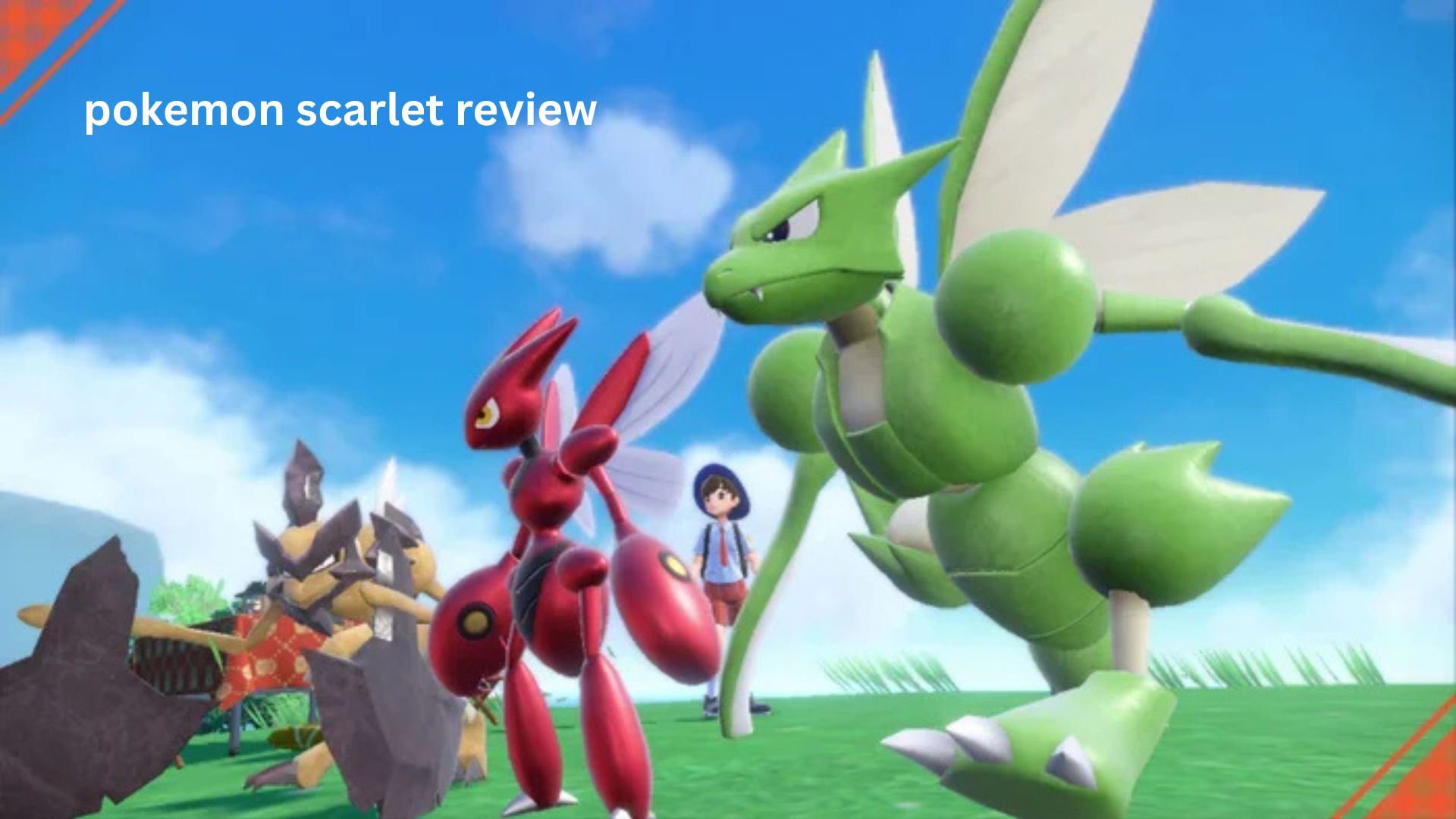
If you are considering Pokémon Scarlet today, the biggest question is not simply whether it is a good Pokémon game. It is whether its ambitious open-world design, memorable story, huge Pokémon roster, and excellent post-game content are enough to outweigh the technical problems that damaged its reputation at launch.
This Pokémon Scarlet review takes a practical look at the game from that perspective. Released on November 18, 2022, Scarlet moved the main series into a genuinely open-world structure, letting players explore Paldea with far more freedom than earlier entries. You can tackle Gyms, Titan Pokémon, and Team Star in different ways rather than following one fixed route.
That freedom is both the game’s greatest strength and one of its biggest weaknesses. There is plenty to discover, but the world does not properly scale to your progress, so wandering into the wrong area can produce surprisingly difficult—or ridiculously easy—encounters.
So, is Pokémon Scarlet worth playing now? Yes, for most Pokémon fans—but with important qualifications. The answer becomes even more favorable if you play on Nintendo Switch 2, where Nintendo introduced visual and frame-rate improvements for Scarlet and Violet.
Pokémon Scarlet at a Glance
| Feature | Verdict |
|---|---|
| Open-world exploration | Excellent idea, uneven execution |
| Story | Surprisingly strong |
| Pokémon designs | One of the generation’s highlights |
| Combat | Familiar but strategically flexible |
| Terastallization | Excellent battle mechanic |
| World design | Large and enjoyable, but sometimes empty |
| Performance | Biggest weakness on original Switch |
| Endgame | Strong, especially with DLC |
| Difficulty | Generally easy, with occasional spikes |
| Overall | 8/10 |
What Makes Pokémon Scarlet Different?
The fundamental change is simple: Paldea is designed as an open world rather than a traditional sequence of routes.
Instead of walking from Town A to Route B and eventually reaching Town C, you can travel across large connected areas almost immediately. Koraidon, your legendary riding Pokémon in Scarlet, eventually lets you travel across land, water and the air.
The main adventure is divided into three major story paths:
- Victory Road — the traditional Gym challenge
- Path of Legends — your search for powerful Titan Pokémon
- Starfall Street — your battles against Team Star
You can mix these objectives rather than completing them in a strict order.
That structure sounds perfect on paper, and often it is.
The problem is that Pokémon Scarlet gives you freedom without fully adapting the difficulty system to that freedom.
The open world is liberating—but not level-scaled
This is one of the most important things to understand before buying the game.
If you assume the game will automatically adjust Gym Leaders and major battles to match your team, you may be disappointed. The recommended progression still matters.
For example, you might discover a high-level area simply because you decided to explore in the “wrong” direction. Conversely, if you follow an inefficient route, you can arrive at a later challenge dramatically overleveled.
This creates an unusual experience:
The game gives you freedom to choose where to go, but not complete freedom over the consequences of that choice.
For experienced Pokémon players, this can actually be enjoyable. You can deliberately create your own difficulty by refusing to overlevel or by using unfamiliar Pokémon.
For younger players or newcomers, however, the lack of clear scaling can create confusion.
The Story Is Better Than You Might Expect
One of the biggest surprises in Pokémon Scarlet is how much stronger its storytelling becomes toward the end.
The opening hours can feel slow because of the academy introduction, tutorials and dialogue. But the three-story structure gradually gives individual characters more room to develop.
The Path of Legends storyline is particularly effective because it gives Arven a personal reason to pursue the Titans. Without getting into major spoilers, his motivation becomes much more meaningful as you progress.
The final section is where the game’s separate ideas finally begin to connect.
This is an important distinction from many older Pokémon games: Scarlet is not necessarily at its best during the conventional Gym journey. Its strongest storytelling arrives when the different characters and storylines begin converging.
A practical tip for first-time players
Do not judge the entire story based on its opening few hours.
If the academy section feels overly slow, that is understandable. The game becomes much more interesting once you have several objectives available and can start moving around Paldea independently.
Exploring Paldea: Freedom Comes at a Cost
Paldea is a fascinating place to explore because Pokémon are no longer hidden behind random encounters.
You can see Pokémon in the environment, decide which ones you want to approach and move through the world without constantly entering separate battle screens.
That seemingly small change makes the process of building a team feel more personal.
You might be riding across a mountain, notice a Pokémon you have never encountered before and immediately stop because you want it on your team.
That is where Scarlet succeeds better than its technical presentation sometimes suggests.
The open world creates moments of accidental discovery.
However, the world itself is not as densely designed as the best open-world games. Some areas can feel like large stretches of terrain connecting more interesting locations.
This leads to one of my less obvious criticisms: Scarlet’s biggest open-world problem isn’t its size; it’s the relationship between size and reward.
Large spaces are enjoyable when exploration consistently produces something meaningful. In Scarlet, you will sometimes travel a considerable distance only to find a handful of items or Pokémon.
The result is an open world that feels more successful as a Pokémon playground than as a deeply interactive world.
Koraidon Makes Exploration Much Better
Koraidon is not merely transportation.
As you progress, its abilities expand, making exploration progressively more convenient. You can move faster, cross water and eventually reach places that were previously inaccessible.
This produces an interesting rhythm:
- Discover an inaccessible location.
- Continue progressing through the story.
- Unlock a new traversal ability.
- Return later.
- Explore areas that were previously unreachable.
It is a classic exploration formula, but it works particularly well because Pokémon are scattered throughout the environment.
One practical recommendation: don’t obsess over collecting every item you see.
You will encounter an enormous number of pickups while exploring. If you stop for everything, your adventure can become unnecessarily slow. Prioritize unusual Pokémon, useful items and locations that genuinely interest you.
Terastallization Is One of Scarlet’s Best Ideas
The Terastal phenomenon is the central battle gimmick of Scarlet and Violet.
A Pokémon can temporarily change its type through Terastallization, creating both offensive and defensive possibilities. Unlike a simple power-up, the mechanic can fundamentally alter how you approach a battle.
For example, a Pokémon with a normally exploitable weakness can use a different Tera Type to turn an expected disadvantage into an advantage.
That makes Terastallization more interesting than it initially appears.
Why Terastallization works
The best part is that it introduces uncertainty.
Normally, when you see a Pokémon, you have a reasonable idea of what it can do based on its typing. Tera Types complicate that assumption.
A familiar Pokémon can suddenly become something completely different.
This is particularly valuable for experienced players because it creates additional layers of prediction.
It also works well in casual play because you do not need to understand competitive Pokémon to enjoy the visual and mechanical impact.
Tera Raids Are Fun—but Inconsistent
Tera Raid Battles are one of the game’s major activities, especially once you start thinking beyond the main story.
The basic concept is appealing: find a Tera Pokémon, team up with other players or NPCs and attempt to defeat it within a limited battle structure.
The problem is consistency.
Some raids are satisfying because you need to think about typing, survivability and damage output. Others can feel chaotic, particularly when animations, delays and complicated battle effects pile up.
For serious endgame players, raids can become less about traditional Pokémon strategy and more about building highly optimized Pokémon for specific situations.
That isn’t necessarily bad—but it is worth knowing before you expect every raid to feel like a perfectly balanced boss encounter.
Pokémon Scarlet’s Performance Problems
This is the part of the game that cannot reasonably be ignored.
At launch, Pokémon Scarlet and Violet were heavily criticized for frame-rate problems, visual glitches, pop-in, texture issues and other technical shortcomings. Contemporary reviews repeatedly identified performance as one of the games’ biggest weaknesses.
Even years later, player opinions remain divided. Some players report that the experience is perfectly enjoyable, while others continue to regard the technical performance as a major flaw.
The important 2026 distinction: which Switch?
If you’re playing on an original Nintendo Switch, you should go in knowing that Scarlet is technically rougher than you might expect from such a major franchise.
If you have a Nintendo Switch 2, the situation is considerably more attractive.
Nintendo’s version 4.0.0 update for Scarlet and Violet, released June 2, 2025, specifically included optimized visuals for Switch 2 displays and high-resolution TVs, along with improved frame rates for smoother movement.
That does not magically transform Scarlet into a modern technical showcase. But it changes the buying equation.
For a Switch 2 owner, the performance criticism should carry less weight than it did at launch.
For an original Switch owner, it remains one of the most important compromises.
Pokémon Scarlet vs. Pokémon Violet
The two games are fundamentally the same adventure.
The major differences involve version-exclusive Pokémon, including the legendary Pokémon and certain other creatures.
Scarlet’s defining legendary is Koraidon, while Violet features Miraidon.
The aesthetic distinction also extends into the game’s version-exclusive Pokémon and some character details.
So which should you choose?
Choose Scarlet if:
- You prefer Koraidon’s design.
- You like the Scarlet-exclusive Pokémon.
- You prefer the game’s prehistoric/futuristic thematic direction associated with Scarlet.
- You have friends who own Violet and want easier version-exclusive trading.
There is no major difference in overall story quality between the two versions. Your choice should primarily come down to the Pokémon and aesthetic you prefer.
The DLC Changes the Overall Verdict
If you’re evaluating Scarlet today rather than at launch, it is worth considering The Hidden Treasure of Area Zero.
The expansion consists of two parts:
- The Teal Mask
- The Indigo Disk
Nintendo released bundle editions containing both the base game and the DLC in November 2023.
The DLC is important because it expands the world, adds Pokémon and provides additional challenges after the main adventure.
The Indigo Disk in particular is much more appealing to players who want a stronger endgame experience.
This produces one of the more interesting conclusions about Scarlet:
The game makes more sense as a complete package than it did as a launch product.
If you’re buying the game years after release, you can experience the base adventure and its expanded content as one larger Pokémon journey rather than judging the 2022 launch version alone.
Three Things Most Reviews Miss
1. Scarlet is better at creating stories than destinations
The game does not always make every town or location fascinating.
What it does well is create memorable journeys between those locations. Some of the best moments come from unexpectedly encountering a Pokémon, discovering a path or reaching a new area while pursuing something else.
The adventure is often stronger than the individual destinations.
2. The lack of level scaling can become a self-imposed challenge
Many reviews treat level scaling purely as a flaw.
It is a flaw if you want the game to naturally regulate difficulty.
But if you deliberately avoid overleveling, use Pokémon you have not trained before and change your team regularly, the fixed levels can become a useful tool for creating your own challenge.
In other words, Scarlet accidentally gives experienced players room to design their own difficulty.
3. The game’s strongest design is its continuity
Scarlet often feels surprisingly seamless.
You can heal, reorganize your team, walk through a settlement, leave town and immediately be back in the wilderness without constantly being interrupted by loading screens. Players have frequently praised this continuous flow even while criticizing other aspects of the open world.
That matters more than it sounds.
It makes the Pokémon fantasy feel less like a sequence of levels and more like an actual journey.
Common Pokémon Scarlet Mistakes to Avoid
If this is your first playthrough, a few decisions can make the game considerably more enjoyable.
Don’t rush every objective
The game is designed around exploration. If you simply follow the obvious markers, you will miss some of what makes Paldea interesting.
Don’t use the same six Pokémon forever
Scarlet gives you access to many creatures early. Experiment.
Changing one or two team members regularly can prevent the game from becoming too easy.
Don’t assume the nearest challenge is the correct challenge
The open-world design makes this especially important.
If a Gym or Titan destroys your team effortlessly, you may simply be approaching it too early.
Don’t ignore Tera Types
Even during casual play, understanding when to Terastallize can make difficult battles much easier.
Don’t judge the game entirely by graphics
This does not excuse the technical issues. They are real.
But Scarlet’s strongest qualities are its battle system, Pokémon designs, exploration loop and later story developments—not graphical fidelity.
Is Pokémon Scarlet Worth Playing in 2026?
Yes—especially if you enjoy exploration, collecting Pokémon and story-driven RPGs.
The answer is more complicated if technical performance is extremely important to you.
On the original Switch, Pokémon Scarlet remains difficult to recommend as a polished technical experience. Contemporary reviews documented serious performance shortcomings, and later player discussion shows that opinions about the technical state remain mixed.
On Switch 2, however, Nintendo’s dedicated improvements make the proposition substantially better.
More importantly, the underlying game is much stronger than its launch reputation sometimes suggests.
The three-story structure is ambitious. The Pokémon designs are memorable. Terastallization adds genuine strategic possibilities. Paldea provides a freedom that traditional Pokémon games rarely offered.
And once the DLC is included, there is a substantial amount of content for players who want more than the basic Champion journey.
Pokémon Scarlet Review: Final Verdict
Pokémon Scarlet is an ambitious game with an uneven finish.
Its open world is not as detailed as the best modern open-world RPGs, and the absence of proper level scaling makes its freedom less elegant than it should be. Performance problems also remain the game’s most obvious technical weakness, particularly on the original Switch.
But underneath those problems is one of the more interesting mainline Pokémon adventures.
The freedom to choose your path, the surprisingly emotional storylines, the excellent Terastallization mechanic and the sheer pleasure of discovering Pokémon in the wild make Scarlet easy to spend dozens of hours with.
My verdict: 8/10.
If you’re a longtime Pokémon fan who skipped Scarlet because of its launch reputation, I think it deserves another look. If you’re buying it for the first time, especially with a Switch 2 and the DLC available, you are getting a much more complete experience than the 2022 launch discussion might lead you to believe.
The biggest lesson from Pokémon Scarlet is that great Pokémon design can survive imperfect technology. The game needed more polish, but its best ideas point toward a much more flexible future for the series.
FAQ
Is Pokémon Scarlet worth buying in 2026?
Yes, particularly for players who enjoy open-world exploration and traditional Pokémon battling. The game has received updates, and Nintendo specifically improved visuals and frame rate when played on Switch 2. The DLC also adds substantial extra content, making the complete experience more appealing than the launch version.
Is Pokémon Scarlet better on Switch 2?
Yes. Nintendo’s June 2025 version 4.0.0 update introduced visual optimization for Switch 2 displays and improved frame rates. It does not completely change the game’s underlying design, but the technical experience is more comfortable on the newer hardware.
Is Pokémon Scarlet or Violet better?
Neither is objectively better because the core game is essentially the same. The biggest differences are version-exclusive Pokémon, the legendary Pokémon and certain thematic details. Choose based on which exclusive Pokémon and legendary you prefer, or choose the opposite version from your friends to make trading more useful.
Is Pokémon Scarlet difficult for beginners?
The basic battles are generally approachable, but the open-world structure can make difficulty confusing. Because the game does not fully scale challenges to your level, you can accidentally enter an area that is much stronger than your current team. Beginners should pay attention to their team’s levels and change direction if a major challenge feels overwhelmingly difficult.
Is the Pokémon Scarlet DLC worth it?
For players who enjoy the base game, the DLC is a strong addition because it expands the adventure with The Teal Mask and The Indigo Disk.It is particularly valuable if you care about additional Pokémon, post-game battles and having a larger overall adventure rather than stopping after the main story.
What is the biggest problem with Pokémon Scarlet?
Performance is the clearest weakness. Reviews at launch highlighted frame-rate drops, visual glitches, pop-in and other technical issues, and player opinions about those problems remain divided years later. The underlying gameplay is considerably stronger than the technical presentation suggests.