


Silent Hill f Box Puzzle: Complete Solution
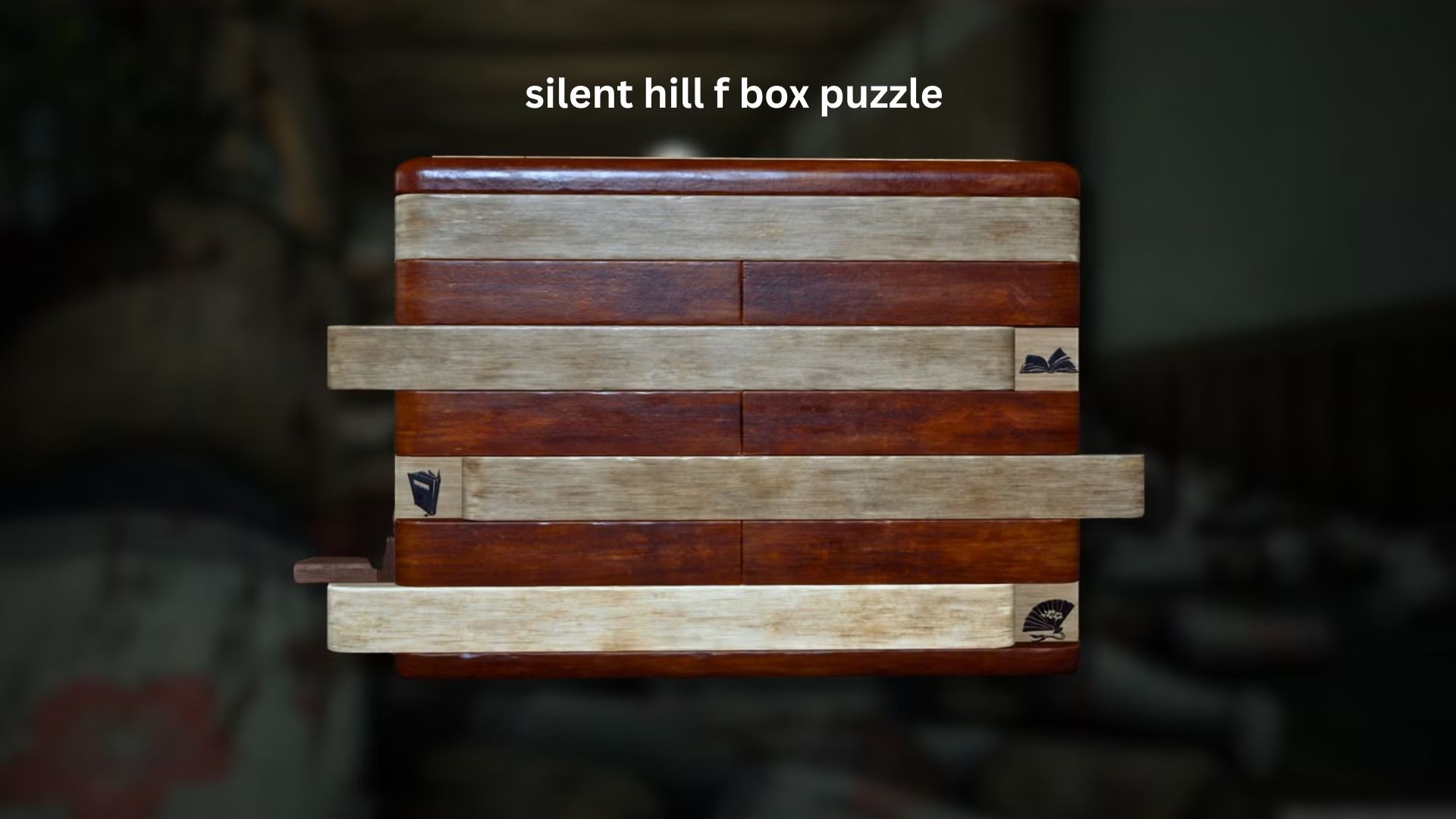
If you are stuck on the Silent Hill f box puzzle, you are probably looking at a wooden box covered in strange symbols and wondering what any of them have to do with the letters beside it. The good news is that the puzzle is more logical than it first appears. The trick is not to guess the symbols individually, but to read Rinko’s clues and identify the category of images the game wants you to reveal.
The Secret Box appears inside Ebisugaoka Middle School and is required to escape the locked classroom and continue through the second floor. It has three stages, with each stage giving you another clue for the next one. The exact symbols you must reveal change according to your puzzle difficulty, which is why a solution that works on Story may appear completely wrong on Hard or Lost in the Fog.
This guide explains the Silent Hill f box puzzle solution for Story, Hard, and Lost in the Fog, while also explaining why each answer works. That last part matters because once you understand the pattern, the box becomes much easier to solve without blindly copying a sequence.
Where to Find the Silent Hill f Secret Box
The Secret Box is found in a classroom on the second floor of Ebisugaoka Middle School.
After entering the relevant classroom, you become trapped and must solve the box to obtain the key needed to continue. The box is accompanied by an unopened envelope containing Rinko’s message. That message is the real starting point for the puzzle.
The puzzle has three stages:
- Sweet and tart fruit
- Journals/books
- Sakura in full bloom
The basic mechanic remains the same: slide the wooden panels so that the correct symbols are exposed on the two sides of the box.
The most important rule
Don’t treat the box as a conventional combination lock.
You are not looking for a numerical code. You are effectively being asked to select every symbol that belongs to a particular category.
That distinction makes the puzzle much easier to understand.
Silent Hill f Box Puzzle: Quick Answers
If you simply want the solutions, use the section corresponding to your difficulty.
| Difficulty | Round 1 | Round 2 | Round 3 |
|---|---|---|---|
| Story | Specific sweet fruits | All books | Cherry blossom branch |
| Hard | All required fruits | All books/journal-related symbols | Sakura-related symbols |
| Lost in the Fog | Required sweet fruits | All books | Four sakura blossom symbols |
The exact panels you need to move differ between difficulties.
Story Difficulty Solution
Story difficulty is the most forgiving version of the Secret Box. The game highlights important words in Rinko’s clues, making the intended categories considerably easier to recognize.
Round 1: Sweet and Tart Fruit
The first clue refers to the sweet and tart fruit on the cake.
On Story difficulty, reveal the appropriate fruit symbols:
- Cherry
- Strawberry
The cake imagery is part of the clue rather than something you need to select as a general category. This is an important distinction because the Hard and Lost in the Fog versions require more fruit symbols. (Silent Hill f)
If you’re following panel positions rather than identifying the pictures, one documented solution has:
- Side 1: bottom panel
- Side 2: top panel
Once the correct symbols are exposed, the first section opens and gives you the next clue.
Round 2: Books and Journals
The next clue points toward Rinko’s journal.
For this stage, reveal all the book symbols.
There are three relevant book symbols on Story difficulty, distributed across the two sides of the box. You need to rotate the box and adjust the appropriate panels until all of them are showing.
This is one of the easiest stages once you understand the game’s logic: don’t look for a particular title or type of book. The category is simply books/journals.
Round 3: Sakura
The final clue refers to beautifully blooming sakura.
On Story difficulty, reveal the cherry blossom branch.
Unlike the harder versions, you do not need to identify several different sakura-related symbols. The solution is essentially one cherry blossom branch.
Once the third stage is completed, the box opens and provides the key needed to progress through the school.
Hard Difficulty Solution
Hard mode removes much of the assistance that Story mode provides. The clues still point toward the same three categories, but you have to interpret them yourself.
The three categories remain:
- Sweet and tart fruit
- Journal/books
- Sakura in full bloom
The important difference is that more symbols need to be exposed.
Round 1: Fruit
For Hard difficulty, you need the required fruit symbols on both sides of the box.
The verified solution is:
One side:
- Apple
- Cherry
- Cut orange
Other side:
- Strawberry
- Pineapple
- Grapes
This is where many players get confused because they may correctly identify one or two fruits but leave another incorrect panel visible. The box expects the complete set required by the clue, not simply one representative example.
A useful way to approach it
Instead of asking:
“Which picture looks most like fruit?”
Ask:
“Which of these symbols belong to the category described by Rinko?”
That prevents you from stopping after finding the obvious cherry or strawberry.
Round 2: Books
The second Hard-mode stage is much more straightforward.
Reveal all four book symbols.
Three books are on one side of the box, while the remaining book is on the opposite side.
Some guides describe the clue as involving books and origami, but the safest approach is to follow the journal-related symbols revealed by the actual puzzle rather than trying to invent an additional category.
Round 3: Sakura
The final Hard puzzle is probably the most frustrating stage for players who are unfamiliar with Japanese plants.
You need to identify the symbols representing sakura/cherry blossoms.
The verified solution requires:
- Two leafy cherry-blossom branches on one side
- A cherry blossom tree on the other side
The game deliberately makes several floral symbols look similar, so it is easy to select something that appears “close enough.” It isn’t.
The common mistake
Don’t assume every flower-looking symbol belongs in this solution.
The clue specifically concerns sakura in bloom, so the distinction between ordinary flowers, branches and cherry-blossom imagery matters.
This is one reason the box can feel less like a traditional logic puzzle and more like a visual recognition test.
Lost in the Fog Box Puzzle Solution
Lost in the Fog is the most demanding version because both the white and brown panels become relevant. There are more possible symbols, and you must expose more correct images during each stage.
The three clues remain the same, however:
- Sweet and tart fruits
- Journals
- Sakura in full bloom
That consistency is useful. The difficulty comes from identifying and positioning more symbols, not from learning a completely different puzzle system.
Round 1: Sweet Fruits
The verified Lost in the Fog solution requires these fruit symbols.
One side:
- Cherry
- Strawberry
- Berries
- Pineapple
Opposite side:
- Cut orange
- Apple
An interesting trap here is that not every botanical fruit necessarily qualifies as a sweet fruit in the context of the puzzle. For example, eggplants and tomatoes are technically fruits botanically, but they are not part of the intended solution.
That is an important lesson for the whole puzzle:
Use the ordinary meaning implied by Rinko’s clue, not a technical scientific definition.
Round 2: Journals
The second Lost in the Fog stage requires all five book symbols.
Four books appear on one side and the fifth is on the opposite side.
This stage is much less ambiguous than the fruit and flower sections. Once you understand that “journal” means the book imagery, simply work through both sides and make sure you have not missed one.
Round 3: Sakura
The final stage requires four cherry blossom symbols.
They are distributed across both sides of the box:
- Three cherry-blossom symbols on one side
- One on the opposite side
The key is to recognize blossoming cherry branches, rather than assuming every tree, plant or potted flower represents sakura.
This distinction is particularly important on Lost in the Fog because there are considerably more possible symbols to evaluate.
Why the Box Puzzle Feels Harder Than It Is
The Secret Box is essentially a visual classification puzzle disguised as a mechanical puzzle box.
That is one of the most useful ways to understand it.
The game gives you:
A written clue → a category → a set of matching symbols → movable panels
For example:
“Sweet and tart fruit”
becomes:
Fruit category
which becomes:
Find every intended fruit symbol
which becomes:
Move panels on both sides until those symbols are exposed.
Once you see that pattern, you don’t need to randomly experiment with every panel.
A Better Method for Solving the Box Yourself
If you want to solve the puzzle without immediately looking at the answer, use this process.
1. Read the clue before touching anything
Don’t start sliding panels immediately.
First determine whether Rinko is talking about:
- Fruit
- Books/journals
- Sakura
This gives you the category you’re searching for.
2. Inspect both sides
The box is deliberately designed so that the relevant symbols can be distributed across its two sides.
Finding three correct symbols on the front does not necessarily mean you’re finished.
3. Separate “correct category” from “looks similar”
This matters most for flowers.
A symbol can be botanical without being the particular plant the clue describes.
Likewise, something can technically be a fruit without being intended as one of the “sweet fruits.”
4. Don’t reset your thinking after turning the box
The second side isn’t a new puzzle.
It is part of the same solution.
Think of the front and back as one combined canvas rather than two separate locks.
5. Wait for the game to register the arrangement
Some players report that the panel movement can feel slightly delayed. GamesRadar specifically notes that there can be enough delay while sliding the panels to accidentally undo a correct arrangement before it registers.
So if you believe you’ve reached the correct configuration, don’t immediately start moving everything again.
Common Silent Hill f Box Puzzle Mistakes
Mistake 1: Using a solution from the wrong difficulty
This is probably the biggest source of confusion.
A Story-mode answer can look completely wrong if you’re playing Hard or Lost in the Fog because the number of required symbols changes.
Always check your puzzle difficulty before following a guide.
Mistake 2: Selecting every fruit
The clue is not simply “fruit.”
It refers to sweet and tart fruit, and the intended symbols are defined by the game’s puzzle rather than botanical classification.
That is why technically correct arguments about tomatoes or eggplants don’t help solve it.
Mistake 3: Treating every flower as sakura
The third round is a recognition challenge.
Look for cherry-blossom imagery specifically rather than filling every available floral slot.
Mistake 4: Forgetting the second side
You can have the front perfectly arranged and still fail because the back is wrong.
This is especially easy to do when you’re focused on one obvious symbol.
Mistake 5: Assuming the puzzle is random
It isn’t.
The symbols are tied directly to the clues in Rinko’s messages. Once you understand that relationship, the puzzle becomes much more predictable.
Three Useful Insights Most Guides Don’t Explain
1. The difficulty changes the amount of interpretation
The underlying puzzle doesn’t become a different puzzle on each difficulty.
Instead, the game progressively removes assistance and increases the number of symbols you must classify.
That means practicing on Story can teach you the logic of the puzzle, even though it won’t teach you the exact Hard or Lost in the Fog panel arrangement.
2. The letters are more important than the box
When players get stuck, they often stare at the wooden panels looking for a pattern.
That’s backwards.
The box is the answer mechanism. Rinko’s writing is the instruction manual.
Read the clue first, determine its category, and only then examine the symbols.
3. The puzzle tests cultural recognition as much as logic
The Sakura stage is a good example. A player can understand the logic perfectly and still struggle because several Japanese plant motifs look unfamiliar.
So getting stuck does not necessarily mean you misunderstood the puzzle. Sometimes the challenge is simply recognizing the visual vocabulary the game expects you to know.
That distinction is useful because it tells you when to keep reasoning and when to stop overthinking.
What Do You Get for Solving the Box?
Completing all three stages opens the Secret Box and gives you the Second Floor Generic Classroom Key.
That key allows you to leave the locked classroom and continue exploring the second floor of Ebisugaoka Middle School.
In other words, this isn’t an optional puzzle that you can safely ignore. It is part of the game’s progression.
FAQ
What is the Silent Hill f box puzzle solution?
The Secret Box has three stages based on Rinko’s clues: sweet and tart fruit, journals/books, and sakura in full bloom. The exact symbols you must reveal depend on your difficulty setting. Story is the simplest, while Hard and Lost in the Fog require more symbols and less assistance.
Where is the Secret Box in Silent Hill f?
The Secret Box is located in a classroom on the second floor of Ebisugaoka Middle School. Entering the classroom traps you inside until the puzzle is solved. Completing it rewards you with the key needed to continue through the school.
What are the three clues for the Silent Hill f box puzzle?
The three main clues correspond to sweet and tart fruit, journals/books, and sakura in full bloom. Each clue determines which symbols must be exposed on the box. The wording stays broadly consistent across difficulties, although the number of matching symbols changes.
What is the Hard-mode Secret Box solution?
On Hard, the first round requires the specified fruit symbols, the second requires all four book symbols, and the third requires the relevant sakura symbols. The first round includes apple, cherry, cut orange, strawberry, pineapple and grapes across both sides.
What is the Lost in the Fog box puzzle solution?
Lost in the Fog uses both white and brown panels. Its three stages require the specified sweet fruits, all five book symbols, and four cherry-blossom symbols respectively. Because more panels are active, this version is substantially easier to solve if you classify the symbols before moving anything.
Why won’t my Silent Hill f puzzle box open?
The most likely problem is that one incorrect symbol is still exposed or one required symbol on the opposite side has been missed. Check both sides carefully and make sure you’re following the solution for your exact difficulty. Also give the game a moment to register a panel arrangement before immediately moving it again.
Final Thoughts
The Silent Hill f box puzzle initially looks like an opaque combination puzzle, but its structure is actually quite clean. Rinko’s notes tell you what category to look for, and the box asks you to expose the corresponding symbols.
For Story, focus on the highlighted clues and the smaller number of required symbols. On Hard, pay close attention to every fruit, book and sakura symbol. On Lost in the Fog, slow down even further and treat both sides of the box as one combined puzzle.
The biggest practical tip is simple: read the clue first, classify the symbols second, and move the panels last. Once you approach it in that order, the box stops feeling like guesswork and becomes a manageable piece of visual logic.