

Wuchang: Fallen Feathers Review — Is It Worth Playing?
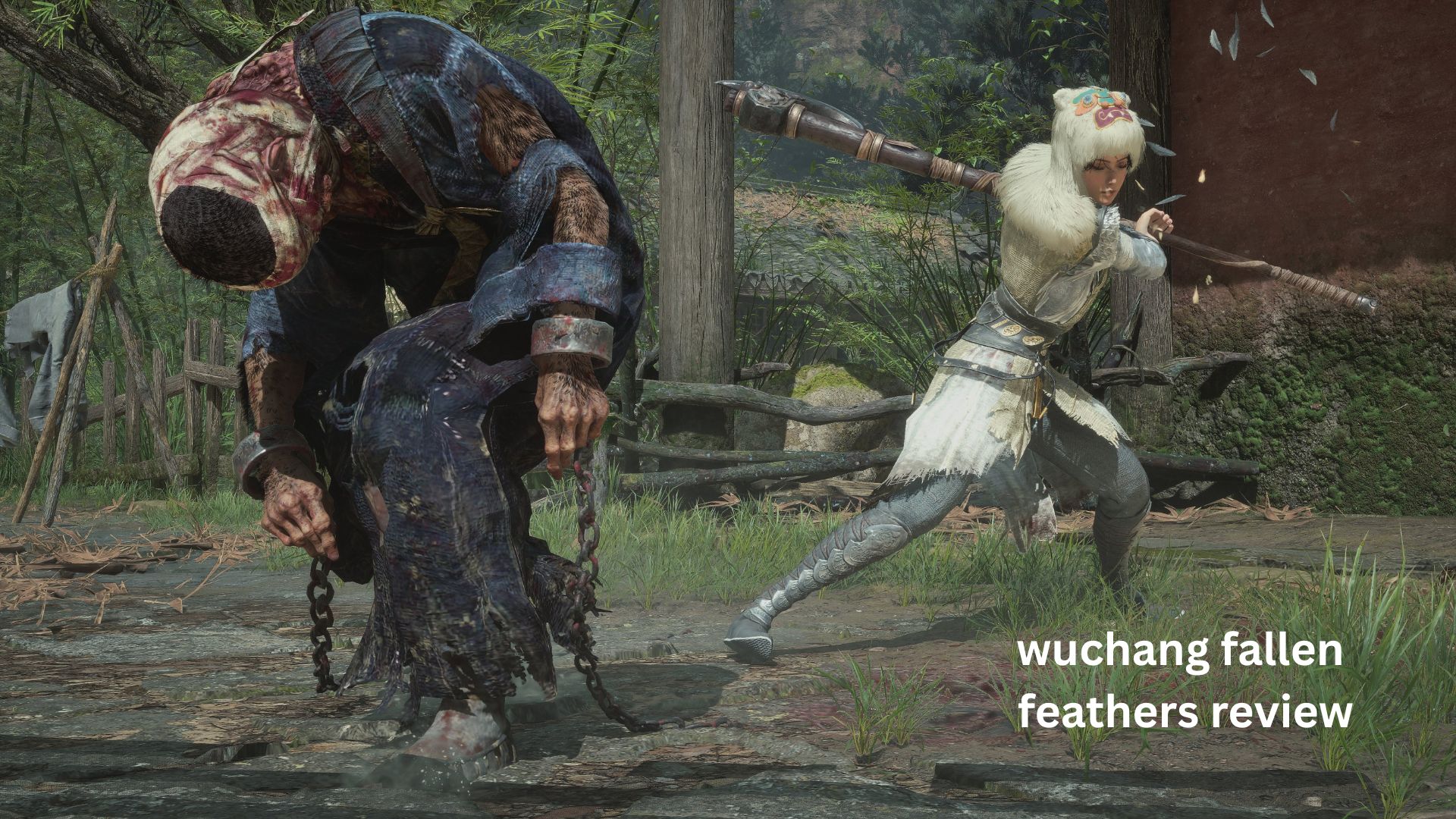
If you enjoy Soulslike games but are tired of playing another obvious Dark Souls or Elden Ring imitation, Wuchang: Fallen Feathers is an interesting proposition. It borrows familiar ideas—checkpoints, punishing enemies, boss patterns, character builds, and difficult exploration—but adds a distinct Chinese historical-fantasy setting and several combat systems of its own.
The problem is that deciding whether Wuchang is worth your time is not as simple as looking at its attractive visuals or impressive boss fights. The game can feel excellent one minute and frustrating the next, particularly when technical problems, uneven difficulty, or awkward enemy stagger mechanics get in the way.
This Wuchang: Fallen Feathers review looks beyond the basic “good or bad” question. It explains what makes the combat work, where the game struggles, how its progression system changes the Soulslike formula, what players should know about performance, and which type of player is most likely to enjoy it.
The short version: Wuchang is a genuinely interesting Soulslike with excellent combat possibilities, flexible character development, strong exploration, and a memorable setting—but inconsistent performance and some frustrating combat design prevent it from reaching the genre’s highest level. Reviews have broadly agreed on that split, although opinions differ considerably on how serious the flaws are.
What Is Wuchang: Fallen Feathers?
Wuchang: Fallen Feathers is an action RPG developed by Leenzee and published by 505 Games. It launched on July 24, 2025, for PC, PlayStation 5, and Xbox Series X|S.
The game places you in the role of Bai Wuchang, a female pirate warrior caught in a world affected by a mysterious plague-like phenomenon known as Feathering. The story combines historical inspiration from China’s late Ming period with supernatural fantasy, creating a setting that feels substantially different from the European medieval worlds commonly associated with Soulslikes.
At its core, however, the structure will immediately feel familiar to experienced players:
- Defeat enemies to gain resources.
- Explore interconnected areas.
- Activate checkpoints.
- Unlock shortcuts and discover hidden paths.
- Improve your character and equipment.
- Learn enemy attack patterns.
- Fight increasingly demanding bosses.
The familiarity is both a strength and a weakness. Wuchang understands the genre extremely well, but it occasionally feels like it is deliberately checking boxes established by FromSoftware’s games.
Wuchang: Fallen Feathers Review: The Combat Is the Main Attraction
The strongest reason to play Wuchang is its combat.
Rather than simply copying the standard stamina-heavy sword-and-shield formula, the game encourages a more aggressive rhythm. One of its most important mechanics is Skyborn Might, which can be generated through actions such as perfectly timed dodges and then spent on special skills and spells.
That creates an interesting feedback loop:
- Avoid an attack successfully.
- Generate Skyborn Might.
- Use that resource to enhance your offense.
- Maintain pressure.
- Build another opportunity to use your stronger abilities.
The result is a combat system that rewards players for taking calculated risks rather than simply standing back and waiting.
PCGamesN particularly praised this approach, noting that Wuchang incorporates its magic system directly into combat rather than treating magic as a completely separate resource-management system.
Weapon variety makes experimentation worthwhile
Wuchang also gives you considerable freedom over how you fight.
Different weapon types support different approaches, while spells can be incorporated into your offensive combinations. You can also equip two weapons and use the Swift Draw system to switch between them as part of combat.
This is one of the game’s more enjoyable ideas because weapon switching is not merely an inventory convenience. It can become part of your actual fighting strategy.
For example, you might use one weapon to establish an opening and immediately switch to another for a heavier attack. Players who enjoy experimenting with builds will get substantially more from this system than someone who simply chooses one weapon and refuses to change.
The Free Respec System Is More Important Than It Looks
One of Wuchang’s most player-friendly features is the ability to respec your character without the usual punishment found in many Soulslikes.
That matters because some encounters strongly favor particular approaches. Instead of being trapped by an early-game decision, you can adjust your build and try something different.
GamesRadar noted that the ability to completely reset the skill tree for free encourages experimentation and removes much of the anxiety surrounding character development.
This creates an unusual design philosophy:
Wuchang does not necessarily ask, “Did you build your character correctly?” It often asks, “Are you willing to change your approach?”
That is a meaningful distinction.
A practical example
Imagine that you have spent several hours developing a fast melee build. You reach a boss whose attack patterns make your usual combo strategy unreliable.
In another Soulslike, you might have to grind for resources, find a respec item, or simply suffer through the encounter with your existing build.
In Wuchang, you have considerably more freedom to change direction.
For players who like learning through experimentation rather than committing permanently to a build, this is one of the game’s best design decisions.
Bosses: Spectacular but Sometimes Frustrating
Boss encounters are where the review picture becomes complicated.
There are bosses that provide memorable battles and genuinely satisfying victories. Learning their patterns, identifying openings, and finally executing the correct strategy can produce the exact feeling that Soulslike fans want.
But the game also has bosses that expose weaknesses in the combat system.
One recurring complaint from reviewers is that bosses can be unusually resistant to stagger. That creates a strange contradiction: Wuchang gives you flashy combinations and rewards aggressive play, yet some bosses make it difficult to use those combinations safely.
This can lead to a frustrating scenario:
You successfully dodge a boss’s attack.
You recognize an opening.
You begin your combo.
The boss barely reacts.
Your attack is interrupted.
You are knocked down.
The boss follows up before your character has fully recovered.
That is not the same thing as challenging difficulty. Good difficulty teaches you something and makes the eventual victory feel earned. Poor difficulty can make you feel that the game’s mechanics are working against each other.
The knockdown problem
The recovery animation after being knocked down is another controversial element.
GamesRadar specifically highlighted situations where Wuchang takes a long time to recover, leaving the player vulnerable to another attack.
This creates one of the game’s least satisfying combat loops: a single mistake can sometimes become several consecutive hits because your character cannot regain control quickly enough.
For experienced Soulslike players, that distinction is important. A difficult attack that kills you because you mistimed your dodge is satisfying to learn. A follow-up hit that occurs because the recovery animation gives you little opportunity to respond can feel considerably less fair.
Exploration Is Better Than the Main Story
Wuchang’s world is one of its strongest elements.
The Chinese setting gives the game a visual and cultural identity that separates it from many other Soulslikes. Temples, villages, mountain environments, caves, and other locations create a world that feels more distinctive than a simple fantasy reskin.
Exploration is also rewarded with hidden routes, shortcuts, equipment, and other discoveries.
However, the quality of the level design is inconsistent.
Some reviewers praised the game’s interconnected areas and dungeon design, while others found certain environments confusing or repetitive.
This leads to one of my more important observations about Wuchang:
Getting lost can be either a feature or a flaw, depending on why you are lost.
If you are lost because several paths are intelligently interconnected and you are trying to understand the world, exploration becomes part of the experience.
If you are lost because similar-looking environments make it difficult to identify where you have already been, the same mechanic becomes frustrating.
Wuchang occasionally falls into the second category.
The Story May Not Keep You Playing
The setting is more compelling than the storytelling.
The combination of historical China, supernatural corruption, warfare, mythology, and the Feathering affliction creates an excellent foundation. But several reviews have criticized the narrative for failing to make the same impact as the game’s setting. GamesRadar, for example, described the story as one of the weaker aspects despite praising the combat and environments.
If you play Soulslikes primarily for atmosphere and combat, this may not bother you.
If you expect a deeply character-driven RPG with exceptionally clear storytelling, Wuchang may disappoint.
The game is at its best when it lets the world, enemies, environments, and combat communicate its identity.
Performance Is the Biggest Warning
This is the part prospective buyers should take seriously.
Wuchang uses Unreal Engine 5 and can look excellent, but reviewers have reported inconsistent performance, including frame-rate drops, stuttering, crashes, and other technical issues depending on platform and hardware.
PCGamesN encountered frame-rate problems at important moments, including during a major boss encounter.
On the other hand, Windows Central reported generally strong performance on Xbox Series X in performance mode, while still noting crashes and asset-streaming problems.
Other testing has produced very different PC results depending on hardware and settings.
That variation is important.
Why performance matters more here than in a normal RPG
A frame-rate dip during exploration is annoying.
A frame-rate dip during a boss attack is potentially fatal.
Soulslike combat depends on timing. Your ability to dodge, counter, and recognize an animation depends on the game responding consistently.
That means a technical problem can become a gameplay problem.
Practical advice: if you have multiple platform options, prioritize the version that gives you the most stable frame rate rather than simply choosing the highest graphical preset.
For PC players, lowering demanding visual settings can make more sense than chasing maximum image quality. A stable frame rate is considerably more valuable when every dodge matters.
Three Things About Wuchang That Are Easy to Miss
1. The game rewards adaptation more than commitment
The free respec system fundamentally changes how you should approach character development.
Do not treat your first build as permanent. Experiment with weapons, skills, and spells, especially when a particular encounter is giving you trouble.
2. Skyborn Might changes the meaning of defense
Perfect dodging is not merely about avoiding damage.
It can directly improve your offensive potential.
That means a defensive action can become an offensive investment. Once you understand this, the combat becomes much more interesting because dodging is no longer simply a survival mechanism.
3. Technical stability can change your perception of difficulty
This is an underappreciated issue.
A player experiencing stable performance may describe a boss as difficult but fair. Another player experiencing stutters during critical animations may describe the exact same encounter as unfair.
That is why performance should be considered part of the Wuchang experience rather than a completely separate technical footnote.
Wuchang vs Other Soulslikes
| Feature | Wuchang: Fallen Feathers | Typical Soulslike |
|---|---|---|
| Combat | Aggressive, combo-focused | Often stamina and timing focused |
| Magic | Integrated into combat | Often separate resource system |
| Respec | Very flexible | Often limited |
| Setting | Chinese historical fantasy | Usually medieval/fantasy |
| Exploration | Interconnected and reward-driven | Usually interconnected |
| Difficulty | Uneven in places | Generally more consistent |
| Performance | Can vary by platform | Depends heavily on game |
| Build experimentation | Excellent | Often more restrictive |
The biggest difference is not that Wuchang completely reinvents the genre. It does not.
Its achievement is combining familiar Soulslike foundations with enough new mechanics and cultural identity to feel like its own game.
Common Mistakes New Players Make
If you decide to play Wuchang, avoid these mistakes.
Relying on one attack pattern
The game rewards experimentation. If your favorite combo repeatedly gets interrupted, change your approach instead of repeatedly forcing it.
Treating Skyborn Might as something to save forever
The mechanic exists to encourage active use. Hoarding every resource can prevent you from getting the combat advantage the system is designed to provide.
Ignoring spells
Even if you prefer melee combat, spells can expand your options and create openings that straightforward attacks cannot.
Refusing to respec
There is little reason to remain loyal to an ineffective build simply because you invested in it earlier.
Prioritizing graphics over frame rate
In a timing-sensitive action game, smooth performance is usually more valuable than a higher visual preset.
Who Should Play Wuchang: Fallen Feathers?
Wuchang is a strong choice if you:
- Enjoy Soulslikes but want a different setting.
- Like fast, aggressive melee combat.
- Enjoy experimenting with builds.
- Appreciate difficult boss encounters.
- Prefer exploration and environmental storytelling.
- Want more freedom to change your character build.
- Are comfortable learning through repeated attempts.
You may want to wait for further patches or choose another game if you:
- Hate inconsistent frame rates.
- Want a highly polished technical experience.
- Prefer straightforward storytelling.
- Dislike long recovery animations.
- Become frustrated when bosses do not stagger easily.
- Expect FromSoftware-level refinement.
Is Wuchang: Fallen Feathers Worth Playing?
Yes, with reservations.
Wuchang: Fallen Feathers is not the flawless Soulslike some early praise suggested, but neither is it a forgettable clone.
Its best qualities are genuinely strong: combat has depth, character customization is unusually flexible, the Chinese-inspired setting gives it personality, and exploration contains enough secrets and shortcuts to encourage curiosity.
Its weaknesses are equally real. Difficulty can fluctuate, some boss encounters undermine the game’s own aggressive combat philosophy, and performance issues can be especially damaging during precision-based battles. Reviewers have consequently landed across a fairly wide range, from strong recommendations to much harsher assessments.
The most accurate way to describe it is this:
Wuchang is an ambitious and sometimes excellent Soulslike that is held back by uneven execution.
If you are willing to work around its rough edges, there is a lot here to enjoy. If technical polish and perfectly balanced encounters are your highest priorities, its flaws may overshadow its strengths.
FAQ
Is Wuchang: Fallen Feathers a good Soulslike?
Yes. It offers challenging combat, interconnected exploration, character builds, difficult bosses, and familiar Soulslike progression while adding its own Skyborn Might and weapon-switching mechanics. Its biggest weaknesses are inconsistent difficulty and technical performance.
Is Wuchang: Fallen Feathers harder than Elden Ring?
It is difficult to make a universal comparison because difficulty depends heavily on playstyle and build. Wuchang can feel particularly punishing when bosses interrupt attacks or repeatedly catch you during recovery animations. Its free respec system, however, gives players more freedom to adapt than some Soulslikes.
Is Wuchang: Fallen Feathers worth playing on PC?
PC can be an excellent way to play if your hardware can maintain a stable frame rate, but performance varies considerably between systems. Some reviewers reported strong performance while others encountered stuttering, frame-rate drops, or crashes. For this game, stable performance should be prioritized over maximum graphical settings.
Does Wuchang: Fallen Feathers have good combat?
Combat is arguably the game’s biggest strength. Skyborn Might, weapon combinations, spells, dodging, and flexible builds create plenty of room for experimentation. The main issue is that some bosses are resistant to stagger, which can make the game’s flashy offensive mechanics harder to use effectively.
Can you change your build in Wuchang: Fallen Feathers?
Yes. The game allows players to respec their skill tree freely, making experimentation much less risky than in many other Soulslikes. This is particularly useful when a boss or area exposes weaknesses in your current setup.
Is Wuchang: Fallen Feathers worth buying?
For Soulslike fans, it is worth considering, especially if you enjoy Chinese historical fantasy and flexible combat builds. The main thing to check is whether your preferred platform delivers acceptable performance. If you can tolerate some rough edges, Wuchang offers enough original ideas to justify the experience.
Final Verdict
Wuchang: Fallen Feathers is a good, ambitious Soulslike rather than a genre-defining masterpiece.
Its combat system deserves particular credit for encouraging aggression, experimentation, and intelligent use of Skyborn Might. The free respec system is another standout feature because it allows players to respond to difficult encounters instead of feeling trapped by early decisions.
The biggest obstacles are technical performance, inconsistent difficulty, and boss mechanics that occasionally conflict with the game’s own combat philosophy.
That makes the final recommendation relatively simple: if you already enjoy Soulslikes and want something with a distinctive Chinese setting and flexible combat, Wuchang is worth playing. Just approach it knowing that some patience may be required—not only for its bosses, but also for its rougher technical edges.
For players who value experimentation over perfection, those rough edges may be a reasonable price for one of the more interesting Soulslike releases of its generation.