

Moons of Madness: A Complete Guide to the Horror Game
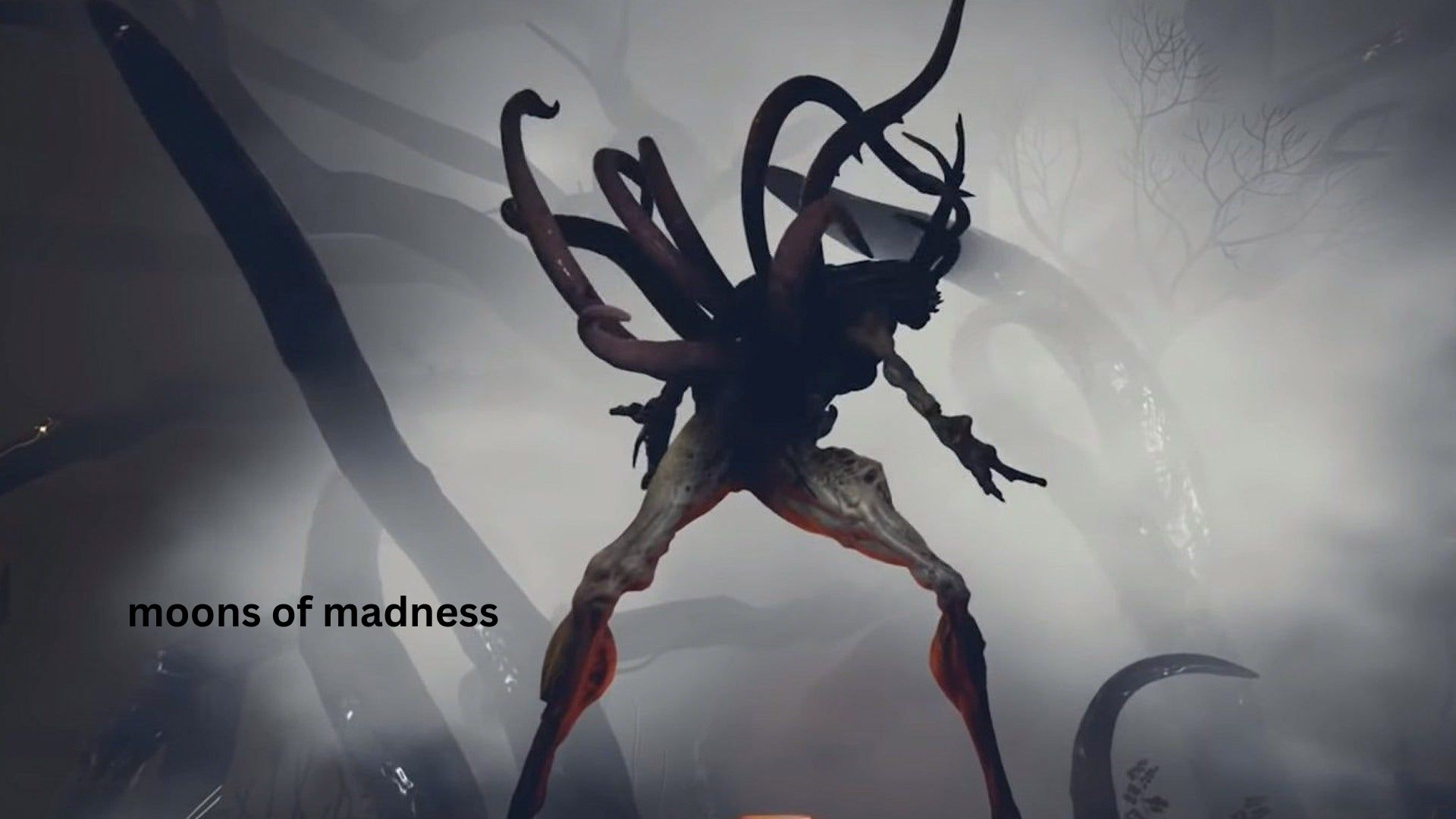
When a horror game leaves you staring at a locked door, wondering whether you missed a tiny clue three rooms earlier, the problem is rarely the monster. It is usually understanding how the game wants you to think. Moons of Madness is exactly that kind of experience. Developed by Rock Pocket Games, this 2019 psychological horror adventure combines science fiction, Lovecraftian themes, exploration, environmental puzzles, and a story designed to make you question what is actually happening.
If you are considering playing Moons of Madness, trying to understand its ending, or simply wondering whether it is worth your time, this guide breaks down the important details without relying on vague descriptions. It explains the gameplay, story premise, atmosphere, puzzles, horror mechanics, ending, connection to The Secret World, and the practical things that can make the experience more enjoyable.
The biggest thing to understand is that Moons of Madness is not primarily an action horror game. It is a slow-burn psychological adventure where observation, atmosphere, and uncertainty matter more than combat.
What Is Moons of Madness?
Moons of Madness is a first-person psychological horror adventure game released in 2019. It was developed by Rock Pocket Games and published by Funcom.
The game places you in the role of Shane Newehart, an engineer stationed on Mars. Your job initially appears straightforward: maintain the remote research facility and keep its systems functioning.
That simple setup gradually falls apart.
Strange events begin occurring around the facility. Equipment malfunctions, communications become unreliable, and Shane starts experiencing disturbing visions and increasingly impossible situations.
The game then moves beyond conventional science fiction into cosmic horror, drawing heavily from the themes associated with H. P. Lovecraft.
Is Moons of Madness an action game?
Not really.
There are horror games where the main attraction is fighting enemies. Moons of Madness takes a different approach.
Its core experience involves:
- Exploring the Mars facility
- Solving environmental puzzles
- Operating machinery
- Reading documents and examining surroundings
- Managing equipment
- Avoiding or surviving frightening encounters
- Following Shane’s increasingly unreliable perception
- Discovering what happened to the mission
This distinction is important before playing. If you expect constant combat, you may find the game surprisingly slow. If you enjoy atmospheric exploration and psychological horror, that slower pace becomes one of its strengths.
The Story and Setting
The story begins at a Mars research facility belonging to the Invictus mission.
Shane Newehart is responsible for keeping the facility operational. The location is isolated, which immediately creates a classic horror problem: when something goes wrong, there is nowhere nearby to escape to.
At first, the dangers appear explainable.
A broken system can be repaired. A missing crew member can potentially be located. A malfunctioning piece of equipment can theoretically be diagnosed.
But the further Shane progresses, the less satisfying those explanations become.
The facility itself starts becoming part of the horror. Familiar rooms become threatening because the player can no longer be completely certain that they are seeing the environment normally.
This is where the game’s psychological side becomes particularly important.
How the Horror in Moons of Madness Works
Moons of Madness does not depend entirely on jump scares.
Instead, it uses several different types of fear.
Isolation
Mars is already an inherently hostile environment.
There is no normal human civilization outside the facility. The landscape is enormous, empty, and deadly. Even before anything supernatural happens, the setting creates vulnerability.
Psychological uncertainty
One of the game’s most effective ideas is uncertainty about Shane’s perception.
When something strange happens, the natural reaction is to ask:
Did this actually happen?
That question becomes increasingly important as the story develops.
Environmental horror
The game frequently turns ordinary spaces into unsettling ones.
A laboratory, corridor, maintenance area, or greenhouse can initially feel safe because you understand its purpose. Once something impossible happens there, that familiarity works against you.
Cosmic horror
The deeper horror comes from encountering things that do not fit comfortably into human understanding.
Rather than presenting evil as simply “a monster that wants to kill you,” cosmic horror often suggests something much larger and stranger.
That is a major reason Moons of Madness feels different from a conventional science-fiction survival game.
Moons of Madness Gameplay: What Should You Expect?
The gameplay is built around exploration and interaction.
You spend considerable time walking through the facility, identifying problems, collecting information, and figuring out how different systems work.
A typical sequence might look something like this:
- You discover that a facility system is malfunctioning.
- You search the surrounding area for clues.
- You locate a tool, access point, or piece of information.
- You interact with several pieces of equipment.
- A puzzle or environmental challenge prevents immediate progress.
- Solving it opens another area.
- The story introduces a new complication.
This structure makes the game feel closer to an interactive horror story than a traditional survival-horror shooter.
Are the Puzzles Difficult?
Most puzzles are manageable once you understand what the game is asking you to observe.
The biggest difficulty is sometimes not solving the puzzle itself but recognizing the intended interaction.
A useful approach is to avoid randomly clicking on everything.
Instead:
- Read documents you find.
- Pay attention to computer terminals.
- Look at equipment labels.
- Remember recently introduced objects.
- Check nearby rooms before backtracking.
- Consider what your character’s job would logically require.
- If something seems important, inspect it carefully.
A practical puzzle-solving rule
If you are stuck, ask:
“What changed immediately before I became stuck?”
Horror adventure games often introduce a new object, malfunction, or piece of information immediately before a puzzle becomes relevant.
This simple habit can save a surprising amount of time.
Does Moons of Madness Have Combat?
Combat is not the game’s defining feature.
The experience focuses much more heavily on exploration, environmental interaction, and psychological tension than on weapons and enemy encounters.
That means you should not approach every frightening situation expecting to shoot your way through it.
Sometimes the better strategy is simply to:
- Observe your surroundings.
- Follow the objective.
- Move carefully.
- Understand the environment.
- Avoid unnecessary panic.
This design choice also helps maintain the feeling of vulnerability.
Moons of Madness and Lovecraftian Horror
The game is strongly influenced by Lovecraftian ideas.
Lovecraftian horror typically revolves around concepts such as:
- Humanity’s limited understanding of the universe
- Ancient or incomprehensible forces
- Madness
- Isolation
- The fear of discovering knowledge that should have remained hidden
- The insignificance of human beings against cosmic forces
Moons of Madness adapts those concepts into a futuristic setting.
Instead of an isolated coastal town or an ancient mansion, the story gives you Mars, advanced technology, laboratories, and scientific research.
That combination is particularly effective because science normally represents rationality.
The game gradually places rational scientific thinking against events that seem to defy rational explanation.
The Connection to The Secret World
One detail that often confuses new players is the game’s connection to The Secret World, Funcom’s shared-world supernatural universe.
Moons of Madness exists within the same broader fictional universe, but you do not need extensive knowledge of The Secret World to understand the main story.
This is important because some players assume they need to research the wider lore before playing.
You don’t.
The game is designed to function as its own experience.
However, knowing that connection can add an interesting layer to certain references and ideas, particularly if you already enjoy Funcom’s supernatural universe.
A Deeper Look at Shane Newehart
Shane is more than simply a character walking through a scary facility.
His psychological state is central to the experience.
The game repeatedly places the player in situations where Shane’s perception becomes increasingly difficult to trust.
This creates an interesting relationship between protagonist and player.
Normally, a first-person game gives you the feeling that you directly see the world through the character’s eyes.
Here, that assumption becomes unstable.
An overlooked aspect of the storytelling
The first-person perspective is not merely a camera choice.
It is part of the storytelling.
Because you experience events through Shane’s perspective, uncertainty about Shane’s mental state becomes uncertainty for the player too.
That is one of the more effective techniques in the game and helps explain why certain scenes feel disturbing even when there is no immediate physical threat.
Three Things Moons of Madness Does Differently
1. It makes technology part of the horror
Computers, machinery, communication systems, life-support equipment, and research infrastructure are not simply background decoration.
They are essential to how you interact with the world.
That creates an unusual contrast: advanced technology is supposed to make Mars safer, yet it can also make the environment more confusing when those systems begin failing.
2. The setting creates fear before the monsters do
Mars itself is dangerous.
A damaged habitat, loss of oxygen, equipment failure, or inability to communicate can become a serious threat.
The game therefore does not have to rely on supernatural creatures every minute.
The environment has already established the possibility of death.
3. Confusion is sometimes intentional
Players occasionally interpret the game’s strange sequences as poor explanation or unclear storytelling.
But uncertainty is part of the intended experience.
Not every strange event is supposed to be immediately categorized as real, imaginary, technological, or supernatural.
That ambiguity is central to the psychological horror.
Common Mistakes Players Make
Rushing through the environment
Moving quickly can cause you to miss useful clues.
Slow down when entering a new area, particularly if the game has just given you a new objective.
Treating every strange event as a conventional puzzle
Not every unusual event has a mechanical solution.
Some sequences exist primarily to develop the story or atmosphere.
Ignoring written information
Documents and terminals can provide context that makes later events easier to understand.
You do not necessarily need to read every piece of text obsessively, but important documents are worth examining.
Expecting constant action
If you approach Moons of Madness expecting something like a shooter, you may misjudge the game.
Its strongest qualities are atmosphere, exploration, narrative tension, and psychological horror.
Is Moons of Madness Scary?
Yes, although how scary it feels depends heavily on what type of horror affects you most.
If you prefer sudden attacks and constant enemy pressure, you may find some sections relatively restrained.
If isolation, uncertainty, disturbing environments, and psychological deterioration bother you, the game can be much more effective.
Its strongest scares often come from anticipation.
You enter a room.
Something looks slightly wrong.
You continue.
The environment becomes increasingly uncomfortable.
And eventually, you realize that what you thought was a normal location is no longer normal at all.
That gradual escalation is one of the game’s best horror techniques.
How Long Does Moons of Madness Take to Finish?
The game is relatively compact compared with many large modern horror adventures.
A typical playthrough is generally around several hours, with the exact time depending on how quickly you solve puzzles, how thoroughly you explore, and how much optional material you examine.
This shorter structure works in its favor.
The game does not need to stretch its central mystery across dozens of hours. It can build tension, reveal information, escalate the horror, and bring the story to its conclusion without becoming excessively repetitive.
Understanding the Moons of Madness Ending
The ending is deliberately connected to the game’s central themes of reality, perception, scientific ambition, and cosmic horror.
Rather than treating everything that happens as a simple monster story, the conclusion asks you to reconsider what you have experienced.
The important thing to remember is that the game repeatedly blurs the boundaries between:
- Reality and hallucination
- Science and the supernatural
- Physical danger and psychological danger
- Human control and forces beyond human understanding
That ambiguity is intentional.
If the ending leaves you with questions, that does not necessarily mean you missed a straightforward explanation. Part of the experience is interpreting how the revelations fit together.
For players who prefer horror stories with completely explicit answers, this can be frustrating.
For players who enjoy discussing interpretations after finishing a game, it is one of the more interesting aspects of Moons of Madness.
Who Should Play Moons of Madness?
Moons of Madness is particularly suitable for players who enjoy:
- Psychological horror
- Lovecraftian themes
- Science-fiction horror
- First-person exploration
- Environmental puzzles
- Narrative-driven games
- Atmospheric storytelling
- Games with ambiguous elements
You may want to look elsewhere if your priority is:
- Fast-paced combat
- Extensive character customization
- Open-world exploration
- Competitive gameplay
- Complex RPG systems
- Constant action
Knowing this before buying or starting the game can make a big difference.
Practical Tips for a Better Playthrough
If you decide to play, these habits can improve the experience:
1. Use headphones if possible.
Sound design plays an important role in building tension, particularly when the environment is otherwise quiet.
2. Don’t rush objectives.
Explore nearby areas before immediately moving on.
3. Read important documents.
They often provide context that makes the story easier to follow.
4. Think logically during puzzles.
Consider what the equipment is designed to do rather than randomly testing interactions.
5. Accept uncertainty.
You do not need to explain every strange event immediately.
6. Play in manageable sessions.
Because the game relies heavily on atmosphere, playing while distracted can reduce its impact.
7. Avoid reading the ending beforehand.
The game’s psychological effect is considerably stronger when you discover its revelations yourself.
FAQ
Is Moons of Madness based on H. P. Lovecraft?
Moons of Madness is heavily inspired by Lovecraftian and cosmic-horror traditions. It uses themes such as incomprehensible forces, isolation, madness, forbidden knowledge, and humanity’s limited place in the universe. However, it is not simply a direct adaptation of a specific Lovecraft story.
Is Moons of Madness connected to The Secret World?
Yes. Moons of Madness shares a fictional universe with The Secret World. However, you can play and understand Moons of Madness without having played The Secret World first. Existing knowledge of that universe may provide additional context, but it is not required.
How long does Moons of Madness take to complete?
A normal playthrough generally takes several hours. Your completion time depends on how quickly you solve puzzles, whether you explore thoroughly, and how much optional information you investigate. Its relatively focused length helps the horror remain concentrated.
Is Moons of Madness scary or more psychological?
It is primarily atmospheric and psychological, although it includes conventional horror sequences as well. Much of its tension comes from isolation, disturbing environments, uncertainty, and the deterioration of the protagonist’s perception. Players who enjoy slow-burn cosmic horror may find it more effective than players looking for constant jump scares.
Does Moons of Madness have difficult puzzles?
Most puzzles are not extremely difficult, but some can be confusing if you overlook an interactive object or piece of information. The key is to examine your surroundings and think about what the current objective logically requires. If you’re stuck, reviewing the latest objective and checking nearby equipment is usually more productive than randomly interacting with everything.
Final Verdict: Is Moons of Madness Worth Playing?
Moons of Madness is worth playing if you want a focused science-fiction horror experience built around atmosphere, exploration, psychological uncertainty, and Lovecraftian ideas.
Its greatest strength is not combat or mechanical complexity. It is the way the game transforms a familiar science-fiction concept—humans establishing a research facility on Mars—into something increasingly unsettling.
The Mars setting, technological failures, psychological elements, and cosmic-horror themes work together to create a distinctive atmosphere. Its shorter length also means the experience remains relatively focused rather than becoming an enormous survival-horror campaign.
The most useful way to approach Moons of Madness is to stop expecting every mystery to behave like a conventional puzzle. Explore carefully, pay attention to the environment, follow the story, and allow some uncertainty to remain.
If you enjoy horror that makes you question what is real rather than simply asking you to defeat what is chasing you, Moons of Madness offers a memorable experience.