

South Park Creators Delay New Episode: What Happened
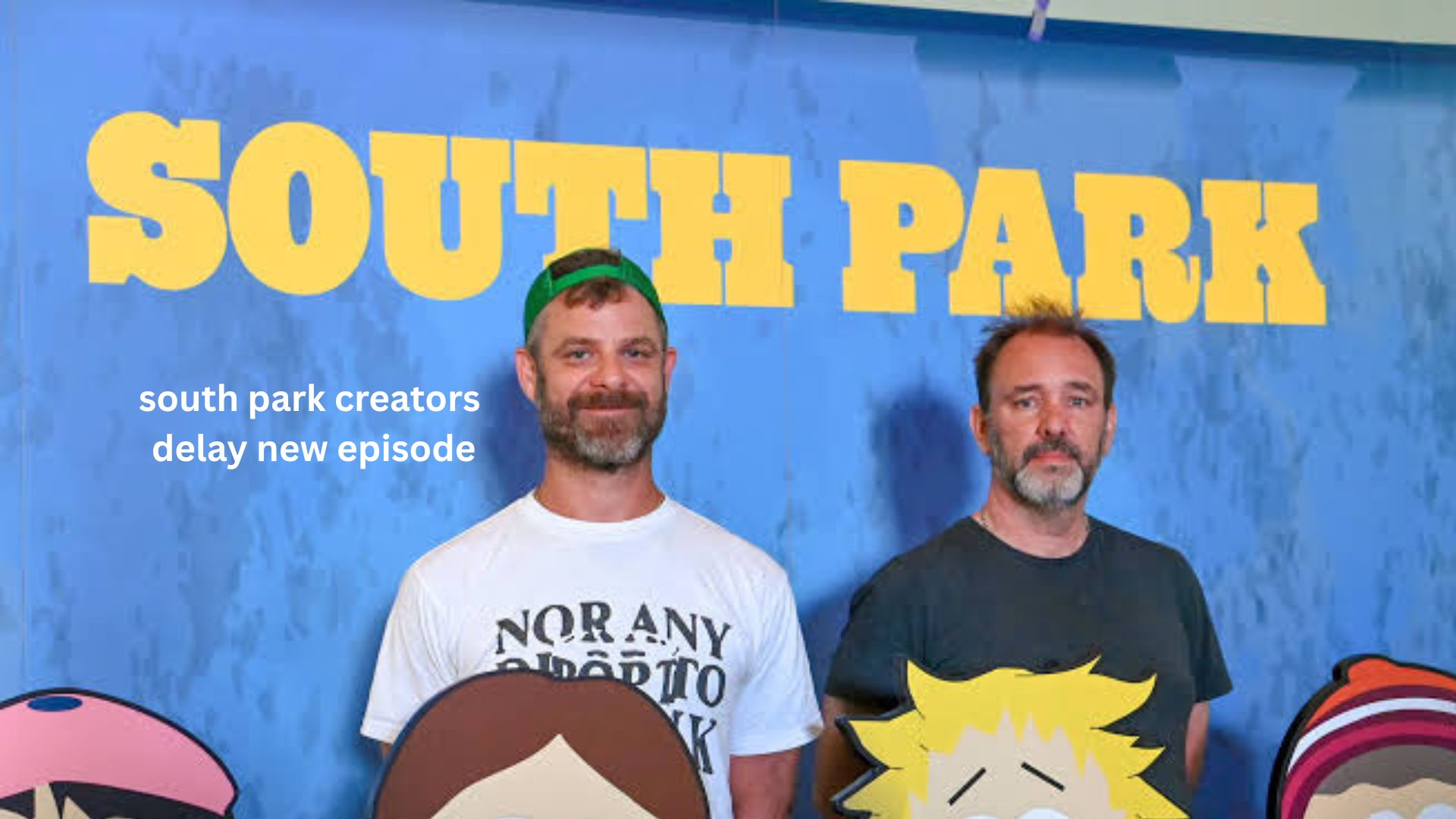
If you were waiting for a new South Park episode and suddenly discovered that nothing new was airing, you were not alone. The phrase “South Park creators delay new episode” refers most notably to a September 2025 production delay that caught viewers by surprise because the episode was postponed only hours before its scheduled broadcast. Trey Parker and Matt Stone, the show’s creators, acknowledged that the episode simply was not finished on time.
The timing created an additional layer of confusion. The delayed episode was scheduled to follow an especially controversial period for the series, leading some fans to wonder whether Comedy Central had pulled it because of its subject matter or outside pressure. However, Parker and Stone later made clear that censorship was not responsible for the missed broadcast.
This article explains what actually happened, why South Park sometimes works under unusually tight production deadlines, what the delay meant for the release schedule, and why fans should be careful about assuming that every sudden programming change is caused by controversy.
Why Did the South Park Creators Delay the New Episode?
The immediate reason was straightforward: the episode was not completed in time for its scheduled broadcast.
Trey Parker and Matt Stone publicly accepted responsibility for the delay. Their explanation was essentially that the production team had left too much work until too close to the deadline, and this time they missed it. Comedy Central subsequently moved the episode to the following week.
That explanation is important because South Park is famous for its unusually fast production process.
Unlike many animated series that can spend months or even longer preparing individual episodes, South Park has historically embraced a compressed production schedule. The approach allows Parker, Stone and their writers to respond to current events while those events are still fresh.
The advantage is obvious: the show can make jokes about something that happened recently rather than something that happened half a year ago.
The disadvantage is equally obvious: there is very little room for error.
If writing takes longer than expected, animation falls behind. If revisions are required late in the process, other departments have less time to finish their work. A problem that might be absorbed easily on a conventional animated production can become a broadcast problem when the deadline is only days away.
Was South Park Censored?
No. At least according to the creators, censorship was not the reason for this particular delay.
The timing understandably caused speculation. The postponed episode was supposed to be the first new installment after a highly controversial period surrounding the show and its treatment of political subjects.
Some viewers therefore wondered whether the episode had been completed but was being held back.
Matt Stone later pushed back against that theory, explaining that nobody had pulled or censored the episode and that the production simply had not finished it.
This distinction matters.
There are two very different situations:
- A completed episode is withheld by a network or platform.
- An unfinished episode misses its production deadline.
The September 2025 South Park situation belonged to the second category.
That does not mean censorship has never been a subject surrounding South Park. The series has repeatedly challenged networks, politicians, celebrities and cultural institutions. But a controversial subject and a production delay are not automatically connected.
Why Does South Park Produce Episodes So Quickly?
The show’s production model is one of the biggest reasons it can remain relevant to current events.
A traditional animated production can involve a long chain of steps:
- Story development
- Script writing
- Recording
- Storyboarding
- Animation
- Editing
- Sound
- Final approvals
- Broadcast preparation
South Park compresses much of that process.
This creates a distinctive creative advantage. Suppose a major political story dominates the news on Monday. A conventional animated show might not be able to comment on it until months later. South Park, by comparison, has historically been structured to react much more quickly.
But speed comes with risk.
A useful way to understand the production system is to think of it like a newspaper operating under a television deadline. The closer the final deadline gets, the more valuable every hour becomes.
If the script is still changing late in the process, the problem does not remain limited to the writers. It can affect recording, animation, editing and final delivery.
That is why a missed deadline can result in something unusual for viewers: an empty slot where a new episode was expected.
Why Fans Thought the Delay Might Be Political
The speculation was understandable because of the circumstances surrounding the 2025 episode.
South Park had been making headlines for its political satire, including jokes involving Donald Trump and other public figures. The series also attracted renewed attention after an earlier episode mocked conservative commentator Charlie Kirk. After Kirk’s death in September 2025, discussion around the show’s treatment of him intensified.
The delayed episode was scheduled soon afterward.
From a viewer’s perspective, the sequence of events naturally raised questions:
Was the episode too controversial? Had the network intervened? Was the show being pressured to change something?
Those were reasonable questions to ask, but they were not supported by the creators’ explanation.
Parker and Stone instead accepted responsibility for the missed deadline.
This is an important lesson when following entertainment news: timing can create a compelling theory without proving that theory is true.
The Real Problem With South Park’s Last-Minute Production Style
The same production method that makes South Park exciting can also make it vulnerable to delays.
Consider a simplified example.
Imagine an episode is scheduled for Wednesday night. The creative team continues refining jokes close to the deadline because current events are changing rapidly. A political story develops on Monday, creating an opportunity for a new joke. The writers adjust the script.
That one change can trigger several additional tasks.
The voice recording may need to change.
Animation may need to be altered.
Timing may need to be adjusted.
Editing may need to be redone.
A small creative decision can therefore become a production chain reaction.
This is one of the less obvious reasons the 2025 delay is useful to understand. The problem was not necessarily a dramatic crisis behind the scenes. It can simply be the natural consequence of a production philosophy built around being extremely current.
What Happened to the Delayed Episode?
The postponed episode was moved to September 24, 2025, one week after its original scheduled date. Comedy Central then returned to its planned pattern of releasing subsequent episodes on a less frequent schedule.
The revised schedule illustrates something important for fans: a one-week delay does not necessarily mean a season has been cancelled or fundamentally disrupted.
Television schedules can move for many reasons, including:
- Production deadlines
- Network scheduling decisions
- Special programming
- Holiday periods
- Broadcast strategy
- Streaming arrangements
- Creative changes
A delayed episode should therefore be treated as a scheduling event unless the network or creators indicate something more serious.
How Rare Was the Delay?
For a series known for last-minute production, actually missing a broadcast deadline is relatively unusual.
That is part of what made the announcement notable.
The South Park production method is intentionally aggressive. The team has repeatedly demonstrated an ability to turn around material at remarkable speed, but a system operating close to its limits will occasionally encounter a failure point.
Think of it like a restaurant that promises extremely fast service. Most customers receive their meals quickly, but when the kitchen suddenly becomes overloaded, one order can fall behind.
The important point is that the unusual event is not necessarily evidence that the entire system has stopped working.
A Common Mistake: Assuming Every Delay Means Censorship
One of the biggest misconceptions surrounding South Park delays is the assumption that controversy must be responsible.
That conclusion is tempting because the show is deliberately provocative.
However, there is a major difference between:
“The episode concerns a controversial subject.”
and
“The episode was delayed because someone objected to the subject.”
The first can be established from the show’s content.
The second requires evidence.
In the September 2025 case, the available explanation from Parker and Stone was that the episode was simply not completed in time. Matt Stone subsequently reinforced that explanation by saying the episode had not been pulled or censored.
For readers trying to understand entertainment stories accurately, this is a useful rule: separate confirmed production information from fan speculation.
Another Important Insight: South Park’s Speed Is Part of Its Risk
There is a deeper reason the delay attracted so much attention.
The production system that makes South Park culturally relevant also creates the possibility of sudden scheduling problems.
That creates a trade-off:
| Production approach | Main advantage | Main risk |
|---|---|---|
| Long animation schedule | More time for refinement | Difficult to respond to current events |
| Rapid production | Extremely topical stories | Greater deadline pressure |
| Last-minute revisions | Fresh jokes and references | Less time for production |
| Fixed long-term scripts | Predictable workflow | Material can become outdated |
South Park has historically leaned heavily toward the rapid-production side.
That is part of the show’s identity rather than merely an inconvenience.
What Should Fans Do When a New Episode Suddenly Disappears?
If you’re expecting a new South Park episode and it does not appear, avoid relying immediately on social-media rumors.
A better approach is:
- Check the official Comedy Central schedule.
- Look for an announcement from South Park Studios or the network.
- Check whether the change affects only one episode or the entire season.
- Look for a stated production reason.
- Treat claims of censorship as unconfirmed unless credible evidence supports them.
This approach is particularly useful with shows that deliberately work close to their production deadlines.
A social-media post saying “the episode was banned” may spread thousands of times before anyone establishes whether the episode was even finished.
Does the Delay Mean South Park Is Ending?
No. A delayed episode does not indicate that South Park is ending.
In fact, the series continues to have a substantial future. In 2026, South Park Studios announced that Season 29 would premiere on September 16, 2026, with additional episodes scheduled for September 30, October 14, October 28, November 11 and November 25.
The announcement also confirmed that new episodes would continue to be released through Comedy Central and Paramount+.
So if you encounter the phrase “South Park creators delay new episode” today, it is important to identify which delay the headline is discussing. The widely reported production delay occurred in September 2025; it should not automatically be interpreted as a current announcement that the series has stopped producing episodes.
What the 2025 Delay Reveals About the Show’s Creative Process
There are several less obvious lessons behind the incident.
1. Being topical can be a production liability
The ability to respond quickly to breaking news gives South Park its distinctive voice. But current events do not wait for production schedules. When the creative team wants to incorporate something that happened only days earlier, the deadline becomes much harder to manage.
2. A delay can actually demonstrate creative control
Parker and Stone taking responsibility for the missed deadline is significant. Rather than allowing speculation to dominate the story, they publicly explained that the episode was not finished.
That does not make the delay desirable, but it provides a clearer picture of how the creators view their production process.
3. Controversy can distort how audiences interpret ordinary production problems
Because South Park routinely deals with sensitive subjects, viewers may naturally interpret unusual events through a political lens.
The episode delay demonstrates why context matters. A controversial show can experience an ordinary production problem.
Those two facts can exist at the same time.
What Is the Best Way to Follow South Park Release Changes?
For viewers, the simplest strategy is to distinguish between production news and episode-release news.
Production news explains what the creators are doing behind the scenes.
Release news tells you when you can actually watch the next episode.
They are related, but they are not identical.
If a new episode is delayed, the most useful information is:
- The original broadcast date
- The new broadcast date
- Whether the episode was completed
- Whether the delay affects additional episodes
- Whether Comedy Central or the creators gave a reason
That information answers the practical question most fans actually have: “When can I watch it?”
Frequently Asked Questions
Why did the South Park creators delay the new episode?
The September 2025 delay happened because Trey Parker and Matt Stone said the episode was not completed in time for its scheduled broadcast. They accepted responsibility and indicated that the production had been left too close to the deadline. Matt Stone later clarified that the episode had not been pulled or censored.
Was the delayed South Park episode censored?
There was no indication from the creators that censorship caused the September 2025 delay. Because the delay happened during a politically sensitive period, fans understandably speculated about outside interference. However, Parker and Stone said the production team simply failed to finish the episode on time.
When did the delayed South Park episode air?
The delayed Season 27 episode was moved from September 17, 2025, to September 24, 2025. Comedy Central then continued the season using a revised release pattern.
Why does South Park make episodes so close to their air dates?
The show’s fast production model helps Parker and Stone respond to current events while they are still relevant. That speed is a major creative advantage, but it also leaves less room to recover when writing, recording, animation or editing takes longer than expected. The 2025 delay is a clear example of the downside of that approach.
Is South Park still making new episodes?
Yes. The series remains active, and South Park Studios announced a Season 29 premiere for September 16, 2026, followed by additional scheduled episodes.
Does a South Park delay mean the show is being cancelled?
No. A missed production deadline is not the same thing as cancellation. The 2025 delay resulted in an episode being moved to a later date, while the series continued and subsequently received further seasons and scheduled releases.
Conclusion
The South Park creators’ delay of a new episode was ultimately much less mysterious than some early fan theories suggested. In the major September 2025 incident, Trey Parker and Matt Stone said they simply did not finish the episode in time, and later comments specifically rejected the idea that censorship had caused the delay.
The situation also reveals something fundamental about South Park: its extraordinary ability to respond to current events comes with extraordinary production pressure. Working close to the deadline can produce some of the show’s freshest comedy, but it also means that occasionally the deadline wins.
For fans, the practical lesson is simple: when a new episode unexpectedly disappears from the schedule, check the official release information before assuming the worst. And when you see a headline about a South Park delay, always check the date—because a 2025 production delay and the show’s 2026 release schedule are two very different stories.