
de Blob: The Colorful Game Worth Rediscovering
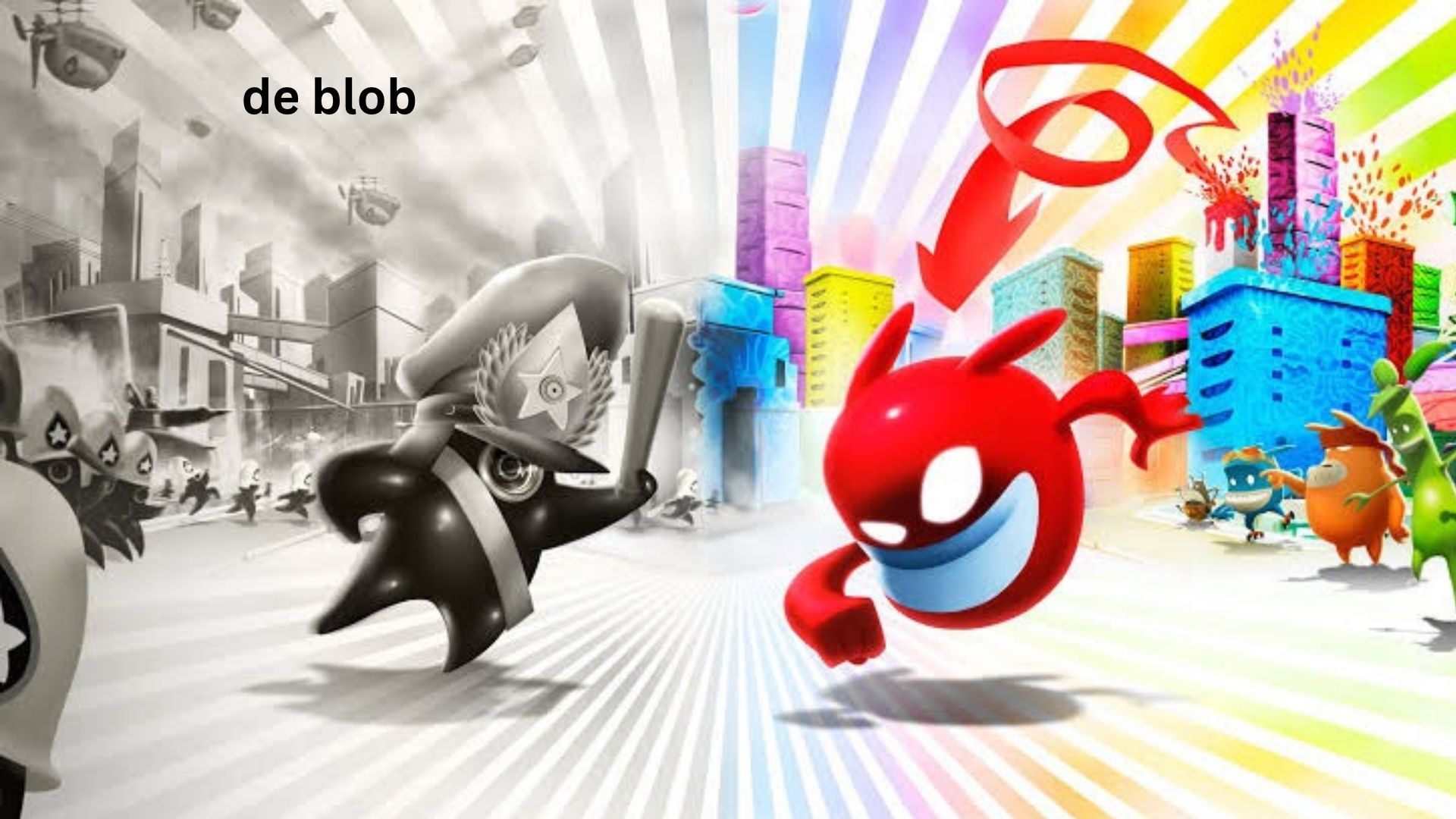
If you enjoy platform games but are tired of titles that feel predictable, de Blob offers a surprisingly different experience. Instead of simply defeating enemies and reaching the end of a level, you play as a colorful, bouncing character whose main job is to bring a lifeless city back to life. The basic idea sounds simple, but the way color, movement, puzzles, exploration, and timing work together gives the game a distinctive personality.
Originally developed by Blue Tongue Entertainment and published by THQ, de Blob became known for turning painting into the central gameplay mechanic. The story takes place in Chroma City, where the authoritarian I.N.K.T. Corporation has removed color from the environment and oppressed its inhabitants, the Raydians. Your character, de Blob, fights back by collecting paint and spreading color throughout the city.
What makes the game interesting today is not simply its colorful presentation. Its strongest idea is that progress is something you can see happening around you. A gray building becomes colorful because of what you do, making exploration feel meaningful rather than decorative.
This guide explains how de Blob works, why its gameplay remains unusual, what beginners should know, and why the game deserves attention from anyone interested in creative platformers.
What Is de Blob?
de Blob is a 3D puzzle-platform game centered on movement, paint, exploration, and environmental transformation. The player controls Blob, an amorphous character capable of rolling, bouncing, jumping, smashing, and painting objects throughout Chroma City.
The game’s original Wii release arrived in 2008, although the project had earlier roots as a student-developed PC game. Later versions expanded its availability to platforms including PC, PlayStation 4, Xbox One, and Nintendo Switch.
The central concept is straightforward:
- Find paint.
- Absorb a color.
- Move through the environment.
- Paint buildings and objects.
- Complete missions and objectives.
- Earn points.
- Liberate more of Chroma City.
That sounds like a traditional platforming formula, but the painting mechanic changes how you approach almost everything.
How Does de Blob Gameplay Work?
The most important thing to understand is that Blob’s body acts almost like a moving paintbrush.
At the beginning of a level, Blob has limited paint. Paintbots around the city provide different primary colors, including red, blue, and yellow. By combining colors, you can create additional colors such as green, orange, purple, and brown.
This creates a simple but useful gameplay loop.
Collecting Paint
Paint is your primary resource.
When Blob collects paint, his body takes on the corresponding color. That color can then be transferred to environmental objects by touching them.
However, paint is not unlimited.
As Blob paints the city, his paint supply decreases. If he runs out, he becomes vulnerable and must find more paint or water to continue safely.
Painting the Environment
Painting is more than a visual effect.
Buildings, streets, walls, objects, and other parts of the environment can change from dull gray to bright colors. This transformation is directly connected to objectives and scoring.
The result is satisfying because the player’s actions have an immediate environmental consequence.
Instead of simply seeing a percentage increase on a menu, you can look around and literally see how much of the city you have changed.
Movement Matters
Blob’s movement is deliberately playful.
Rolling, bouncing and jumping are not just transportation methods. They are part of how you interact with the environment.
A good player learns to combine movement with painting rather than treating them as separate mechanics.
For example, a well-timed bounce can allow Blob to reach a higher surface while simultaneously spreading color across several objects.
The Story Behind Chroma City
The story gives the unusual gameplay a clear purpose.
Chroma City has been stripped of its color by the I.N.K.T. Corporation. The organization wants to impose a controlled, black-and-white world, while Blob and the Color Revolutionaries resist that system.
Comrade Black leads the opposition, while the Inkies serve as the primary enemies.
The story is intentionally exaggerated and cartoon-like, but there is an interesting idea underneath it: color represents freedom, creativity, and individuality.
That theme makes the painting mechanic feel more important than it initially appears.
You are not simply completing arbitrary painting challenges. You are gradually reversing the transformation imposed on the city.
Why the Color System Is More Important Than It Looks
One of the most interesting aspects of de Blob is how it makes color a gameplay resource rather than merely a visual design choice.
Suppose you need a particular color to complete an objective. You cannot necessarily grab it immediately.
You may need to:
- Find the correct paint source.
- Mix primary colors.
- Avoid water that removes your current color.
- Reach the objective before your paint supply disappears.
- Plan your route through the environment.
This creates small decisions throughout a level.
A Practical Beginner Tip
Don’t immediately spend every color point you collect.
Before painting a large section, look around and consider what objectives are nearby. Sometimes preserving a particular color for a mission is more useful than painting every object you encounter.
This is one of those small habits that makes the game easier without requiring advanced skill.
What Makes de Blob Different From Typical Platform Games?
Many 3D platformers focus heavily on collecting objects, defeating enemies, or reaching a specific destination.
de Blob adds another layer: environmental restoration.
Consider the difference.
In a conventional platformer:
You enter an area → complete an obstacle → collect something → move forward.
In de Blob:
You enter a gray area → collect paint → transform the environment → complete objectives → unlock more progress.
The second approach makes exploration feel more purposeful.
The environment is not simply a background. It is part of the objective.
Missions and Objectives
The game contains numerous activities that encourage players to interact with Chroma City in different ways.
Some objectives focus on painting.
Others involve rescuing citizens, reaching particular areas, defeating enemies, or completing tasks within a time limit.
The game’s structure is divided into levels and sections, with gates requiring players to accumulate enough points before progressing.
This creates an important balance.
You have freedom to explore, but the game still gives you measurable goals.
Why This Structure Works
Completely open exploration can sometimes feel directionless.
Completely linear platforming can feel restrictive.
de Blob sits somewhere between the two. You have room to experiment, but missions and score requirements keep you moving toward a clear objective.
The Role of Water and Paint Management
One mechanic that new players should understand early is the relationship between paint and water.
Water can remove Blob’s current color. That might sound inconvenient, but it creates useful gameplay tension.
Imagine that you have spent several minutes collecting a specific color and are approaching an important objective. A careless jump into water can remove your color and force you to repeat part of the process.
This teaches an important lesson:
Don’t treat every environmental hazard as something to avoid blindly. Learn what it does first.
Water can be a problem, but understanding its location helps you plan routes more effectively.
de Blob on Modern Platforms
Although the game originated around the Wii generation, it was later brought to modern platforms.
The PC version was released in 2017, followed by PlayStation 4 and Xbox One versions. Nintendo Switch received de Blob in June 2018.
The Nintendo Switch version supports single-system play for up to four players and includes multiple multiplayer modes.
The Xbox version likewise supports local multiplayer for two to four players.
This matters because de Blob is not limited to being a nostalgic single-player experience. Its local multiplayer options give the game another reason to be played with friends or family.
Is de Blob Good for Beginners?
Yes, particularly if you enjoy colorful and accessible platform games.
The basic controls are easy to understand:
- Move Blob.
- Collect paint.
- Change color.
- Paint objects.
- Complete objectives.
- Avoid hazards.
- Explore the environment.
The challenge comes from combining these simple actions effectively.
That makes the game approachable without making it completely shallow.
A younger player can enjoy the colors and bouncing movement, while an experienced player can pay more attention to efficient routes, scores, color management, and mission completion.
Common Mistakes New Players Make
1. Painting Everything Immediately
It is tempting to paint every gray object you see.
But this can waste your paint supply.
Instead, prioritize objectives first and explore afterward.
2. Ignoring the Color Combination System
Red, blue, and yellow are not just separate options. They form the foundation for creating other colors.
Learning basic color combinations makes certain objectives considerably easier.
3. Forgetting About Paint Points
Your color supply is limited.
If Blob becomes too dry, your ability to continue safely is affected. Keep an eye on your resources rather than concentrating only on the objective marker.
4. Treating Exploration as Optional
Some players rush directly toward missions.
That misses part of the game’s appeal.
Exploring can reveal paint sources, alternative routes, collectibles, and opportunities to improve your score.
5. Playing Too Fast
The game rewards movement, but reckless movement can cause unnecessary mistakes.
Sometimes the best strategy is to stop for a moment, identify nearby paint sources, and decide where you want to go next.
Three Underappreciated Things About de Blob
1. The Environment Is a Progress Meter
One of the smartest design choices is that the city itself communicates progress.
As you restore color, the environment becomes visibly different.
This gives the player a psychological reward that a conventional score counter cannot provide.
2. Color Creates Route Planning
Color is not merely decoration.
Because different objectives can require different colors, your route through a level can change depending on what Blob is carrying.
That makes navigation more strategic than it first appears.
3. The Game Turns Restoration Into a Reward
Many games make destruction feel satisfying.
de Blob does something different.
It makes restoration satisfying.
You do not simply defeat an enemy and move on. You watch a previously lifeless section of the city become vibrant again.
That positive feedback remains one of the game’s most memorable qualities.
Is de Blob Still Worth Playing?
For players who enjoy modern games, the answer depends on what they expect.
If you want highly realistic graphics, complex RPG systems, or competitive online gameplay, de Blob may feel dated.
But if you value creative mechanics, colorful environments, accessible platforming, local multiplayer, and unusual game concepts, it remains interesting.
Its core idea has aged particularly well because the gameplay does not depend entirely on technological spectacle.
The basic question is still enjoyable:
How much of this gray city can I bring back to life?
de Blob vs. Traditional 3D Platformers
| Feature | de Blob | Traditional 3D Platformer |
|---|---|---|
| Main focus | Painting and exploration | Platforming and collectibles |
| Environment | Changes through gameplay | Often mostly fixed |
| Resource management | Paint and color | Usually limited |
| Puzzle element | Strong | Varies |
| Combat | Present but secondary | Often more central |
| Exploration | Important | Depends on the game |
| Multiplayer | Local multiplayer available | Varies considerably |
This comparison explains why de Blob can feel unusual even after only a few minutes of play.
It borrows familiar platforming ideas but gives them a different purpose.
FAQ
What is de Blob about?
de Blob is a 3D puzzle-platform game about restoring color to Chroma City after the I.N.K.T. Corporation turns the city gray. Players control Blob and use paint to transform buildings, streets, and other parts of the environment. The story combines cartoon humor with themes of creativity and resistance.
What platforms can you play de Blob on?
The game has appeared on several platforms, including Wii, PC, PlayStation 4, Xbox One, and Nintendo Switch. The modern releases make it easier for players who missed the original Wii version to experience the game. Nintendo’s Switch release launched on June 26, 2018.
How does the color system work in de Blob?
Blob collects paint from different sources and changes into the corresponding color. Primary colors can be combined to produce additional colors, giving players more options when completing objectives. Managing those colors efficiently is an important part of the gameplay.
Is de Blob multiplayer?
Yes. The game includes local multiplayer, with versions supporting up to four players. The Nintendo Switch version offers eight different multiplayer modes, making it more than just a single-player platformer.
Is de Blob suitable for children?
The game is designed around colorful cartoon-style action and relatively accessible gameplay. Nintendo lists the Switch version as PEGI 3, while the Xbox listing rates it Everyone with mild cartoon violence. Parents should still consider the specific rating system used in their country.
Conclusion
de Blob stands out because it turns a simple idea—adding color to a gray world—into the foundation of an entire game.
Its strongest feature is not any single character, enemy, or level. It is the relationship between movement, color, exploration, and visible environmental change. Every successful painting action makes Chroma City feel more alive, while the color system adds a layer of planning that prevents the experience from becoming a simple sightseeing exercise.
For beginners, the best approach is to manage paint carefully, learn how colors combine, explore before rushing forward, and use the environment to plan your movements.
For returning players, the game offers something even more interesting: a reminder that creative game mechanics do not always need complicated systems to be memorable.
Sometimes, giving a gray city its color back is enough.