

Modern Warfare 2: A Practical Guide to the Game
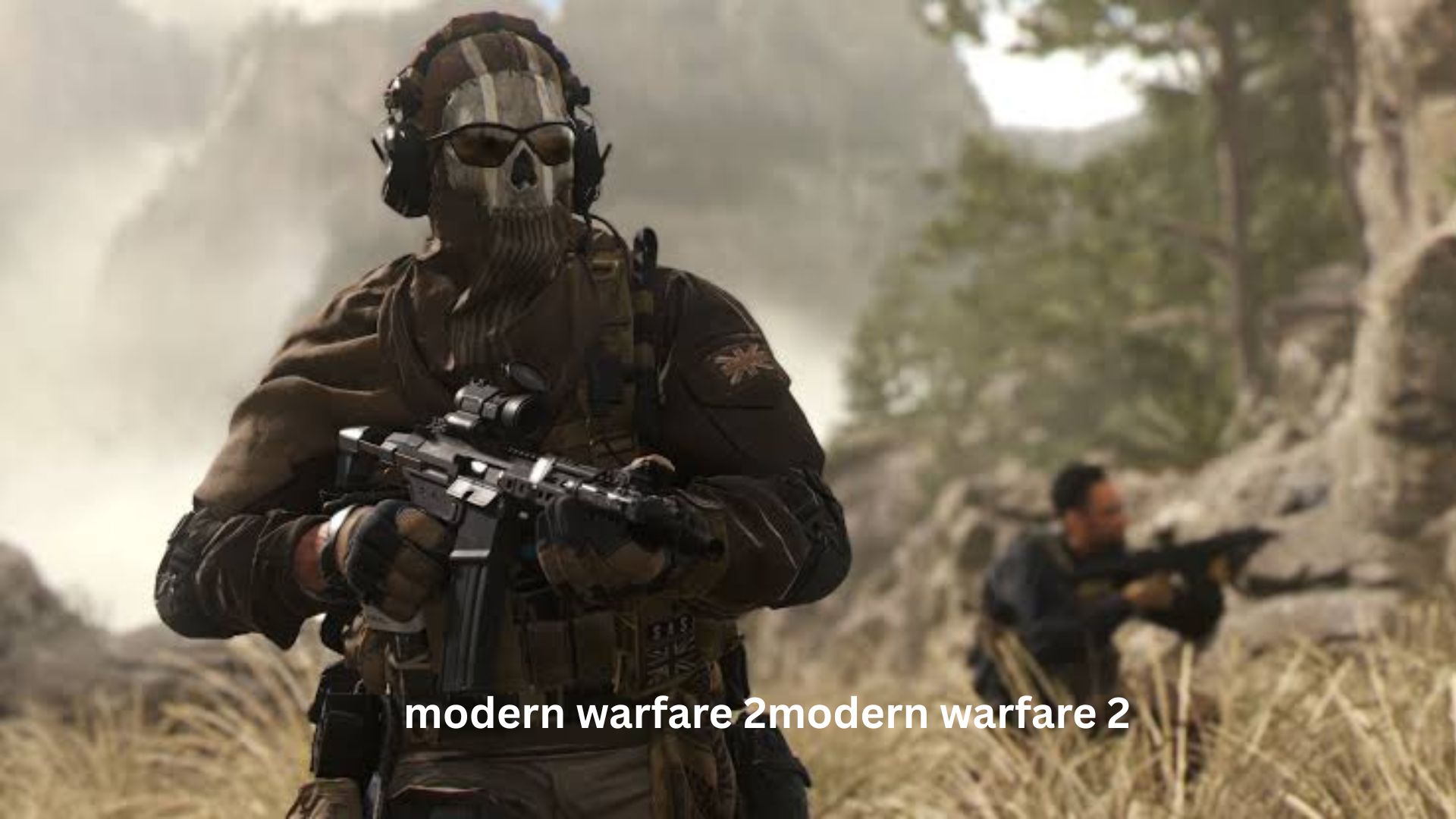
If you search for Modern Warfare 2, you may be looking for one of two very different Call of Duty experiences: the original Call of Duty: Modern Warfare 2 from 2009 or Call of Duty: Modern Warfare II from 2022. Both are major entries in the franchise, but they play very differently and appeal to different kinds of players. That distinction matters if you are trying to decide which game to play, understand its mechanics, or improve your multiplayer performance.
This guide focuses mainly on the 2022 game while also explaining where the 2009 classic fits into the picture. Rather than simply listing weapons, maps, and modes, the goal is to explain what actually makes Modern Warfare 2 enjoyable—and sometimes frustrating—in real play. You will learn how the multiplayer system works, how to build a practical loadout, how to improve your gunfights, what beginners commonly get wrong, and which habits make the biggest difference when matches become competitive.
What Is Modern Warfare 2?
Call of Duty: Modern Warfare II is the 2022 sequel to the 2019 reboot Call of Duty: Modern Warfare. It combines a single-player campaign with multiplayer, cooperative features, and a large progression system built around weapons, attachments, challenges, and unlocks.
The title is easy to confuse with the 2009 Modern Warfare 2, which is one of the most influential games in Call of Duty history. The 2009 version is part of the original Modern Warfare storyline, while the 2022 game belongs to the rebooted continuity.
A simple way to separate them is:
- Modern Warfare 2 (2009): the classic sequel featuring characters such as Soap, Price, and Ghost in the original timeline.
- Modern Warfare II (2022): a reboot-era sequel with a redesigned storyline, updated mechanics, and a more modern multiplayer system.
If someone talks about legendary multiplayer memories, controversial moments, or the original version’s campaign, they are often referring to the 2009 release.
Why Modern Warfare II Feels Different
One of the biggest differences between Modern Warfare II and older Call of Duty games is its emphasis on tactical decision-making.
The game still rewards fast reactions, but simply running toward every fight is not always the best approach. Weapon handling, movement, positioning, audio awareness, and attachment choices can all influence the outcome.
This creates an important lesson for new players:
Winning more gunfights is not always about aiming faster. It is often about starting the gunfight from a better position.
For example, imagine two players entering the same hallway. One runs directly through the center while the other approaches from an angle that gives partial cover and limits the number of directions an enemy can attack from. Even if both players have similar aim, the second player has created a much easier fight.
That principle applies across multiplayer modes.
Understanding the Core Multiplayer Loop
Modern Warfare II’s multiplayer progression revolves around using weapons, earning experience, unlocking attachments, and developing loadouts that fit your preferred playstyle.
The basic loop looks like this:
- Choose a weapon class.
- Play matches and earn weapon experience.
- Unlock attachments and additional equipment.
- Adjust the weapon to suit your style.
- Learn maps and common engagement locations.
- Refine your positioning and movement.
- Repeat with different weapons and roles.
The important part is not simply unlocking everything.
A common beginner mistake is constantly changing weapons because another player killed them with something that looked powerful. That usually makes improvement harder because you never spend enough time learning one weapon’s recoil, effective range, reload timing, and handling.
Pick a reliable weapon and learn its behavior first.
How to Build a Better Loadout
A good loadout should solve a problem rather than simply contain the most popular attachments.
For an assault rifle, for example, you might prioritize:
- Recoil control
- Moderate aiming speed
- Reliable damage range
- A manageable optic
- Enough mobility for close-to-medium engagements
For a submachine gun, the priorities may change:
- Faster movement
- Quick aim-down-sight speed
- Close-range effectiveness
- Fast sprint-to-fire response
- Manageable recoil
The mistake is trying to maximize every statistic simultaneously.
Most attachments involve trade-offs. Increasing recoil control can affect mobility or aiming speed. Improving range may make a weapon feel slower. A heavier build might perform well at distance but become awkward when an opponent suddenly appears around a corner.
The Best Attachment Is Often the One You Can Control
A theoretical damage advantage means very little if the weapon becomes uncomfortable to use.
Suppose one build has excellent range but produces noticeable visual recoil. Another has slightly less range but stays easy to control. For many players, the second option will produce better real-world results.
That is an important practical distinction:
A statistically strong weapon is not necessarily a practically strong weapon for you.
Map Knowledge Can Beat Better Aim
Players often concentrate heavily on improving their aim while ignoring map knowledge.
That is a mistake.
Once you understand a map, you begin predicting where opponents are likely to appear. You also learn which routes are dangerous, which positions provide useful cover, and where players commonly stop to reload or challenge an angle.
Instead of reacting to every enemy, you start anticipating them.
For example, if your team has pushed deeply into one side of a map, you should consider the possibility of an enemy rotation from another route. A player who understands that flow can prepare for the flank before it happens.
This is one of the less obvious ways experienced players seem to have “faster reactions.”
Sometimes they are not reacting faster.
They are expecting the enemy sooner.
Movement: Speed Is Not Everything
Modern Call of Duty games place significant emphasis on movement, but beginners sometimes misunderstand what good movement means.
Movement is not simply running around as quickly as possible.
Useful movement includes:
- Changing direction unpredictably during close fights
- Using cover between engagements
- Avoiding unnecessary exposure
- Maintaining momentum when rotating
- Knowing when to stop moving and hold an angle
- Choosing movement based on weapon type
A player carrying a close-range weapon can often benefit from aggressive movement. Someone using a weapon designed for longer engagements may gain more by controlling sightlines.
One of the most useful habits is learning when not to move.
If you have a strong position and expect an opponent to challenge you, constantly moving can actually make your own aim less consistent. Sometimes holding a well-chosen angle is more effective than trying to create movement for its own sake.
How to Improve Your Gunfights
When you lose a gunfight, do not automatically blame aim.
Ask three questions:
1. Who saw whom first?
If the opponent had visual information before you did, you were already at a disadvantage.
2. Who had better cover?
Standing completely exposed while your opponent can retreat behind cover creates an unfavorable exchange.
3. Was the engagement appropriate for your weapon?
Using a long-range weapon at point-blank distance—or challenging a distant enemy with a weapon designed for close combat—is often a positioning mistake rather than an aiming mistake.
This simple review process is more useful than repeatedly telling yourself to “aim better.”
Campaign vs. Multiplayer
The campaign and multiplayer portions of Modern Warfare II offer very different experiences.
The campaign is designed around scripted missions, character-driven storytelling, set pieces, stealth sequences, and controlled combat scenarios. Multiplayer is much more unpredictable because human opponents behave differently from one match to another.
That difference changes how you should approach them.
In the campaign, experimentation can be enjoyable because the environment is designed around specific encounters. In multiplayer, consistency matters more. A loadout that works once is not necessarily reliable across ten matches.
The campaign is therefore useful for understanding the game’s characters and overall tone, while multiplayer is where mechanical mastery becomes the main challenge.
Common Mistakes New Players Make
Constantly Changing Weapons
Changing weapons after every bad match prevents you from learning recoil and timing.
Ignoring the Minimap
The minimap can provide valuable information about teammate positions, enemy activity, and possible flanking routes. Checking it regularly can improve your awareness without requiring better mechanical skill.
Reloading After Every Kill
A partially loaded magazine is not automatically a problem. Reloading immediately after every engagement can leave you vulnerable when another enemy appears.
Chasing Every Kill
A player running after an opponent into an unknown area may turn a winning situation into a disadvantage.
Sometimes letting an enemy escape is the correct decision.
Copying Someone Else’s Settings Blindly
Popular controller or mouse settings can be useful starting points, but they are not universal solutions. Your sensitivity should allow you to track targets comfortably without sacrificing precision.
A Practical Routine for Getting Better
If you want measurable improvement, avoid playing dozens of matches without thinking about what happened.
Try this routine:
First, choose one primary weapon.
Use it for several matches instead of changing constantly.
Second, focus on positioning.
Before worrying about your kill count, notice whether you are repeatedly dying while exposed.
Third, identify your most common death.
Maybe you are losing close-range fights, getting flanked, or challenging opponents from poor angles.
Fourth, fix one problem at a time.
If you try to improve aim, movement, positioning, map knowledge, and loadout design simultaneously, it becomes difficult to tell what actually helped.
Finally, review your decisions rather than only your score.
A low-scoring match can still contain useful progress if you identify why your deaths happened.
One Underused Strategy: Control the Pace
One of the most useful insights in Modern Warfare II is that you do not always need to match the enemy’s pace.
If opponents are playing aggressively, slowing down slightly can force them to make mistakes. If the opposing team is sitting back, controlled aggression may disrupt their positions.
Think of the match as a rhythm.
Fast players create opportunities, but they also create openings. Slow players reduce risk, but they can surrender map control.
The strongest approach is knowing when to change pace.
Another Important Insight: Deaths Create Information
A death is frustrating, but it also provides information.
If you are eliminated from the same doorway three times, the important question is not simply why the enemy keeps winning. Ask what the doorway is telling you.
Perhaps the enemy expects players to enter from that route. Perhaps the angle is too exposed. Perhaps you need to approach from another direction or use equipment before challenging it.
Experienced players gradually turn deaths into a map of danger.
That mindset can make improvement much faster.
Modern Warfare 2: 2009 vs. Modern Warfare II: 2022
The two games share a name but offer noticeably different experiences.
| Feature | Modern Warfare 2 (2009) | Modern Warfare II (2022) |
|---|---|---|
| Continuity | Original Modern Warfare timeline | Reboot timeline |
| Style | Classic fast-paced Call of Duty | More tactical modern approach |
| Campaign | Famous original storyline | Rebooted campaign |
| Multiplayer | Classic perk and weapon system | Expanded progression and gunsmith |
| Feel | Old-school arcade shooter | More modern weapon handling |
| Best for | Nostalgia and classic Call of Duty | Modern mechanics and progression |
If you grew up with the 2009 game, the newer release may feel familiar while still being fundamentally different.
That is because the newer game does not simply reproduce the old formula. It borrows the identity of Modern Warfare while rebuilding many of its systems for a newer generation.
How to Choose Your Playstyle
There is no single correct way to play.
Aggressive
Choose this if you enjoy pushing objectives, taking close-range fights, and constantly moving.
Your priorities should be mobility, reaction speed, and understanding when to disengage.
Balanced
This is often the easiest style for beginners.
Use a flexible weapon, stay near objectives, and change your pace depending on the situation.
Tactical
This style emphasizes positioning, controlled engagements, longer sightlines, and patience.
It can be highly effective, but staying too passive may allow the opposing team to control the map.
The best players are usually capable of switching between these approaches rather than becoming trapped in one style.
FAQ
Is Modern Warfare 2 the same as Modern Warfare II?
No. The 2009 Modern Warfare 2 and 2022 Modern Warfare II are separate games in different continuities. The 2009 version continues the original Modern Warfare storyline, while the 2022 release continues the rebooted story that began with 2019’s Modern Warfare. Their multiplayer systems and overall design also differ significantly.
Is Modern Warfare II good for beginners?
Yes, although the large number of weapons, attachments, and progression options can initially feel overwhelming. New players usually benefit from sticking with one dependable weapon and learning basic positioning before experimenting with complicated loadouts. Understanding maps can also produce faster improvement than endlessly changing sensitivity or attachments.
What is the best way to improve at Modern Warfare II multiplayer?
Focus on one skill at a time. Start with positioning and map awareness, then work on aim, movement, and loadout optimization. After each match, identify the reason behind repeated deaths instead of judging yourself only by your kill/death ratio.
Why do I lose gunfights even when my aim seems good?
Aim is only one part of a gunfight. You may be entering fights from poor angles, using the wrong weapon at a particular range, exposing yourself without cover, or allowing the opponent to see you first. Improving the situation before the shooting starts can often produce a larger improvement than simply increasing sensitivity.
Which is better, Modern Warfare 2 from 2009 or Modern Warfare II from 2022?
It depends on what you want. The 2009 game is especially appealing if you want the classic Call of Duty experience and original Modern Warfare storyline. The 2022 release is better suited to players who prefer newer mechanics, weapon customization, and a modern multiplayer progression system.
Conclusion
Modern Warfare 2 remains an interesting name in the Call of Duty series because it represents two different eras of the franchise. The 2009 game helped define classic modern military shooters, while the 2022 Modern Warfare II rebuilt that identity around contemporary mechanics and progression.
If your goal is to become better at the newer game, do not obsess over finding a magical weapon or copying another player’s setup. Learn your weapon, understand the map, choose better fights, use cover intelligently, and pay attention to why you die.
The biggest improvement often comes from changing what happens before you pull the trigger. Once you start treating positioning, information, and timing as part of the gunfight itself, Modern Warfare II becomes much easier to understand—and much more rewarding to master.