


Tropico 6: A Practical Guide to Building a Great Island
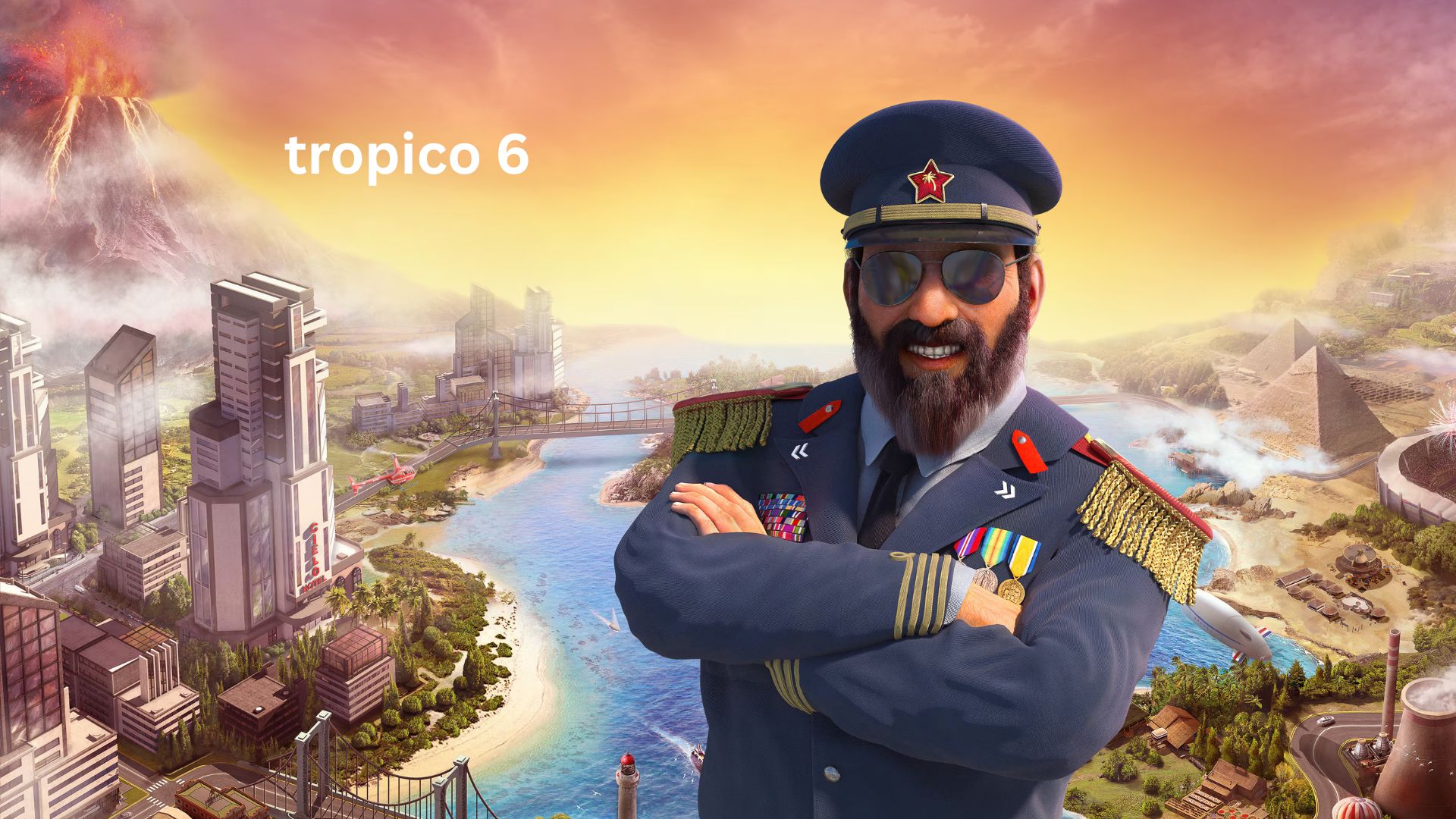
You start a new island in Tropico 6 with a beautiful coastline, a few scattered buildings, and a population that seems happy enough. Then the problems begin. Workers cannot reach their jobs quickly, electricity runs short, housing quality falls behind, factions become demanding, and suddenly the economy you thought was growing is barely paying the bills. This is where Tropico 6 becomes much more than a city-building game.
The real challenge is learning how to balance money, infrastructure, politics, employment, happiness, and your own ambitions as El Presidente. You can build a wealthy industrial nation, create a tourism-focused paradise, or deliberately run an authoritarian regime—but every choice creates consequences somewhere else.
This guide explains how Tropico 6 actually works in practice, including the mistakes that commonly ruin otherwise promising islands. It also covers useful strategies for different stages of the game, from your first settlement to a mature economy. Most importantly, it focuses on the decisions that make a noticeable difference during an actual playthrough rather than simply listing game mechanics.
What Is Tropico 6?
Tropico 6 is a city-building and political management game in which you play as El Presidente, the ruler of the fictional Caribbean nation of Tropico.
Unlike a conventional city builder, you are not only responsible for roads, buildings, jobs, and resources. You also have to manage political factions, elections, foreign relationships, trade, research, citizens’ needs, and different historical eras.
One of the game’s defining features is its progression through four eras:
- Colonial Era
- World Wars Era
- Cold War Era
- Modern Times
Each era introduces new technologies, industries, buildings, political pressures, and economic opportunities.
The important lesson is that Tropico 6 rewards long-term planning rather than simply building as much as possible.
How to Start a New Island Without Creating Problems
The first few years can determine whether your island becomes financially stable or permanently struggles with debt.
A common beginner mistake is spending too much money immediately. A large government building, expensive entertainment complex, or unnecessary decorative project may look attractive, but early cash has a much more important job: keeping your economy functioning.
Start With the Economy
Your first priority should be productive employment.
Look at the resources available on your island and identify industries that can generate money without requiring a huge infrastructure investment.
For example, if your island has strong agricultural potential, develop farms and processing industries before trying to build an expensive tourism district.
A simple economic chain might look like:
Farm → Processing Plant → Export → Revenue
The advantage of this approach is that your economy is based on something your island can actually produce.
Do Not Build Everything at Once
A useful rule is to build in layers.
First establish:
- Housing
- Food production
- Basic employment
- Roads and transportation
- Essential services
- Export industries
- Advanced infrastructure
This prevents a surprisingly common problem: having an impressive-looking city that cannot afford to operate its own buildings.
Roads and Transportation Matter More Than They Look
One of the most underestimated mechanics in Tropico 6 is transportation.
A building may be close to another building geographically, but that does not necessarily mean workers or goods will move efficiently between them.
Factories need raw materials. Citizens need to reach workplaces. Products need to reach docks. Tourists need transportation between attractions and hotels.
If your economy feels inexplicably slow, check transportation before assuming your industries are unprofitable.
The Hidden Cost of Long Commutes
Imagine you have a profitable industrial district on one side of the island and housing on the other.
On paper, everything works.
In practice, workers may spend excessive time traveling. That can reduce productivity and make your workforce less effective than expected.
This leads to an important practical insight:
A good Tropico 6 city is not necessarily the city with the shortest roads. It is the city with the most efficient movement of people and goods.
Design industrial areas around transportation access rather than simply placing factories wherever there is empty land.
Housing: Why Your Citizens Keep Complaining
Housing is another area where new players often spend money without solving the underlying problem.
Citizens care about the quality of their homes, but they also care about affordability and access to other services.
If you replace poor housing with expensive apartments but your workers cannot afford them, the upgrade may not solve the problem you expected it to solve.
A better approach is to create different housing options for different income levels.
Keep affordable housing near major workplaces while gradually introducing better residential areas as your economy becomes stronger.
This also makes your island feel more naturally organized.
Understanding the Tropican Economy
The economy in Tropico 6 becomes much easier to manage once you stop thinking about buildings individually.
Think in terms of production chains.
A farm is not just a farm. It can become the beginning of a chain that eventually produces a higher-value export.
For example:
Raw resource → Processing → Manufactured product → Export
The processed product can often generate considerably more economic value than simply exporting the raw material.
Why Processing Industries Are So Important
Suppose your island produces a large amount of a raw agricultural resource.
Selling it immediately provides income, but processing it creates another layer of economic activity.
That means:
- More industrial jobs
- More value added before export
- Greater use of your raw materials
- More opportunities to specialize your economy
The catch is that processing industries require workers, electricity, transportation, and infrastructure.
That is why blindly building factories is not a strategy.
The correct question is:
Can my island support this production chain efficiently?
Keep an Eye on Your Workforce
A factory is useless if nobody is available to work there.
Tropico 6 gives you a surprisingly interesting workforce problem because citizens have different education levels and professions.
You may have plenty of unemployed people but still be unable to fill specialized jobs.
This is why education should be treated as an economic investment rather than simply a happiness service.
Build your workforce around the industries you intend to develop.
If your long-term plan depends on advanced manufacturing, start preparing educated workers before the factories become the center of your economy.
Tourism: Paradise Requires Planning
Tourism can become one of the most profitable ways to develop an island, but simply placing hotels and attractions near a beach does not guarantee success.
Tourists need reasons to visit and spend money.
A strong tourism district should consider:
- Hotels
- Attractions
- Entertainment
- Transportation
- Tourist safety
- Food and services
- Overall visitor experience
Build Tourism Districts, Not Random Attractions
A common mistake is scattering tourist buildings around the island.
Instead, create concentrated tourism zones.
For example, a coastal area could contain hotels, entertainment, restaurants, beaches, and transportation connections.
This makes the area easier to manage and gives tourists more things to do without forcing them to travel across the entire island.
Tourism also works best when it complements the rest of your economy rather than replacing it too early.
Politics: You Are Not Just a Mayor
This is where Tropico 6 separates itself from many city builders.
Your citizens have political opinions and factions have different expectations.
You can have a wealthy island and still face political instability.
That means you should regularly pay attention to:
- Faction demands
- Approval
- Elections
- Constitution choices
- Political relationships
- Citizen happiness
Do Not Try to Make Everyone Happy
This is one of the most useful strategic lessons in Tropico 6.
Trying to satisfy every faction simultaneously can leave you with an expensive collection of compromises.
Instead, decide what kind of government you want to operate and identify which groups are essential to maintaining it.
Then manage opposition without allowing it to destabilize your entire island.
In other words, politics should be treated as a resource-management problem.
You are constantly deciding where to spend money, attention, and political capital.
Elections: Avoid Waiting Until the Last Minute
If you are playing a system where elections matter, do not suddenly start fixing approval when the election is already approaching.
Citizen happiness is influenced by several factors, and some improvements take time to produce meaningful results.
If approval starts falling, investigate why.
Possible causes include:
- Poor housing
- Low healthcare quality
- Limited entertainment
- Food shortages
- Unemployment
- Religious dissatisfaction
- Poor workplace conditions
- Political opposition
Fixing the underlying issue is usually more reliable than repeatedly applying a temporary solution.
Research and Era Progression
Research in Tropico 6 can be easy to overlook because economic and political problems demand immediate attention.
But technologies can significantly improve your island’s capabilities.
Do not research something simply because it is available.
Instead, ask:
What problem am I currently trying to solve?
If your economy is struggling with transportation, prioritize developments that improve logistics.
If your next stage depends on advanced industry, prepare the technologies and workforce needed to support it.
This approach makes research part of your strategy rather than a checklist.
Trade: Use It to Strengthen Your Economy
Trade is particularly valuable when your island produces some resources efficiently but lacks others.
A common mistake is accepting every attractive trade opportunity.
Not every profitable-looking deal is strategically useful.
Before committing, consider:
- What does the island already produce?
- Which industries need additional resources?
- Is the contract helping an existing production chain?
- Will the deal improve your long-term economy or only provide temporary cash?
The strongest trade decisions usually support an existing economic strategy.
Three Strategies That Work Well
There is no single correct way to rule Tropico 6. However, three broad approaches are particularly useful.
1. Industrial Powerhouse
Focus on production chains, factories, exports, infrastructure, and a skilled workforce.
This approach works particularly well when your island has strong natural resources.
The key is to avoid expanding faster than your transportation and workforce can support.
2. Tourism Paradise
Focus on beautiful districts, hotels, attractions, entertainment, and visitor spending.
This strategy can produce excellent revenue, but tourism depends heavily on infrastructure and visitor satisfaction.
A tourism island should be designed as an interconnected destination rather than a collection of expensive buildings.
3. Balanced Economy
Combine agriculture, industry, tourism, and services.
This is often the safest strategy for newer players because it reduces dependence on one source of income.
The downside is that managing several sectors requires more planning.
Common Tropico 6 Mistakes to Avoid
Building Too Quickly
Fast expansion feels productive, but it can destroy your finances.
Build when you have a reason, not simply because you have construction capacity.
Ignoring Electricity
Advanced buildings can become liabilities if your power infrastructure cannot support them.
Always consider energy requirements before expanding modern industries.
Creating Huge Residential Areas
Large housing districts without nearby jobs can create transportation problems.
Place homes with employment and services in mind.
Ignoring Education
You may eventually have plenty of jobs but not enough qualified workers.
Education should grow alongside your economy.
Forgetting Imports
Not every resource needs to be produced locally.
Sometimes importing a necessary raw material makes more economic sense than trying to manufacture everything yourself.
Spending All Your Money
Keep a financial buffer.
Unexpected expenses, construction projects, infrastructure requirements, and economic fluctuations can quickly turn a healthy treasury into a crisis.
Advanced Insight: Design Around Bottlenecks
One of the less obvious ways to improve in Tropico 6 is to identify your bottleneck rather than constantly adding more buildings.
Suppose five factories are waiting for raw materials.
Building a sixth factory will not fix the problem.
You might need more farms, teamsters, roads, docks, or storage capacity instead.
The same principle applies to housing and services.
If citizens are unhappy, adding another random service building may not help if the real issue is access.
Before expanding, ask:
What is currently limiting the system?
Fix that first.
Advanced Insight: Efficiency Can Matter More Than Size
A huge island with dozens of factories is not automatically stronger than a smaller, well-organized economy.
In practice, compact production chains can be surprisingly effective.
If farms, processing facilities, warehouses, transportation, and export infrastructure are arranged logically, fewer buildings can sometimes accomplish more than a sprawling industrial zone.
This is particularly useful when you are trying to control expenses.
Advanced Insight: Build for the Next Era
Another useful habit is to think one era ahead.
Do not wait until your economy desperately needs modern infrastructure before preparing for it.
If you know that your future strategy depends on educated workers, electricity, tourism, or advanced manufacturing, start building the foundations earlier.
This makes transitions between eras much smoother.
A Practical Mid-Game Checklist
When your island reaches the point where the basic economy is working, pause and review it.
Ask yourself:
- Is the treasury growing consistently?
- Are major industries receiving enough workers?
- Are transportation systems overloaded?
- Do citizens have suitable housing?
- Are essential services accessible?
- Is electricity sufficient?
- Are exports supporting the economy?
- Do I have enough educated workers?
- Which political factions are becoming difficult?
- What industry will drive the next stage of growth?
If you can answer these questions clearly, you are probably in a strong position.
FAQ
Is Tropico 6 difficult for beginners?
Tropico 6 is relatively approachable at first, but its interconnected systems can become complicated as your island grows. The biggest difficulty is understanding how economics, transportation, employment, politics, and citizen happiness affect one another. Starting slowly and expanding only when your economy can support it makes the learning curve much easier.
What is the best way to make money in Tropico 6?
There is no universal best industry because profitability depends on your island’s resources, workforce, infrastructure, and era. Production chains that turn raw materials into higher-value goods can be extremely effective. Tourism can also become highly profitable when hotels, attractions, transportation, and visitor spending are properly connected.
How do you keep citizens happy in Tropico 6?
Citizen happiness depends on several quality-of-life factors, including housing, food, healthcare, entertainment, religion, safety, employment, and other services. Do not simply build more services whenever happiness drops. First identify which specific category is causing dissatisfaction, then invest in the service that addresses it.
What should you build first in Tropico 6?
Start with the foundations of a functioning economy: housing, food, employment, transportation, basic services, and an export source. Avoid spending heavily on luxury or advanced infrastructure before you have reliable income. Your first goal should be economic stability rather than creating a visually impressive city.
How important is transportation in Tropico 6?
Transportation is extremely important because people, resources, and finished goods all need to move around your island. Poor transportation can reduce industrial productivity even when you have enough factories and workers on paper. If an economy seems inefficient for no obvious reason, transportation should be one of the first systems you investigate.
Conclusion
Tropico 6 is at its best when you stop treating it as a simple city-building game and start thinking like the leader of a real island nation. Every decision connects to another system: an industrial expansion requires workers and transportation, educated workers require schools, tourism requires infrastructure, and political stability depends partly on the quality of life you provide.
The most effective approach is therefore not to build as much as possible. Build with purpose.
Create production chains that your island can actually support, fix bottlenecks before expanding, keep transportation efficient, prepare your workforce for future industries, and maintain enough financial flexibility to survive unexpected problems.
Once you start viewing your island as one interconnected system rather than a collection of buildings, Tropico 6 becomes considerably easier—and much more rewarding. Your best island will not necessarily be the biggest one. It will be the one where every major part works together.