
Gears of War Reloaded Review: Is It Worth It?
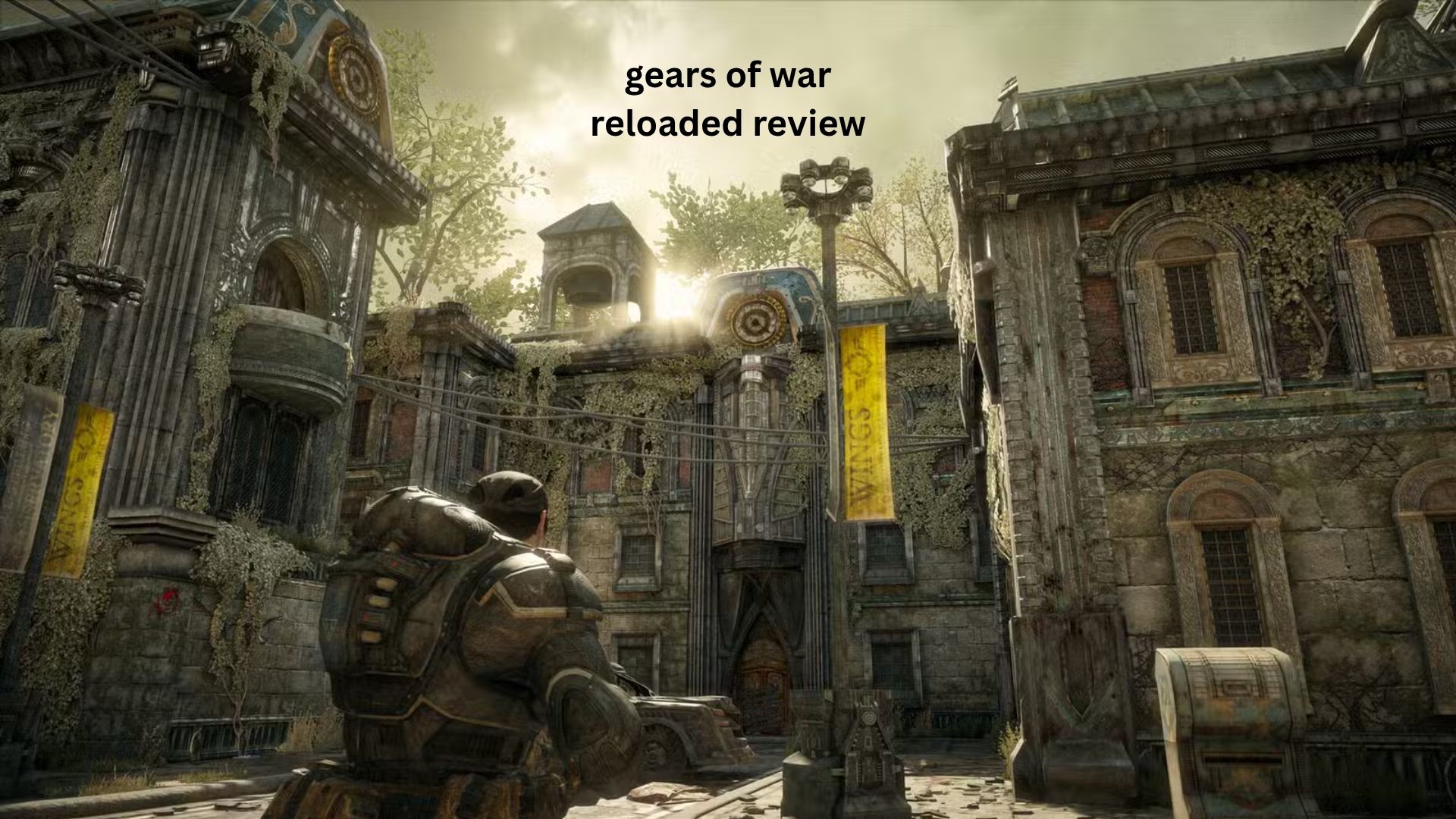
If you remember the original Gears of War as one of the defining Xbox 360 shooters, there is an obvious question before buying Gears of War: Reloaded: is this really the definitive version, or is it simply another remaster of a game we have already seen?
After Ultimate Edition, that concern is completely reasonable. Reloaded does not reinvent the campaign, add a new storyline, or rebuild the combat from the ground up. Instead, The Coalition takes the 2006 classic and concentrates on presentation, performance, platform support, and multiplayer accessibility. The result is a cleaner, faster, more widely available version of a game whose core design has aged surprisingly well.
This Gears of War Reloaded review looks beyond the obvious 4K upgrade. The more important question is whether the original cover-shooter formula still feels good today, how Reloaded compares with Ultimate Edition, and who will actually get enough value from buying it.
What Is Gears of War: Reloaded?
Gears of War: Reloaded is a remastered version of the original 2006 Gears of War. It was developed by The Coalition and released on PC, Xbox Series X|S, and, importantly, PlayStation 5.
The game retains the original campaign, characters, weapons, enemies, and fundamental combat system. Instead of adding substantial new gameplay, Reloaded focuses on technical improvements such as:
- 4K presentation and upgraded assets
- Improved textures, lighting, shadows, and reflections
- HDR and Dolby Vision support
- Dolby Atmos and enhanced audio
- Faster loading
- Up to 120 FPS support
- Cross-play
- Cross-progression
- Campaign co-op
- The original post-launch content included at no additional cost
That distinction is important. Reloaded is best understood as a modern presentation upgrade rather than a new version of Gears of War.
Gears of War Reloaded Gameplay Review
The biggest reason Reloaded works is that the original gameplay did not need much fixing.
Marcus Fenix still moves with that deliberately heavy feeling that defines Gears. You sprint from cover to cover, blind-fire around corners, perform active reloads, and use the environment to control enemy encounters.
The basic loop remains extremely satisfying:
- Find cover.
- Read the battlefield.
- Force enemies out of position.
- Move when the opportunity appears.
- Use close-range weapons when enemies push aggressively.
- Finish the encounter before advancing.
It sounds simple, but this structure creates a surprisingly tactical shooter.
Unlike many modern third-person shooters that encourage constant movement, Gears rewards controlled aggression. Running forward without considering cover can get you killed quickly.
The Active Reload Still Matters
One of the smartest mechanics in the series remains the Active Reload.
Instead of simply pressing reload and waiting, you can time your input to reload faster or temporarily improve weapon performance.
It gives a basic action—reloading—a small skill component.
More importantly, it creates an interesting risk-reward decision. Do you reload safely, or attempt an active reload while enemies are attacking?
That small interaction is one reason the combat still feels distinct nearly two decades later.
How Good Does Reloaded Actually Look?
This is where expectations need to be realistic.
Reloaded looks substantially cleaner than the original, with upgraded textures, lighting, reflections, shadows, HDR, and other presentation improvements. The game can also run at high frame rates, with multiplayer supporting up to 120 FPS.
But it is not a ground-up remake.
The underlying character models, animations, level design, and general gameplay structure remain closely tied to the older game. PC performance testing also found that the updated version is relatively easy for modern desktop hardware to run, although handheld PCs can be considerably more demanding.
That leads to one of the more interesting observations about Reloaded:
Its biggest improvement is not necessarily the amount of detail on screen. It is the consistency of the experience.
The original game could feel unmistakably like a 2006 title. Reloaded reduces some of that technical friction while allowing the original encounter design to remain intact.
Reloaded vs Ultimate Edition
This is probably the most important comparison for returning players.
| Feature | Gears of War Ultimate Edition | Gears of War Reloaded |
|---|---|---|
| Original campaign | Yes | Yes |
| Visual overhaul | Yes | Further upgraded |
| 4K-focused presentation | Limited | Yes |
| HDR improvements | Limited | Yes |
| Up to 120 FPS | No | Yes |
| PS5 release | No | Yes |
| Cross-play | Limited/No | Yes |
| Cross-progression | No | Yes |
| Post-launch content | Included | Included |
| New campaign story | No | No |
Reloaded therefore makes considerably more sense for someone who has not played Gears recently or is experiencing it for the first time.
If you finished Ultimate Edition a year or two ago, however, the decision becomes more complicated.
You are essentially paying for a better technical presentation of a campaign you already know.
That is not necessarily bad—but it is worth understanding before spending money.
The Campaign Is Still the Star
The campaign remains the strongest reason to play Reloaded.
Marcus Fenix, Dom Santiago, the Locust, the COG, the underground environments, and the exaggerated military personalities still give the game a distinctive identity.
The campaign is structured around five main acts and combines straightforward shooting with memorable set pieces and boss encounters.
What works particularly well is the pacing.
The game does not constantly interrupt you with huge open-world systems, skill trees, crafting menus, or dozens of side objectives. You generally know what you are doing: move forward, survive the encounter, and keep going.
For players tired of enormous games demanding dozens of hours, that simplicity can feel refreshing.
Co-op Makes the Campaign Better
The campaign can be played cooperatively, including split-screen and online co-op.
This is more than a checkbox feature.
Gears of War was designed around squad combat, so playing alongside another person naturally fits the game’s structure.
One player can draw attention while another flanks. You can revive each other after mistakes, coordinate weapons, and approach encounters differently.
For a first-time player, co-op is arguably one of the best ways to experience Reloaded.
Multiplayer: Still Fun, But Not for Everyone
The multiplayer side is where the age of the original design becomes much more obvious.
The basic combat remains built around:
- Cover positioning
- Shotgun battles
- Wall bouncing
- Weapon control
- Map knowledge
- Team coordination
For experienced Gears players, that is exactly the attraction.
For newcomers, it can be brutal.
Someone who understands movement and shotgun spacing can make a new player feel completely helpless. That learning curve is not necessarily a technical problem—it is part of the game’s competitive identity.
Reloaded includes cross-platform multiplayer and progression, which gives the community a much broader pool of players than a single-platform release would provide.
However, don’t expect later-series features such as Horde to transform the package into a modern live-service multiplayer game. Reloaded is intentionally rooted in the original Gears experience.
Performance: One of Reloaded’s Biggest Strengths
Performance is one area where the remaster makes a meaningful difference.
The campaign targets 60 FPS, while multiplayer can reach 120 FPS depending on platform and settings. PC testing has shown that modern desktop hardware can run the game at very high frame rates, while the console versions provide different resolution and performance modes.
This matters more in Gears than it might initially appear.
The game’s combat depends heavily on:
- Precise cover transitions
- Quick aiming
- Shotgun timing
- Active reloads
- Fast reactions
A smoother frame rate makes these actions feel more immediate.
One practical recommendation is to prioritize stable performance over chasing maximum resolution. If your display supports a high refresh rate and you are sensitive to responsiveness, the higher-frame-rate mode can make more sense than simply selecting the sharpest possible image.
Three Things Most Reviews Miss
1. Reloaded’s real upgrade is consistency
It is easy to judge a remaster by screenshots.
But Gears of War benefits enormously from consistency in motion and responsiveness. The difference becomes clearer during frantic firefights than while standing still and examining textures.
That makes performance improvements more valuable than they initially sound.
2. The game’s limitations are also part of its appeal
Reloaded does not have the enormous weapon selection, open-ended progression, or abundance of modes found in many modern shooters.
At first, that can seem outdated.
But it also means the game gets to the point quickly. You learn the weapons, understand the cover system, and improve through repetition rather than unlocking increasingly powerful equipment.
For players who prefer mechanical mastery over progression systems, that simplicity is a strength.
3. It is more valuable as an introduction than as a second purchase
This is perhaps the most important buying insight.
If you have never played the original Gears of War, Reloaded is an excellent entry point.
If you played the 2006 version years ago, it is a strong upgrade.
If you recently completed Ultimate Edition, however, Reloaded offers fewer reasons to replay the campaign immediately.
That does not make Reloaded bad. It simply changes the value proposition.
Common Mistakes New Players Make
If this is your first Gears game, avoid these mistakes.
Staying behind the same cover too long
Cover is protection, not a permanent home.
Enemies can flank you, force you out, or overwhelm your position.
Ignoring the Active Reload
Don’t treat it as a cosmetic gimmick. Learning the timing makes combat noticeably more satisfying.
Using the same weapon for every situation
The Gnasher is devastating at close range, while other weapons are more appropriate for distance and suppression.
Learn to switch based on the battlefield.
Playing like a traditional run-and-gun shooter
Charging across an open area is usually a bad idea.
Think about where you are moving before you leave cover.
Expecting modern accessibility and quality-of-life features everywhere
Reloaded improves some accessibility and control options, but it remains an old game’s structure underneath the upgrades. Reviews have noted that it lacks some conveniences players may expect from newer titles.
Who Should Buy Gears of War Reloaded?
Buy it if you are new to Gears
This is probably the easiest recommendation.
You get the original campaign with modern technical improvements, multiplayer, co-op, and cross-platform functionality.
Buy it if you loved the original
If nostalgia is calling, Reloaded gives you a smoother way to revisit the game without returning entirely to 2006-era presentation.
Consider waiting if you recently played Ultimate Edition
The improvements are real, but the underlying campaign is still familiar.
If you already know every encounter, you should ask whether improved graphics and performance are enough to justify another purchase.
Be cautious if you want a modern multiplayer shooter
Reloaded is not trying to become Call of Duty, Fortnite, or a contemporary live-service game.
Its multiplayer is deliberately old-school.
That can be a positive—but only if you actually enjoy that style.
Is Gears of War Reloaded Worth It?
Yes, for most new players.
The core game remains excellent, and Reloaded combines that strong foundation with modern visuals, smoother performance, cross-play, cross-progression, and expanded platform availability.
For returning players, the answer is more conditional.
The technical improvements are worthwhile, but Reloaded does not provide a fundamentally different campaign. Reviews have therefore landed in generally favorable territory while still noting that the package plays it relatively safe. Metacritic’s critic aggregate, for example, currently sits at 79 for the PlayStation 5 version.
My overall verdict would be:
Gears of War: Reloaded is an excellent way to play a classic, but not an essential upgrade for everyone who already owns Ultimate Edition.
Its greatest achievement is demonstrating that the original Gears formula still works. Its biggest weakness is that the remaster sometimes feels like it is polishing an already-polished game rather than giving it a compelling new reason to exist.
FAQ
Is Gears of War Reloaded a remake or remaster?
It is a remaster rather than a complete remake. The original campaign, gameplay systems, characters, levels, and fundamental mechanics remain intact, while the technical presentation and platform support have been significantly upgraded.
Is Gears of War Reloaded worth buying if I played Ultimate Edition?
It depends on how recently you played Ultimate Edition. If it has been several years, Reloaded offers a strong reason to revisit the campaign through better visuals, performance, and modern multiplayer functionality. If you played Ultimate Edition recently, the differences may not justify another purchase for you.
Does Gears of War Reloaded have 120 FPS?
Yes, Reloaded supports up to 120 FPS, particularly in multiplayer, with the exact performance and resolution depending on the platform and selected mode. PC hardware can also run the game beyond 120 FPS under appropriate conditions.
Can you play Gears of War Reloaded with friends on different platforms?
Yes. Cross-play allows players on supported platforms to play together, while cross-progression allows campaign saves and multiplayer progression to carry across platforms.
Is Gears of War Reloaded good for beginners?
Absolutely. The campaign provides a straightforward introduction to the series’ cover-based shooting, Active Reload system, weapons, enemies, and characters. Multiplayer is more difficult for beginners because experienced players can have a substantial advantage in movement and shotgun combat.
How long is the Gears of War Reloaded campaign?
The campaign is relatively compact compared with modern open-world games. Its focused structure is actually one of its strengths: you can experience the story and combat without committing to an enormous 50-hour progression system.
Final Verdict
Gears of War: Reloaded succeeds because it understands what made the original special.
The cover mechanics remain excellent. The weapons still have weight. Active Reload remains satisfying. The campaign’s focused structure feels refreshing in an era of oversized games, and co-op remains a natural fit.
The technical improvements make the experience cleaner and smoother, while cross-play and cross-progression remove some of the platform barriers that surrounded the series for years.
But Reloaded should not be confused with a new Gears adventure.
If you want a completely redesigned campaign, new weapons, new mechanics, or a major expansion, this is not that game. If you want to experience one of the most influential third-person shooters in a polished modern format, however, Gears of War: Reloaded is one of the better ways to do it.
For newcomers, it is an easy recommendation. For longtime fans, it is best viewed as a refined homecoming rather than a reason to forget the versions that came before.