


Roguelikes: Why Every Run Feels Different
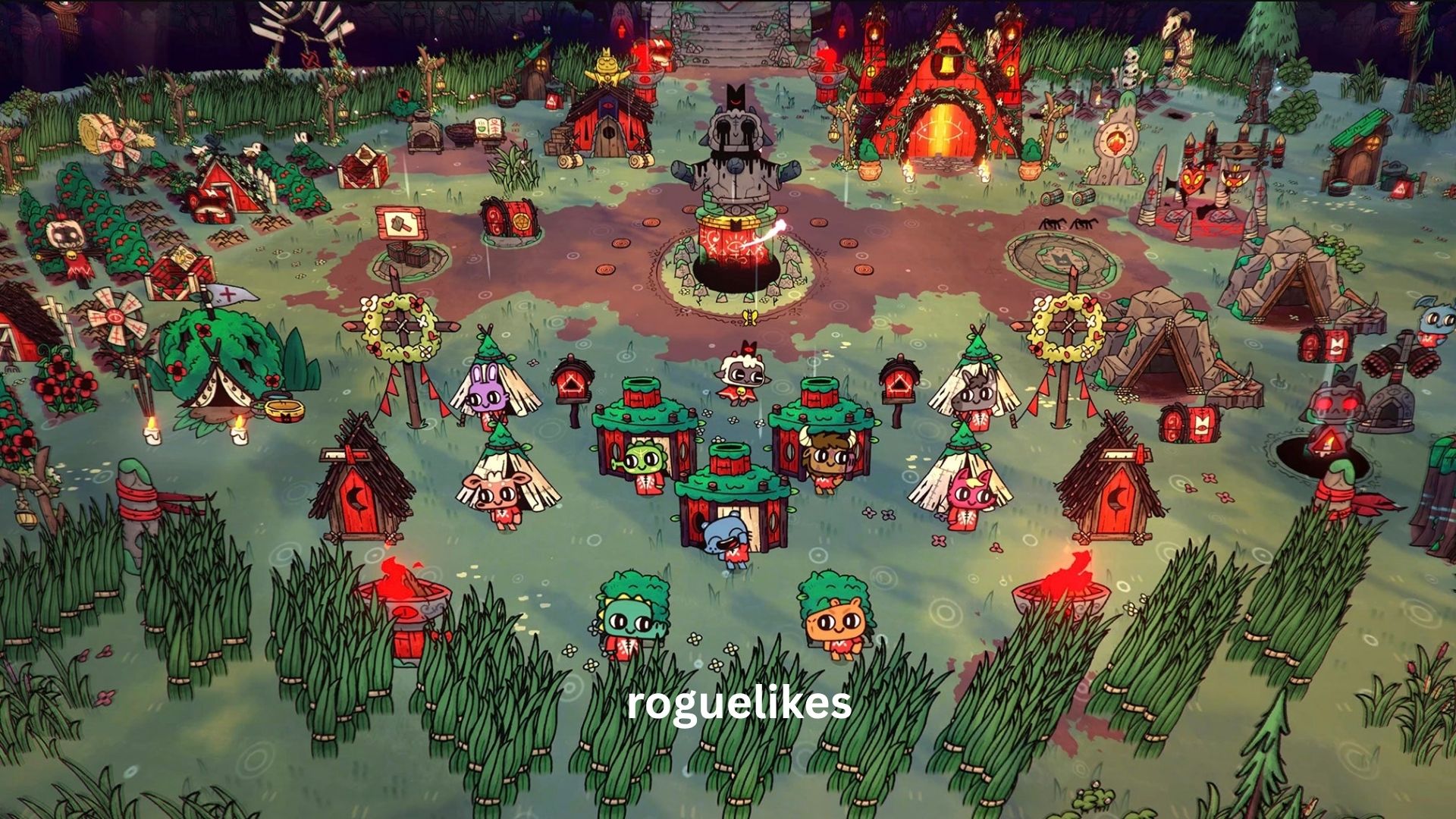
A good roguelike can be frustrating in a very specific way: you can spend 30 minutes building what feels like a perfect character, make one bad decision, and lose everything. Then, instead of quitting, you start another run almost immediately. That unusual loop is the heart of roguelikes.
But the genre is often misunderstood. Some people use “roguelike” to mean any game with procedural levels and permanent death, while others reserve the term for games that closely follow the design of the original Rogue. The difference matters when you are deciding what to play, especially because modern games can range from slow, tactical dungeon crawlers to fast action games where every failed attempt unlocks something new.
This guide explains what roguelikes actually are, how they differ from roguelites, why losing can be rewarding, and how to approach the genre without turning every run into a frustrating grind. It also looks at the design choices that make a roguelike genuinely replayable—and the warning signs that make a game feel repetitive rather than endlessly interesting.
What Is a Roguelike?
A roguelike is a game built around repeated attempts, procedural or randomized content, meaningful resource management, and often permanent death.
The name comes from Rogue, the 1980 game that established many of the genre’s defining ideas. Traditionally, roguelikes are turn-based, grid-based dungeon games in which each decision matters and death can end the entire run.
Modern usage is broader. Games such as Hades, Dead Cells, Slay the Spire, and The Binding of Isaac are commonly described as roguelikes or roguelites, even though they may have very different mechanics.
The easiest way to understand the genre is through its core loop:
Start a run → explore → make choices → build power → take risks → die or succeed → start again.
The important part is that restarting is not simply repeating the same level. The game changes enough between attempts that you must adapt.
How Do Roguelikes Work?
Most roguelikes revolve around a combination of several systems.
Procedural generation
Instead of giving you exactly the same dungeon every time, the game generates layouts, encounters, items, enemies, or combinations of these systems differently.
This creates uncertainty.
You might know the general rules of the game, but you don’t necessarily know what will appear around the next corner.
That changes how you play. Rather than memorizing a fixed route, you learn to make good decisions with incomplete information.
Permanent death
Traditional roguelikes usually have permadeath. When your character dies, that run is over.
Your equipment, position, temporary abilities, and accumulated resources may disappear.
At first, this can feel harsh. In practice, it creates tension because decisions have consequences.
Opening a dangerous room when you have low health isn’t just a minor inconvenience. You are effectively gambling the entire run.
Resource management
Health, ammunition, food, currency, cooldowns, equipment durability, or other limited resources can become strategically important.
A common beginner mistake is treating every resource as something to spend immediately.
Experienced players often think differently:
“Do I need this now, or will this decision make the next five minutes safer?”
That small change in mindset can dramatically improve performance.
Build variety
Many modern roguelikes allow you to create different builds during each run.
One attempt might emphasize critical hits and speed. Another might focus on defensive abilities. A third might revolve around poison, summons, ranged attacks, or some unusual interaction between items.
This is one reason the genre can remain interesting after dozens—or hundreds—of attempts.
Roguelike vs. Roguelite: What’s the Difference?
The terms are often confused.
A roguelike generally emphasizes the traditional structure associated with Rogue: procedural environments, turn-based play, grid movement, resource management, and permanent death.
A roguelite borrows some of those principles but usually introduces persistent progression between runs.
| Feature | Traditional Roguelike | Modern Roguelite |
|---|---|---|
| Procedural content | Usually | Usually |
| Permanent death | Usually | Often |
| Persistent upgrades | Limited or absent | Common |
| Turn-based gameplay | Common | Not required |
| Real-time combat | Rare | Very common |
| Unlockable content | Limited | Common |
| Build experimentation | High | High |
The distinction isn’t always strict. The gaming community frequently uses “roguelike” as an umbrella term for both.
For a player, however, the more useful question isn’t “Is this technically a roguelike?”
It’s:
“What carries over when I die?”
If almost everything disappears, you’re closer to the traditional roguelike experience. If you retain permanent upgrades, characters, weapons, abilities, story progress, or other advantages, you’re generally dealing with a roguelite structure.
Why Are Roguelikes So Addictive?
The strongest roguelikes create a powerful relationship between failure and learning.
A failed run should ideally answer at least one question:
- What killed me?
- What did I misunderstand?
- Which resource did I waste?
- Was my build too risky?
- Did I choose the wrong reward?
- Should I have avoided that fight?
When the game gives you useful information through failure, death doesn’t feel completely wasted.
There is another important psychological trick at work: runs are usually short enough to make another attempt feel reasonable.
If a run takes 20–40 minutes, losing can produce the immediate thought:
“I know what I did wrong. I’ll try again.”
That’s very different from losing 20 hours of progress.
The Most Important Skill: Making Decisions With Imperfect Information
One of the less obvious strengths of roguelikes is that they teach a useful form of decision-making.
You rarely know everything.
You may have:
- limited health,
- an incomplete build,
- unknown enemies ahead,
- several reward choices,
- limited currency,
- and no guarantee that a better item will appear later.
The goal isn’t to find the mathematically perfect decision every time.
It’s to make the best decision available given what you currently know.
That distinction becomes especially important in difficult games.
A player who constantly waits for the “perfect” item can actually perform worse than someone who builds around a merely good option and adapts.
How to Get Better at Roguelikes
If you’re new to the genre, don’t focus exclusively on winning.
Focus on improving one decision at a time.
1. Learn enemy behavior before chasing damage
Knowing when an enemy attacks can be more valuable than increasing your damage output.
Watch for:
- attack animations,
- movement patterns,
- range,
- recovery windows,
- and combinations of enemies.
Once enemy behavior becomes predictable, difficult encounters become much easier.
2. Don’t restart just because your build looks mediocre
This is a surprisingly common mistake.
Players sometimes see an early item they don’t like and mentally abandon the run.
That’s often counterproductive.
A mediocre build can become excellent after one or two complementary upgrades.
Learning to adapt is part of the genre.
3. Treat health as a resource
Health isn’t simply a number that tells you whether you’re alive.
It can also represent permission to take risks.
If you’re at full health, you can sometimes afford a dangerous choice. If you’re nearly dead, even a small mistake can end the run.
The best players aren’t necessarily those who never take damage. They’re often the ones who understand when taking damage is acceptable.
4. Learn when to walk away
Not every fight needs to happen.
If a game allows you to avoid certain enemies, skip an optional encounter when the potential reward isn’t worth the risk.
This is one of the biggest differences between playing aggressively and playing intelligently.
Three Less-Obvious Lessons From Roguelike Design
Failure is more valuable when it changes future behavior
Simply dying repeatedly isn’t good game design.
The useful form of failure is diagnostic failure.
If you die and understand why, the next run contains new knowledge. If you die randomly with no idea what happened, the game feels unfair.
That is why good enemy telegraphs, readable mechanics, and consistent rules matter so much.
Randomness should create decisions, not replace them
Randomness alone doesn’t make a game replayable.
Imagine two games.
In the first, you lose because the game randomly gives you terrible equipment.
In the second, you receive three imperfect options and must decide which one works best with your current build.
Both contain randomness, but only the second gives you meaningful agency.
The best roguelikes use randomness to create problems that the player must solve.
The real progression can be knowledge
Persistent upgrades aren’t the only form of progression.
You can become stronger without your character becoming stronger.
After several runs, you may learn:
- which enemies deserve immediate attention,
- which rewards are traps,
- which combinations are powerful,
- when to spend currency,
- when to retreat,
- and which risks are actually worthwhile.
That knowledge stays with you even when the game takes everything else away.
Common Roguelike Mistakes
Playing every run exactly the same way
A strategy that worked yesterday may be terrible with today’s items.
Adapt to what the game gives you.
Chasing the strongest-looking item
An item isn’t automatically good just because it has impressive numbers.
Synergy matters.
A weaker ability that complements your existing build can be far more valuable than a powerful item that doesn’t fit.
Spending everything immediately
Currency and consumables often have opportunity costs.
Before spending, ask whether the purchase solves an immediate problem or simply feels satisfying.
Ignoring defense
New players naturally gravitate toward damage.
But surviving longer gives you more opportunities to deal damage.
In many roguelikes, defensive abilities indirectly increase your offensive output because they keep your build alive long enough to reach its potential.
Blaming randomness too quickly
Sometimes you genuinely get an unlucky run.
But if the same problem keeps happening, look for a decision pattern.
If you repeatedly die because you enter difficult rooms with low health, the problem may not be bad luck. It may be risk management.
What Makes a Roguelike Worth Playing?
Before committing to a difficult game, look at five things.
1. Are the runs meaningfully different?
Small cosmetic changes aren’t enough. Your decisions should produce different situations.
2. Does failure teach you something?
You should understand why you lost.
3. Are builds flexible?
A strong game lets you recover from imperfect early choices.
4. Is randomness balanced by player choice?
Randomness should create interesting decisions rather than determine the winner.
5. Is restarting enjoyable?
This is perhaps the most important test.
If starting another run feels like a chore, the game’s progression loop probably isn’t working for you.
Are Roguelikes Good for Beginners?
Yes, but some are much more approachable than others.
If you’re new to the genre, a forgiving modern roguelite can be easier to understand than a traditional roguelike.
Look for games with:
- clear tutorials,
- readable combat,
- relatively short runs,
- persistent progression,
- forgiving early areas,
- and multiple viable builds.
Traditional turn-based roguelikes can be extremely rewarding, but they often demand more patience because positioning, inventory management, identification systems, and resource conservation can matter more than reflexes.
If you dislike losing progress, start with a roguelite rather than jumping directly into one of the most punishing traditional examples.
FAQ
What exactly is a roguelike game?
A roguelike is a game centered around repeated runs, procedural or randomized content, meaningful resource management, and usually permanent death. Traditional examples are commonly turn-based and grid-based. Modern usage has expanded the term to include many action games that borrow the same core structure.
What is the difference between a roguelike and a roguelite?
The biggest practical difference is persistent progression. Traditional roguelikes generally reset most or all of your progress when a character dies, while roguelites commonly allow permanent upgrades or unlocks between runs. The terminology isn’t perfectly standardized, so individual games can sit somewhere between the two.
Why do people enjoy games where they lose everything?
The loss creates tension, but the player usually gains knowledge from the failed attempt. You learn enemy patterns, item combinations, routes, and risk management. When the next run succeeds because of what you learned previously, the victory feels earned.
Are roguelikes difficult for beginners?
Some are, but difficulty varies enormously. Traditional roguelikes can have steep learning curves, while many modern roguelites gradually introduce mechanics and provide permanent upgrades. Beginners generally have an easier time starting with a game that offers short runs and clear feedback after failure.
What should I focus on when playing a roguelike for the first time?
Focus on learning the game’s rules rather than trying to win immediately. Study enemy attacks, experiment with different builds, and pay attention to why each run ends. Once you understand the game’s decision-making, winning becomes much more realistic.
Are roguelikes replayable?
They can be exceptionally replayable when their procedural systems, builds, encounters, and player choices interact in interesting ways. However, random generation alone doesn’t guarantee replayability. A great roguelike makes you curious about what might happen if you make a different decision next time.
Final Thoughts
Roguelikes work because they turn failure into part of the experience rather than treating it as the opposite of progress.
The strongest games in the genre don’t simply throw random levels and powerful enemies at you. They give you incomplete information, force you to weigh risks, and reward you for understanding their systems.
If you’re struggling with a roguelike, don’t automatically look for a stronger build or an easier strategy. First ask whether you are making better decisions than you did five runs ago.
That is often the real progression.
And once you reach the point where a failed run immediately makes you think, “I know what I’ll do differently next time,” you’ve understood what makes the genre special.