

Lust for Darkness: Story, Gameplay and Review
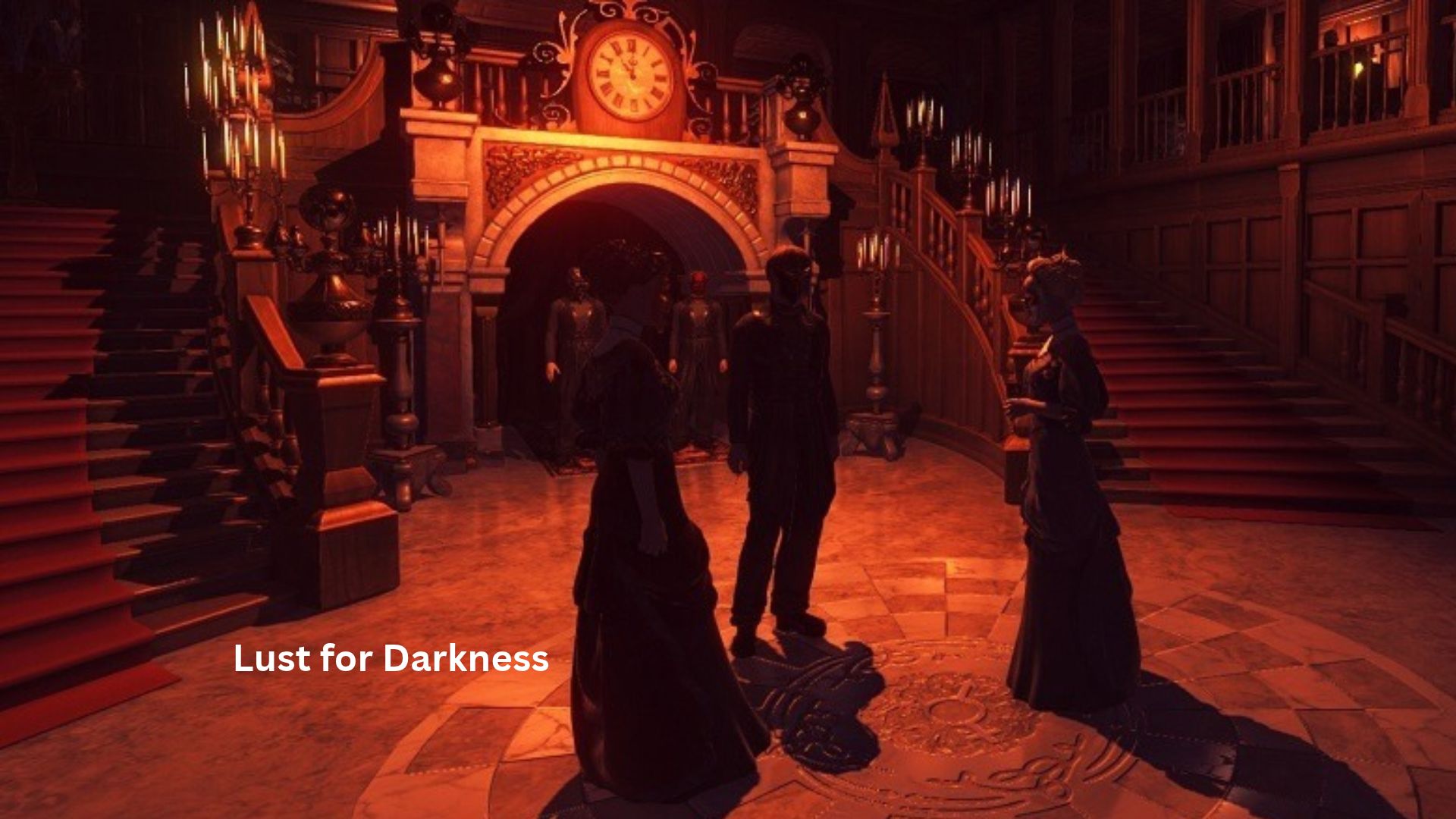
If you search for Lust for Darkness, you will quickly discover that it is not a conventional horror game. It combines psychological horror, occult mystery, disturbing imagery, exploration, and mature themes in a way that is deliberately uncomfortable. That combination is exactly why some players find it fascinating while others find it excessive.
Released in 2018 by Movie Games Lunarium, Lust for Darkness follows Jonathan Moon, a man searching for his missing wife after receiving a mysterious letter from her. His investigation leads him to a secluded Victorian mansion and eventually to a strange dimension known as Lusst’ghaa. The game draws heavily on Lovecraftian horror and surreal visual influences associated with artists such as H. R. Giger and Zdzisław Beksiński.
But what is Lust for Darkness actually like to play? Is it primarily a horror game, an exploration game, or an interactive story? And does its controversial subject matter genuinely contribute to the experience?
This guide answers those questions, explains the story and gameplay structure, examines its strengths and weaknesses, and helps you decide whether the game is worth your time.
What Is Lust for Darkness?
Lust for Darkness is a first-person psychological horror adventure with strong erotic and occult themes. It was developed by Movie Games Lunarium and originally released for PC and macOS in June 2018.
The game is designed around exploration rather than traditional combat. Instead of giving the protagonist an arsenal of weapons, it places the player in environments where observation, item collection, environmental interaction, stealth, and occasional escape sequences are more important.
At its core, the game revolves around three ideas:
- A missing-person investigation
- An occult organization pursuing forbidden desires
- A mysterious alternate dimension
The unusual combination gives Lust for Darkness an identity that is immediately different from standard haunted-house horror.
It is also important to understand what the game is not. It is not a conventional survival-horror title built around extensive combat, complicated inventory management, or large open environments. Its experience is closer to a short, atmospheric horror adventure.
The Story of Lust for Darkness Explained
The protagonist is Jonathan Moon, whose wife Amanda disappeared approximately a year before the main events of the game.
Jonathan eventually receives information suggesting that Amanda may still be alive. Following the clues, he travels to the isolated Yelverton mansion.
At first, the location appears to be an ordinary wealthy estate. However, Jonathan soon discovers that something deeply disturbing is taking place inside.
The mansion is connected to a secretive cult and a supernatural gateway. Through this gateway, Jonathan encounters Lusst’ghaa, a bizarre world completely separated from ordinary human reality.
This transition is one of the game’s most important narrative ideas.
The story effectively moves from:
familiar → mysterious → disturbing → supernatural → otherworldly
That progression helps explain why the mansion is so important. It acts as a bridge between recognizable Victorian surroundings and an environment where ordinary rules no longer apply.
Who Is Jonathan Moon?
Jonathan is the player’s viewpoint throughout most of the experience.
His motivation is relatively straightforward: find Amanda and understand what happened to her.
This personal motivation is useful because it gives the player a reason to continue exploring even when the world becomes increasingly confusing. Jonathan is not entering the mansion because he wants to investigate an ancient cult. He is looking for someone he loves.
That distinction makes the early mystery easier to understand.
What Is Lusst’ghaa?
Lusst’ghaa is the game’s fictional alternate dimension.
According to the game’s mythology, its inhabitants deliberately transformed themselves over generations in pursuit of perpetual pleasure. As a result, the environment has become grotesque, alien, and almost completely detached from human civilization.
The setting is one of the game’s strongest concepts because it creates a sharp contrast with the Victorian mansion.
The mansion represents:
order, history, wealth and secrecy
Lusst’ghaa represents:
mutation, excess, alienation and uncontrolled desire
That contrast is more interesting than the game’s shock value alone.
What Makes Lust for Darkness Different From Other Horror Games?
The most obvious difference is its combination of horror and erotic themes.
However, simply calling it an “erotic horror game” does not completely explain its appeal. The more interesting aspect is how the game uses desire as part of its horror atmosphere.
Traditional horror often revolves around fear of death, isolation, disease, monsters, or the unknown.
Lust for Darkness adds another element:
fear of losing control over one’s desires.
That gives the game a psychological dimension, even though the narrative does not always explore that idea as deeply as it could.
The game also combines several artistic influences. Its surreal environments often resemble biomechanical and dreamlike horror rather than conventional gothic monsters.
This creates an unusual visual language where organic and architectural forms appear deliberately distorted.
Lust for Darkness Gameplay
Gameplay is primarily about exploration.
You move through environments, investigate rooms, interact with objects, collect useful items, solve environmental puzzles, and occasionally avoid enemies.
There is little emphasis on direct combat.
Exploration
Exploration is arguably the most important part of the experience.
The Victorian mansion encourages you to inspect rooms and objects for clues. Later, Lusst’ghaa changes the atmosphere dramatically by introducing strange architecture, alien vegetation, disturbing creatures, and unfamiliar surroundings.
A practical observation for new players is that examining the environment carefully is usually more useful than rushing forward.
If a progression point seems unclear, check:
- Nearby rooms
- Objects that can be manipulated
- Items recently collected
- Doors or areas you may have overlooked
- Environmental symbols or clues
The game occasionally makes progression less obvious than expected.
Puzzle Design
The puzzles are generally simple.
Many involve finding an object and determining where it belongs. Others require you to recognize symbols, inspect the environment, or manipulate objects in a particular sequence.
This is good news for players who dislike extremely difficult puzzle games.
However, there is an important distinction:
The puzzles are usually easy to solve, but some objectives are not immediately obvious.
That means the frustration often comes from knowing what the game wants you to do, rather than from the actual solution being intellectually difficult.
If you become stuck, retrace your recent movements instead of randomly clicking everything.
Is Lust for Darkness Scary?
Yes, but its horror works differently from games built around constant survival pressure.
The game relies heavily on atmosphere, disturbing environments, sound, sudden encounters, and the psychological discomfort created by its subject matter.
Some scenes are unsettling because of what you see.
Others work because the environment makes you feel that something is fundamentally wrong.
This distinction matters.
A jump scare produces a short burst of fear.
An unsettling environment can remain in your mind much longer.
Lust for Darkness is generally more successful at the second type of horror than at creating sophisticated survival mechanics.
Stealth and Chase Sequences
There are moments when the player has to avoid or escape creatures.
These sections provide variety, but they are not the game’s strongest gameplay mechanics.
The routes are often fairly straightforward, meaning that successful escapes frequently depend more on movement and persistence than complex tactical planning.
For players expecting something similar to a deep stealth game, this can feel limited.
For players who simply want a short horror adventure, however, the simplicity may be acceptable.
The Importance of the Game’s Art Direction
One area where Lust for Darkness clearly stands out is its visual identity.
The developers drew inspiration from several dark and surreal artistic traditions, particularly the work associated with H. R. Giger and Zdzisław Beksiński, alongside Lovecraftian horror.
The result is an environment that frequently mixes:
- Organic shapes
- Industrial-looking structures
- Surreal architecture
- Grotesque creatures
- Victorian interiors
- Alien landscapes
This combination gives the game an identity that is difficult to confuse with a typical haunted-house title.
Why the Two Worlds Work
One of the game’s more interesting design decisions is the contrast between its two major environments.
The Victorian mansion is recognizable.
Lusst’ghaa is not.
That difference creates a useful psychological effect. When players leave the familiar mansion and enter the alternate dimension, the loss of visual familiarity reinforces the feeling that they are no longer operating within normal reality.
This is one of the game’s more successful storytelling techniques because the environment communicates information without requiring lengthy explanations.
Lust for Darkness vs. Traditional Lovecraftian Horror
It is easy to describe Lust for Darkness as Lovecraftian, but the comparison deserves some qualification.
Lovecraftian horror traditionally emphasizes:
- The unknown
- Human insignificance
- Forbidden knowledge
- Cosmic entities
- Madness
- Fear of realities beyond human understanding
Lust for Darkness borrows several of these ideas but combines them with erotic horror.
That creates a different emphasis.
Instead of simply asking, “What exists beyond our understanding?”, the game repeatedly asks a related question:
“What happens when human desire crosses a boundary it should not cross?”
This is an interesting premise even if the execution sometimes favors shock over subtle psychological development.
Three Less-Obvious Insights About Lust for Darkness
1. The mansion is more than a horror setting
The mansion functions as a psychological transition point.
It begins as a place of investigation and gradually becomes evidence that Jonathan’s understanding of reality is incomplete.
This makes the setting important to the story rather than merely decorative.
2. The game’s biggest strength is also its biggest weakness
The extreme visual identity makes Lust for Darkness memorable.
But because the game repeatedly emphasizes its mature imagery, some players may eventually become less affected by it.
In other words, shock has diminishing returns.
Once something stops being surprising, the story needs character development and thematic depth to maintain interest.
3. Its short length changes how you should approach it
Players expecting a 15- or 20-hour horror adventure are likely to be disappointed.
The game is relatively short, and that affects how its story should be judged.
Instead of treating it as a massive horror universe, it is better understood as a compact experimental horror experience.
That perspective makes its unusual design choices easier to appreciate.
Common Mistakes New Players Make
Expecting extensive combat
There is no traditional combat system carrying the experience. The game is much more focused on exploration, puzzles, stealth, and escaping danger.
Assuming every locked area requires a complicated puzzle
Most progression problems are relatively straightforward once you understand what the game is asking for.
Rushing through the mansion
The environment contains clues and optional information. Moving too quickly can make the narrative feel more confusing than it actually is.
Expecting subtle horror throughout
The game is deliberately provocative. Its horror is sometimes atmospheric but can also be extremely direct and graphic.
Playing without considering the mature-content warnings
This is particularly important. Lust for Darkness contains sexual content, nudity, violence, gore, and disturbing themes. It is clearly intended for mature audiences.
Is Lust for Darkness Worth Playing?
The answer depends heavily on what you want from a horror game.
You may enjoy it if you like:
- Psychological horror
- Lovecraft-inspired settings
- Surreal art direction
- Short horror experiences
- First-person exploration
- Occult mysteries
- Experimental horror
- Games with mature themes
You may want to skip it if you prefer:
- Deep combat
- Complex puzzles
- Long campaigns
- Highly developed character relationships
- Open-world exploration
- Subtle horror
- Realistic storytelling
The critical response has been mixed for precisely this reason. Reviewers have often recognized the game’s atmosphere and distinctive visual design while criticizing its short length, basic puzzles, limited stealth, and uneven storytelling.
That split is important because it explains why two players can have dramatically different opinions about the same game.
Is Lust for Darkness Connected to Lust from Beyond?
Yes.
Lust for Darkness is part of a broader universe, and Lust from Beyond serves as its sequel.
The sequel expands the universe and develops its mythology further. Therefore, players who become interested in the fictional world after completing Lust for Darkness have another game to explore.
However, it is useful to experience the first game on its own terms rather than assuming the sequel will automatically fix every weakness.
FAQ
What is Lust for Darkness about?
Lust for Darkness follows Jonathan Moon as he searches for his missing wife, Amanda. His investigation leads him to a mysterious mansion connected to an occult group and eventually to the alien dimension of Lusst’ghaa. The story combines psychological horror, supernatural mystery, and mature themes.
Is Lust for Darkness a horror game?
Yes. It is primarily a first-person psychological horror adventure. Its gameplay focuses on exploration, environmental puzzles, stealth, and escaping enemies rather than conventional combat. Its atmosphere is heavily influenced by Lovecraftian and surreal horror.
How long does Lust for Darkness take to complete?
The main experience is relatively short, generally taking only a few hours for a first playthrough. The exact time varies depending on how quickly you solve puzzles and how much optional material you investigate. Its short length is one of the most frequently discussed aspects of the game.
Is Lust for Darkness connected to Lust from Beyond?
Yes. Lust from Beyond is a sequel set within the same fictional universe. The later game expands upon the mythology and ideas introduced by Lust for Darkness. Players interested in the setting can therefore treat the two games as connected entries in the same horror universe.
Is Lust for Darkness suitable for all players?
No. The game is specifically intended for mature audiences and contains sexual content, nudity, violence, gore, and disturbing imagery. Anyone who is uncomfortable with those themes should consider the content warnings before playing.
Is Lust for Darkness worth playing today?
It can be worth playing if you are interested in unusual atmospheric horror and do not require complex gameplay systems. Its strongest qualities are its distinctive world design, surreal atmosphere, and unusual premise. Players seeking sophisticated puzzles, extensive stealth, or a long story may find it less satisfying.
Final Verdict
Lust for Darkness is an unusual horror game that succeeds most when it embraces atmosphere, surreal world-building, and its strange combination of occult and psychological themes.
Its weaknesses are equally clear. The puzzles are generally simple, stealth mechanics are limited, the story can feel underdeveloped, and its reliance on provocative imagery will not appeal to everyone.
Yet dismissing the game simply as shock horror misses one of its more interesting qualities. Its real experiment is the collision between desire, fear, secrecy, and the unknown.
Ultimately, Lust for Darkness is memorable not because it perfectly executes every idea it introduces, but because it is willing to explore territory that most horror games avoid.