

Rare YuGiOh Cards: What Makes Them Valuable?
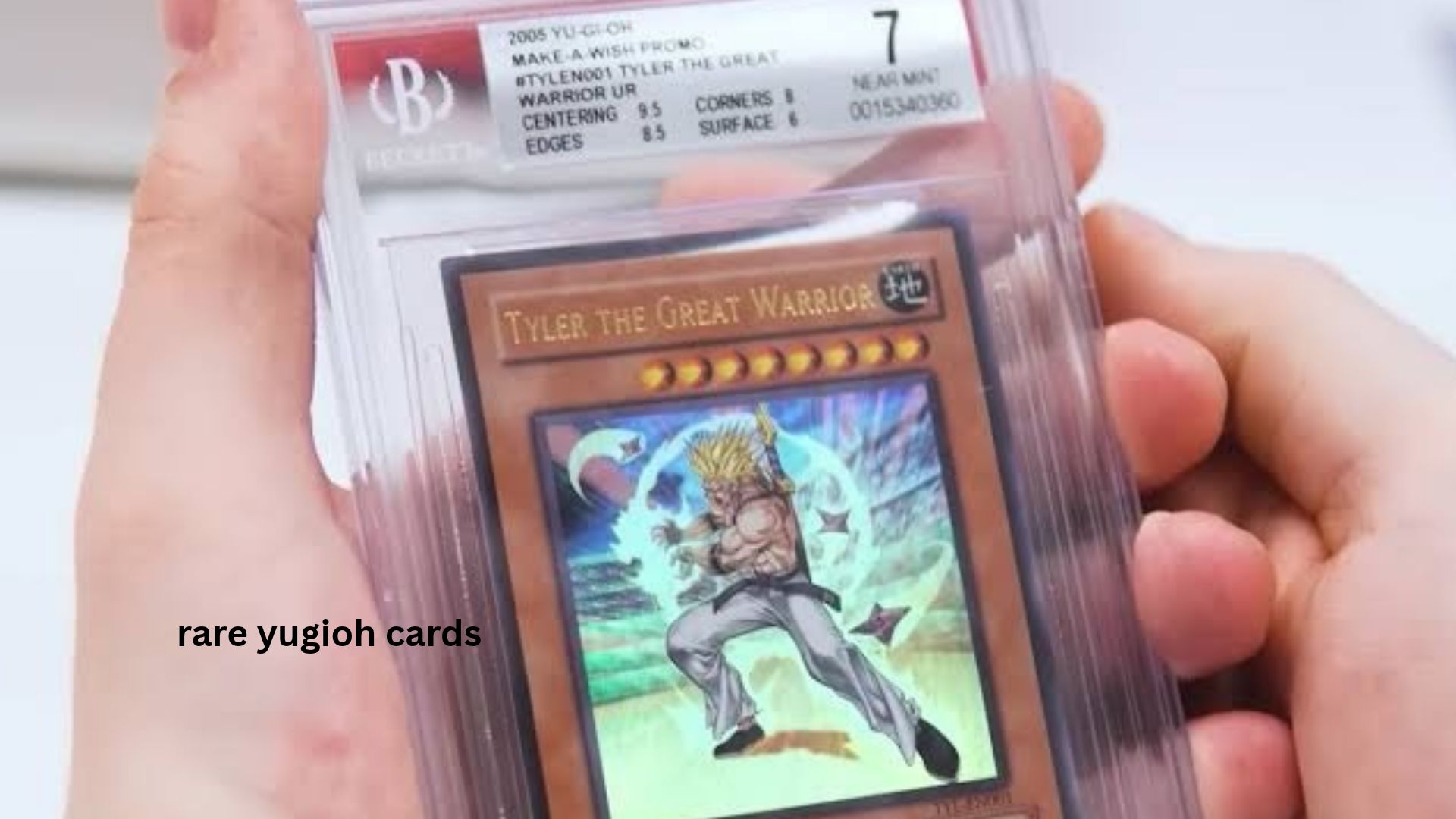
If you have an old Yu-Gi-Oh! card collection sitting in a drawer, the hardest part is often knowing what is actually worth checking. A card can look ordinary but be valuable because of its printing, rarity, language, condition, tournament history, or extremely limited distribution. On the other hand, a card that looks rare may be surprisingly common once you identify the exact set and edition.
That is why identifying rare YuGiOh cards is more complicated than simply searching for the most expensive cards online. The same card name can exist in dozens of printings, with dramatically different values.
This guide explains how collectors actually evaluate valuable Yu-Gi-Oh! cards, which historical cards deserve attention, how rarity works, why condition can change the price, and what mistakes to avoid before selling anything. It also covers an important issue beginners often overlook: a genuine old card is not automatically a valuable card.
Whether you inherited a collection, discovered childhood cards in storage, or are actively collecting vintage Yu-Gi-Oh!, the goal is simple: help you determine which cards deserve a closer look before you spend or sell.
What Are Rare YuGiOh Cards?
Rare YuGiOh cards are cards that have limited availability, desirable printing characteristics, historical importance, exceptional condition, or strong collector demand.
In practical terms, rarity comes from several different sources. A card might be valuable because it was:
- Printed in a particularly scarce set
- Distributed as a tournament or championship prize
- Released as a promotional card
- Produced in a desirable first edition
- Printed with an unusual or highly collectible rarity
- Difficult to find in excellent condition
- Important to early Yu-Gi-Oh! history
- Highly sought after by competitive or nostalgic collectors
This distinction matters because rarity and value are not the same thing.
A card can have a high rarity designation but limited demand. Conversely, a card with a relatively familiar rarity can become expensive when the character, artwork, age, or competitive history creates strong collector interest.
Why Some Yu-Gi-Oh! Cards Become Extremely Valuable
The market for collectible cards is driven by a combination of scarcity and demand.
Consider two cards from the same era. One may have been included in a mass-produced booster set with millions of copies. Another may have been awarded to a small number of tournament participants.
Even if both are old, their supply is completely different.
Several factors typically interact.
Scarcity
The fewer legitimate copies available, the greater the potential collector interest.
However, scarcity should be verified rather than assumed. A card being described online as “rare” does not prove that very few copies exist.
Historical Importance
Cards connected to the early history of the Yu-Gi-Oh! Trading Card Game can attract collectors who want more than playable cards.
Early promotional cards, tournament prizes, championship cards, and unusual releases can have particular significance.
Condition
Condition is one of the biggest differences between a collectible card and an ordinary used card.
Two identical cards can have dramatically different values if one has:
- Heavy scratches
- Whitening along the edges
- Creases
- Surface dents
- Fading
- Poor centering
- Water damage
- Bent corners
A card that looks excellent at first glance should still be inspected under good lighting.
Provenance
For exceptionally valuable cards, knowing where a card came from can add confidence.
For example, a documented tournament prize with credible history is easier to evaluate than an unusually expensive-looking card with an uncertain origin.
The Rarity System You Need to Understand
Yu-Gi-Oh! has used many different rarity treatments over the years. New collectors sometimes assume that one rarity is always more valuable than another, but the reality is more complicated.
Commonly encountered rarity types include:
- Common
- Rare
- Super Rare
- Ultra Rare
- Secret Rare
- Ultimate Rare
- Ghost Rare
- Gold Rare and related Gold rarities
- Starlight Rare
- Collector’s Rare
- Prismatic-style rarities
- Special promotional and prize-card treatments
The exact rarity is only one part of identification.
A useful rule is:
Identify the exact printing before estimating value.
Do not search only for the card’s name. Instead, determine its set, edition, card number, language, rarity, and other identifying details.
Vintage Cards Deserve Special Attention
Some of the most interesting rare YuGiOh cards come from the early years of the game.
Cards associated with the original anime era can attract significant nostalgia-driven demand. Blue-Eyes White Dragon, Dark Magician, Red-Eyes Black Dragon, Exodia pieces, and other iconic monsters are obvious examples.
But there is an important trap here.
Not every old Blue-Eyes is valuable
Blue-Eyes White Dragon has appeared in numerous releases.
A first-edition printing from an early set can be a completely different collectible from a later reprint featuring similar artwork.
The same principle applies to Dark Magician and Red-Eyes Black Dragon.
When evaluating vintage cards, check the specific printing, not just the character or monster name.
Some Types of Rare Cards Collectors Watch Closely
Tournament and Championship Prize Cards
Prize cards are among the most interesting categories in the Yu-Gi-Oh! collecting world.
Certain championship and tournament cards were distributed under circumstances that naturally limited their original supply. Their value can come from scarcity, competitive history, and prestige.
These should not be confused with ordinary tournament-legal cards that were simply difficult to obtain at one point.
Early Promotional Cards
Promotional cards distributed through special events, products, magazines, games, or other channels can be particularly interesting.
Their value depends heavily on the exact promotion and printing.
An early promotional card with strong demand can outperform a normal booster card despite having less familiar rarity terminology.
First Edition Vintage Cards
“First Edition” is one of the first things collectors notice when examining older Yu-Gi-Oh! cards.
But first edition alone does not guarantee a high price.
A valuable first-edition card usually combines several desirable characteristics:
- Recognizable card
- Scarce or historically important printing
- Strong collector demand
- Excellent condition
- Authenticity
A heavily damaged first-edition card may still be collectible, but its value can be far below that of a pristine example.
Condition Can Change Everything
Imagine finding two copies of the same vintage card.
The first has sharp corners, clean surfaces and almost no visible wear.
The second has scratches, edge whitening and a crease across the card.
To someone unfamiliar with the hobby, they are simply two copies of the same card.
To a serious collector, they are two very different assets.
Professional grading can become relevant for valuable cards, but grading should not automatically be treated as a requirement.
Before submitting a card, consider:
- Is the card genuinely valuable?
- Is the condition strong enough to justify grading?
- Is the grading cost reasonable compared with potential value?
- Is the card authentic?
- Is the card sufficiently scarce to attract collectors?
Submitting every old card for grading can become an expensive mistake.
How to Identify a Rare YuGiOh Card
If you have an unknown collection, use a systematic process.
Step 1: Separate the Cards
Start by separating obvious categories:
- Early-era cards
- Promotional cards
- First editions
- Prize or tournament cards
- High-rarity cards
- Modern special rarities
- Ordinary bulk cards
Do not immediately throw away common-looking cards. Some cards are valuable because of a particular printing detail.
Step 2: Record the Card Number
The set or card number is extremely important.
It usually provides much more information than the artwork alone.
Two versions of the same monster can have different card numbers, sets, rarities and values.
Step 3: Check Edition Information
Look for indicators such as:
- 1st Edition
- Unlimited
- Limited Edition
- Promotional markings
Older and newer products can use different conventions, so interpret the marking together with the rest of the card.
Step 4: Identify the Rarity
Look closely at the name lettering, artwork foil, borders and other printing characteristics.
Do not rely only on color. Different generations of Yu-Gi-Oh! cards use different visual treatments.
Step 5: Inspect Condition
Check the front and back.
Pay particular attention to:
- Corners
- Edges
- Scratches
- Surface dents
- Creases
- Centering
- Foil scratches
- Printing defects
The back of a card is especially useful because edge whitening can become obvious there.
A Better Way to Estimate Card Value
One of the most useful collector habits is to stop thinking in terms of asking prices and start thinking in terms of completed sales.
A seller can list a card for an enormous amount without ever finding a buyer.
That listing does not establish the card’s market value.
A better process is:
- Identify the exact card.
- Identify the exact printing.
- Identify the condition.
- Look for comparable completed transactions.
- Compare raw cards with graded cards separately.
- Pay attention to actual sale prices rather than optimistic listings.
This is particularly important with rare YuGiOh cards because small differences in printing can produce very large differences in value.
Raw vs. Graded Cards
A raw card is an ungraded card.
A graded card has been professionally authenticated and assigned a condition grade by a grading company.
For high-value cards, grading can provide buyers with additional confidence.
However, grading is not magic.
A low-grade card does not suddenly become highly valuable simply because it is inside a slab. Likewise, a common card does not become rare because it has been professionally graded.
The underlying collectible still matters.
When Grading May Make Sense
Grading is worth considering when:
- The card has substantial potential value.
- The card is authentic.
- The condition appears strong.
- There is meaningful collector demand.
- You understand the grading costs and risks.
For inexpensive cards, grading fees can easily consume a large percentage of the card’s value.
Common Mistakes New Collectors Make
Mistake 1: Searching Only the Card Name
Searching “Blue-Eyes White Dragon price” is usually too broad.
There are many Blue-Eyes printings.
The correct search starts with precise identification.
Mistake 2: Assuming Every First Edition Is Expensive
First Edition is helpful information, not a guaranteed price signal.
Demand, rarity, set, condition and authenticity still matter.
Mistake 3: Cleaning the Card
This is a surprisingly important point.
Collectors should generally avoid experimenting with household cleaning products, rubbing alcohol, erasers, aggressive wiping or other methods intended to make an old card “look new.”
You may permanently damage the surface or alter characteristics that matter to collectors.
A card with honest age and minor wear is preferable to a damaged card that has been aggressively “restored.”
Mistake 4: Handling Valuable Cards Carelessly
Repeatedly touching foil surfaces, stacking cards loosely, bending cards while inspecting them or storing them in humid conditions can cause unnecessary damage.
For potentially valuable cards, use appropriate protective sleeves and rigid protection.
Mistake 5: Trusting an Online Price Screenshot
A screenshot showing a card listed for $5,000 does not mean the card is worth $5,000.
Always ask whether a comparable card actually sold for that amount.
Three Overlooked Insights About Rare YuGiOh Cards
The “Exact Copy” Problem
Collectors often say they own a particular card without realizing that the name represents multiple distinct products.
In practice, the printing is the collectible, not simply the card name.
This is why experienced collectors spend so much time examining tiny identifying details.
Nostalgia Can Create Unexpected Demand
Competitive usefulness is not always the strongest driver of collectible value.
An iconic monster from someone’s childhood can attract buyers decades later even if the card has little relevance to modern competitive play.
This creates a separate market based on artwork, memories, anime history and collecting culture.
Condition Is More Than “Good” or “Bad”
Condition should be evaluated as a collection of individual characteristics.
A card might have excellent centering but edge whitening. Another might have clean edges but surface scratches.
Thinking about condition this way gives you a much better understanding of why two apparently similar cards can sell for very different amounts.
A Practical Scenario: You Find an Old Collection
Suppose you discover 300 Yu-Gi-Oh! cards from your childhood.
Instead of immediately searching every card individually, create a shortlist.
First pull out:
- First-edition cards
- Early cards
- Foil cards
- Promotional cards
- Tournament-related cards
- Famous monsters
- Cards in unusually excellent condition
Then identify each shortlisted card precisely.
This approach saves considerable time and reduces the chance of overlooking something important.
For a large collection, photographing or recording card numbers in a spreadsheet can also make the identification process much easier.
How to Protect Rare YuGiOh Cards
If you believe you have valuable cards, storage becomes part of the investment.
Use:
- Proper-fitting protective sleeves
- Rigid card holders for important examples
- Acid-free storage materials where appropriate
- A dry, stable environment
- Protection from direct sunlight
- Organized boxes that do not force cards tightly together
Avoid attics, damp basements and places with major temperature fluctuations.
Humidity is particularly troublesome because paper-based collectibles can deteriorate over time.
Should You Sell Rare YuGiOh Cards?
Selling depends on your goals.
If you simply want to clear out old cards, selling the entire collection may be convenient but can produce less money because valuable cards become mixed with bulk.
If maximizing value is your priority, identify the potentially important cards first and separate them from ordinary cards.
For particularly expensive cards, consider getting more than one valuation opinion before accepting an offer.
Also remember that a dealer’s buying price and a collector’s eventual retail price are not necessarily the same. A dealer needs room for expenses, risk and profit.
FAQ
What are the rarest YuGiOh cards?
Some of the rarest Yu-Gi-Oh! cards are extremely limited tournament, championship, promotional, and prize cards. Their scarcity can be far greater than that of cards from ordinary booster sets. Exact rarity and value depend on the specific printing, condition, authenticity, and documented distribution history.
How can I tell if my Yu-Gi-Oh! card is rare?
Start by checking the card number, set, edition, rarity markings, language and condition. Do not identify the card from its name and artwork alone because the same card may have many different printings. Once you know the exact version, compare it with verified market transactions.
Are old Yu-Gi-Oh! cards worth money?
Some old Yu-Gi-Oh! cards are valuable, but age alone does not make a card expensive. Early printings of popular monsters, scarce promotional cards, tournament cards and high-grade examples tend to receive more collector attention. Common older cards can still have relatively modest values.
Is a first-edition Yu-Gi-Oh! card valuable?
A first-edition card can be valuable, particularly when it is an early printing of a highly collectible card in excellent condition. However, “1st Edition” does not automatically mean the card is worth a large amount. The exact set, rarity, condition and market demand must all be considered.
Should I get rare Yu-Gi-Oh! cards graded?
Grading can make sense for authentic cards with strong potential value and good condition. It provides an independent assessment and can make high-value transactions easier for buyers. For inexpensive or heavily damaged cards, however, grading costs may outweigh the potential benefit.
What is the best way to sell rare YuGiOh cards?
First identify the exact printing and condition before negotiating a sale. Compare actual completed sales rather than relying on high asking prices, and consider obtaining multiple opinions for an unusually valuable card. Separating valuable cards from bulk can also help you avoid selling a potentially important card for a collection-wide price.
Conclusion
Finding rare YuGiOh cards is less about recognizing a shiny foil card and more about learning how to identify the exact collectible in front of you. Set information, edition, rarity, condition, scarcity, authenticity and collector demand all work together to determine whether a card is genuinely valuable.
The safest approach is to slow down. Don’t clean an old card, don’t trust an inflated online listing, and don’t assume that a famous card name automatically means a high-value printing.
If you have an old collection, start with the cards that have the strongest combination of age, scarcity, recognizable characters, unusual distribution and excellent condition. A careful identification process can reveal opportunities that a quick glance would miss—and that is often where the real excitement of Yu-Gi-Oh! collecting begins.