

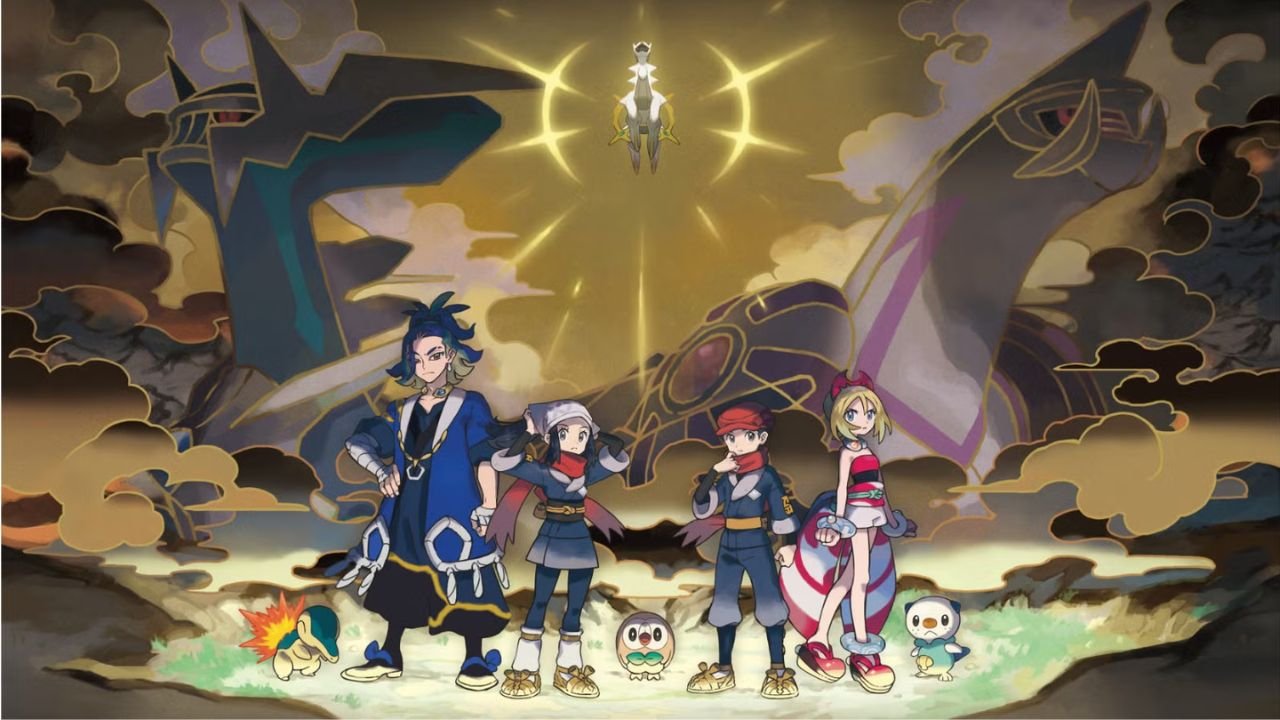
Pokémon Legends: Arceus Review — A Fresh Pokémon Shift
For years, many Pokémon fans followed the same familiar loop: enter a town, battle gym leaders, collect badges, defeat the Elite Four, and catch Pokémon in tall grass with a random encounter system that hadn’t changed much since the early generations. While comforting, that formula started to feel predictable for players looking for something more immersive and modern.
That’s where Pokémon Legends: Arceus enters the picture. Instead of repeating the traditional structure, it asks a bold question: what if Pokémon training wasn’t about gyms and leagues, but about survival, research, and building the first Pokédex in a wild, untamed world?
This review is based on hands-on gameplay experience, focusing on how the game actually feels to play—not just what it promises on paper. From exploring open zones filled with aggressive wild Pokémon to crafting items on the fly and dodging attacks in real time, the game changes the rhythm of Pokémon in ways that are immediately noticeable.
But does this reinvention truly work for long-time fans? Or does it leave behind too much of what made Pokémon special in the first place? Let’s break it down.
A Different Kind of Pokémon Journey
The biggest shift in Pokémon Legends: Arceus is its setting and purpose. You’re placed in the Hisui region—a historical version of Sinnoh—long before modern Pokémon societies existed. There are no Pokémon gyms, no trainers waiting for battles every few steps, and no structured path to becoming a champion.
Instead, your mission is simple but surprisingly deep: study Pokémon behavior and complete the first-ever Pokédex.
This changes everything.
Instead of forcing battles, you observe Pokémon in their natural environments. Some run away immediately when they spot you. Others become aggressive and will actually chase you down. This creates a constant feeling of tension that traditional Pokémon games rarely deliver.
What stands out most is how alive the world feels. Pokémon aren’t just random encounters anymore—they behave like real creatures with patterns, territories, and reactions to your presence.
Gameplay Loop: Exploration First, Battles Second
At its core, the gameplay loop revolves around three actions:
- Exploring wild zones
- Catching or studying Pokémon
- Returning to base to report research progress
Unlike older Pokémon games where battles are mandatory, here you often decide whether fighting is even necessary.
One of the most refreshing changes is the catching system. You can throw Poké Balls directly in the overworld without entering a separate battle screen. If you sneak behind a Pokémon in tall grass, you can often catch it instantly.
This creates a stealth-like experience. You crouch, observe, and time your throws carefully. It feels more like tracking wildlife than battling cartoon creatures.
However, battles still exist—and they’ve been reworked. The turn-based system remains, but with Agile and Strong Style moves that affect turn order and power. This adds a layer of strategy without overwhelming new players.
From experience, battles feel faster and more dynamic, but still recognizable to longtime fans.
The Open Zone Structure Works Surprisingly Well
Rather than a fully open world, the game uses large explorable regions. Each zone is packed with Pokémon, materials, and environmental hazards.
At first, this might feel like a limitation compared to modern open-world games. But in practice, it actually improves focus.
Each area feels handcrafted. You learn where certain Pokémon spawn, how they behave, and what risks exist in each biome. For example, some aggressive Pokémon will attack on sight, forcing you to plan your route carefully.
This design encourages repeated exploration. You don’t just “clear” an area—you return to it with better tools, stronger Pokémon, and new objectives.
Catching Pokémon Feels More Rewarding Than Ever
One of the most satisfying improvements is how catching Pokémon is integrated into progression.
Instead of catching one Pokémon and moving on, you’re encouraged to complete research tasks such as:
- Catching multiple specimens
- Observing specific moves
- Feeding wild Pokémon
- Battling them in different conditions
This makes even common Pokémon feel meaningful. A simple Starly or Bidoof becomes part of your research journey rather than just early-game filler.
From a player perspective, this is where the game shines. You stop treating Pokémon as collectibles and start treating them as subjects in a living ecosystem.
Combat: Familiar but Faster
The battle system retains turn-based mechanics, but introduces meaningful variations.
The Agile Style allows you to act faster at the cost of reduced damage, while Strong Style increases power but slows your turn order. This system creates real risk-reward decisions mid-battle.
In practice, battles feel quicker and less repetitive than older games. You’re not just selecting “Attack” repeatedly—you’re thinking about timing, sequencing, and momentum.
However, it’s worth noting that the system is not deeply complex. Competitive players may still find it relatively simple compared to other RPGs. But for the intended experience, it strikes a good balance.
Graphics and Performance: Functional, Not Stunning
Visually, Pokémon Legends: Arceus is a mixed experience.
On the positive side, Pokémon designs are excellent, animations during battles are smooth, and the world has a consistent artistic direction inspired by ancient Japan.
However, environments can feel rough around the edges. Distant textures and terrain sometimes lack detail, and the visual fidelity doesn’t match other modern Switch titles.
Still, during actual gameplay, these issues become less noticeable because you’re focused on movement, catching Pokémon, and survival rather than sightseeing.
In short: it’s not a technical showcase, but it rarely interferes with enjoyment.
Difficulty and Player Experience
One of the most noticeable aspects is the increased difficulty in terms of survival—not combat.
Wild Pokémon can and will attack you directly. If your character gets hit too many times, you’ll be sent back to base and lose some collected resources. This adds real stakes to exploration.
This system creates tension in a way traditional Pokémon games don’t. You’re not just a trainer—you’re someone physically present in a dangerous world.
It’s especially impactful in higher-level zones where even small mistakes can lead to quick defeat.
What Works Best
After extended play, several strengths stand out:
- Catching Pokémon feels more immersive and hands-on
- Exploration has real purpose beyond simple progression
- Research-based Pokédex is genuinely engaging
- Battles are faster and more strategic
- The world feels more alive and reactive
These elements combine to create a refreshing Pokémon experience that breaks away from decades of repetition.
Where It Falls Short
Despite its innovation, the game isn’t perfect.
Some limitations include:
- Repetitive environmental design in certain areas
- Lack of traditional towns and social interactions
- Limited endgame variety once the Pokédex is complete
- Visual performance that doesn’t fully match modern expectations
For players who love classic Pokémon structure—gyms, leagues, and competitive progression—this game may feel incomplete or too experimental.
Who Should Play Pokémon Legends: Arceus?
This game is ideal for:
- Players tired of the traditional Pokémon formula
- Fans who enjoy exploration and collection systems
- Gamers who like survival-style mechanics without harsh punishment
- Anyone interested in Pokémon worldbuilding and lore
It may not be ideal for:
- Competitive Pokémon battlers
- Players expecting a fully open-world AAA experience
- Those who prefer structured gym-based progression
Final Verdict
Pokémon Legends: Arceus is one of the most important reinventions in the Pokémon series. It doesn’t completely abandon tradition, but it reshapes the core experience into something more immersive, exploratory, and grounded in discovery.
While it has technical limitations and lacks some classic features, its strengths far outweigh its flaws. The shift from “trainer-focused battles” to “research-driven exploration” is not just a gameplay change—it’s a philosophy change.
If you’ve been waiting for a Pokémon game that actually feels different rather than iterative, this is it.
Outing Club examines the life stories, family histories, and personal paths of famous individuals, giving readers a more in-depth view of the people behind news and media attention.