


Avatar Prerelease: What You Need to Know
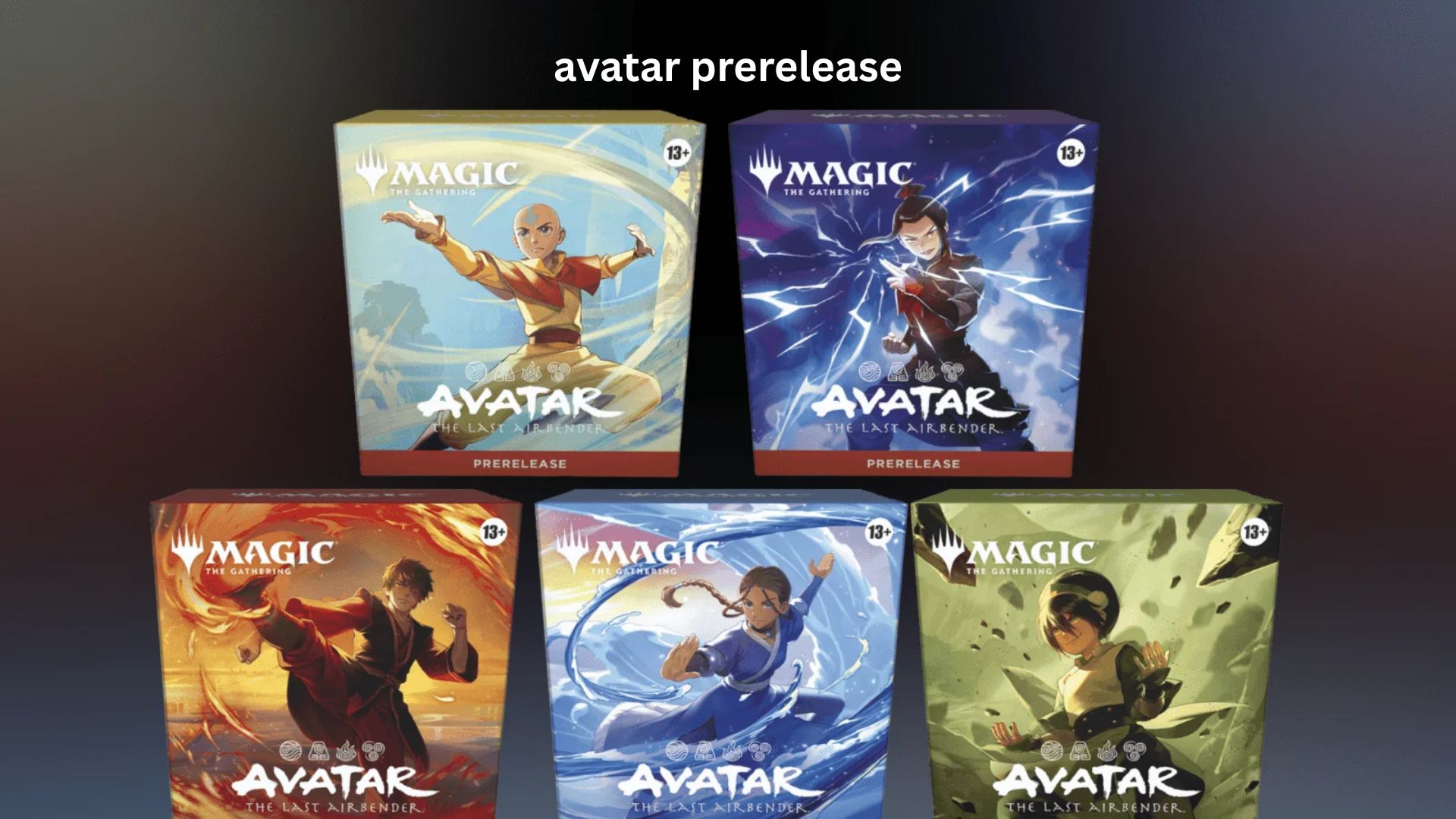
If you have searched for avatar prerelease, you are probably trying to answer a practical question: what exactly happens at the event, what do you receive, and is it worth attending if you are not an experienced Magic: The Gathering player? The phrase can be confusing because “Avatar” can refer to several entertainment properties, but in the current trading-card context, it most commonly refers to the Magic: The Gathering | Avatar: The Last Airbender set.
The prerelease was the first opportunity for players to experience the set in a limited tournament environment. Wizards of the Coast scheduled prerelease events for November 14–20, 2025, ahead of the set’s wider release.
This guide explains how the Avatar prerelease works, what comes inside the prerelease pack, how the five character themes affect deck building, and what a new player should do differently from an experienced Magic player. It also covers several easy-to-miss details that can make a significant difference during a sealed event.
What Is the Avatar Prerelease?
The Avatar prerelease is a Magic: The Gathering sealed-deck event built around the Avatar: The Last Airbender set.
Instead of bringing a completed deck from home, players receive a special Prerelease Pack. They open the contents, build a limited deck from those cards and basic lands, and then play against other participants.
The official Prerelease Pack contains:
- Five Avatar: The Last Airbender Play Boosters
- One seeded Character Booster
- Two non-foil double-sided tokens
- One traditional foil, year-stamped rare or mythic rare
- One themed Spindown life counter
The important part is that the Character Booster is connected to one of five major characters and one Magic color. The five themes are associated with Aang, Katara, Azula, Zuko, and Toph.
This gives the prerelease a stronger identity than a completely random sealed pool.
When Was the Avatar Prerelease?
The official prerelease period for Magic: The Gathering | Avatar: The Last Airbender began on November 14, 2025. Wizards of the Coast listed prerelease events from November 14 through November 20, while the set’s broader release followed afterward.
That timing matters because a prerelease is deliberately designed to give players an early hands-on experience with a new Magic set.
If you are researching the event today rather than planning for its original weekend, it is useful to distinguish between the 2025 prerelease event and Avatar products that remain available afterward. The set itself is now an established Magic release rather than an upcoming prerelease.
How the Five Avatar Prerelease Packs Work
One of the most interesting parts of this release is the character-based structure.
Each Prerelease Pack is linked to a particular Avatar character and Magic color:
| Character | Magic color |
|---|---|
| Aang | White |
| Katara | Blue |
| Azula | Black |
| Zuko | Red |
| Toph | Green |
The seeded booster is intended to push your card pool toward that color. However, there is an important strategic point: your seeded color does not automatically have to become your final deck’s main color.
This is one of the easiest mistakes new players make.
Suppose you receive a Zuko pack and open several useful red cards. It is tempting to decide immediately that your deck must be red. But after opening the five regular Play Boosters, you may discover that another color has much stronger creatures, removal, combat tricks, or card advantage.
A better approach is to treat your character color as a starting signal, not a command.
What Should You Expect at an Avatar Prerelease?
A typical sealed prerelease follows a fairly simple process.
1. Register for the event
You normally register with the participating game store and receive your Prerelease Pack.
2. Open your cards
You open the five Play Boosters and your seeded Character Booster.
3. Evaluate the entire pool
This is where patience matters. Do not build your deck around the first powerful rare you see.
Sort your cards by color and look for:
- Playable creatures
- Removal
- Combat tricks
- Card draw
- Mana fixing
- Strong synergy
- A reasonable mana curve
4. Build a 40-card deck
You generally build a 40-card limited deck rather than a normal 60-card Constructed deck.
Basic lands are available separately for deck construction.
5. Play several rounds
You then play against other prerelease participants using the deck you built.
The experience is partly competitive and partly experimental. Everyone is working with limited information and unfamiliar cards, which makes the first few games especially valuable.
The Most Important Deck-Building Lesson
The biggest practical difference between prerelease deck building and Constructed deck building is consistency.
In Constructed Magic, you can deliberately include multiple copies of your best cards. In sealed play, you work with whatever your boosters give you.
That means you should not ask:
“What is the strongest card I opened?”
Instead, ask:
“What is the strongest deck I can consistently build from this pool?”
Those are very different questions.
A powerful rare sitting alongside weak support cards may be less useful than a solid collection of commons and uncommons that work together.
How to Choose Your Two Colors
Most sealed decks are built around two primary colors.
A practical evaluation method is to score each color according to four things:
- Number of playable cards
- Quality of removal
- Strength of creatures
- Mana curve and synergy
For example, imagine you open:
- 10 playable red cards
- 8 playable green cards
- 4 playable blue cards
- 3 playable white cards
- 5 playable black cards
That does not automatically mean red-green is correct.
Your 10 red cards might include several expensive creatures that compete for the same part of your curve. Meanwhile, the eight green cards might include efficient creatures and combat tricks that give the deck a much smoother progression.
The strongest combination is usually the one that produces the best complete deck, not the largest pile of playable cards.
Aang, Katara, Zuko, Toph and Azula: Does the Character Matter?
Yes, but not in the way some beginners expect.
The character-themed booster gives your starting pool a particular identity, but it does not guarantee a specific strategy or final deck.
The Avatar set was designed around its elemental themes, including Airbending, Waterbending, Firebending, and Earthbending, so the character packaging is more than simple decoration. It connects the flavor of the franchise with Magic’s color and gameplay systems.
Still, sealed deck construction rewards flexibility.
A useful rule is:
Start with your character. Finish with your card pool.
That small distinction can prevent a lot of poor deck-building decisions.
Three Less-Obvious Insights About the Avatar Prerelease
Your seeded booster can distort your first impression
Because your Character Booster is deliberately aligned with a particular color, it can make that color look stronger than it actually is.
This creates a psychological trap.
You have been handed a Zuko-themed product, so you naturally want to play red. But your five normal boosters may be telling a different story.
Experienced limited players learn to separate product identity from deck quality.
Your mana curve matters more than your favorite Avatar character
It is easy to build a deck around the characters you love most.
That is fun, but competitive sealed play requires another question: what happens on turns two, three, four and five?
A deck with several impressive late-game cards but almost nothing useful early can lose before those powerful cards become relevant.
A balanced curve often produces a better playing experience than a collection of individually exciting cards.
The first games are part of the learning process
Do not judge your deck solely by its first result.
In a prerelease environment, you are learning the cards at the same time as your opponents. A card that initially looks mediocre may become useful once you understand the format’s common interactions.
After your first game, ask:
- Which cards consistently helped?
- Which cards stayed in my hand?
- Did I have enough early plays?
- Did I lose because of mana?
- Did I have enough removal?
- Was one color clearly underperforming?
That information can improve your decisions in later rounds.
Common Avatar Prerelease Mistakes
Playing too many colors
Having several exciting cards does not mean you should play three or four colors.
Unless your pool provides reliable mana fixing, sticking to two colors is generally safer.
Playing every rare
A rare can be powerful without being suitable for your deck.
Limited decks are about synergy, curve and consistency.
Ignoring two-mana creatures
New players often focus on large creatures because they look impressive.
But early creatures can determine whether you survive long enough to use those expensive cards.
Keeping a bad opening hand
If your opening seven cards contain almost no lands or an extremely awkward mana curve, blindly keeping can put you behind before the game really begins.
Learn when a mulligan gives you a better chance to play a functional game.
Overvaluing flavor
Avatar fans naturally want to build around their favorite characters.
There is nothing wrong with that in casual play. But if your goal is to win the prerelease match, let the cards determine your strategy rather than forcing a favorite character into the deck.
How Beginners Can Prepare Before an Avatar Prerelease
You do not need years of Magic experience to enjoy a prerelease.
A little preparation goes a long way.
Before attending, make sure you understand:
- How combat works
- How mana works
- What a creature’s power and toughness mean
- How instant and sorcery spells differ
- How blocking works
- What the basic phases of a turn are
- How to build a 40-card sealed deck
If you are completely new, playing a few practice games before the event can make the experience much less stressful.
It is also worth bringing a way to keep track of life totals and taking time to read unfamiliar cards carefully. At a prerelease, everyone is learning the new set, so asking your opponent to explain an interaction is perfectly reasonable.
Is an Avatar Prerelease Pack Worth It?
That depends on what you want.
If you are an Avatar fan who enjoys Magic, the product has obvious appeal because it combines the franchise’s characters with a playable sealed experience.
For a competitive player, its value is different. The main benefit is the opportunity to play the set in a limited environment and learn its mechanics before becoming familiar with the wider card pool.
For collectors, the five different character themes also create an additional collecting angle. The official product structure specifically offers five themed Prerelease Packs, giving players an Aang, Katara, Azula, Zuko or Toph identity to explore.
The smartest choice depends on whether your priority is playing, collecting, or simply enjoying the Avatar crossover.
FAQ
What is an Avatar prerelease?
The Avatar prerelease was a Magic: The Gathering sealed event for the Avatar: The Last Airbender set. Players received a themed Prerelease Pack, opened a limited pool of cards and built a 40-card deck. The official prerelease period began November 14, 2025.
What comes in an Avatar prerelease pack?
Each pack contains five Play Boosters, a seeded Character Booster, two double-sided tokens, a traditional foil year-stamped rare or mythic rare, and a themed Spindown die. The Character Booster is connected to one of five Avatar characters and a corresponding Magic color.
Which Avatar characters are featured in the prerelease packs?
The five featured characters are Aang, Katara, Azula, Zuko and Toph. Each is associated with a Magic color, creating five different themed Prerelease Packs.
Do I have to play the color of my Avatar prerelease pack?
No. Your seeded Character Booster is designed to give you a strong starting point, but you are free to build your deck around the colors that produce the best overall card pool. Evaluating all your cards before choosing your final colors is usually the better strategy.
Is the Avatar prerelease good for beginners?
Yes. A prerelease can actually be one of the more approachable ways for a new player to experience a Magic set because everyone works from a limited card pool. Some stores even offered special learn-to-play sealed events designed to make the format more comfortable for newer players.
Conclusion
The Avatar prerelease was more than a themed product launch. It gave Magic players a practical way to experience Avatar: The Last Airbender through sealed deck building, elemental themes and character-focused Prerelease Packs.
The most useful lesson is simple: do not let the character on your pack decide your entire deck. Use the seeded color as a starting point, examine the complete card pool, prioritize a reliable mana curve and build around the cards that work together.
For new players, the best approach is to prepare for the basic rules, stay flexible during deck construction and treat each game as an opportunity to learn the set. For experienced players, the challenge is resisting the temptation to overvalue individual rares and instead identifying the strongest consistent strategy.
Ultimately, the Avatar crossover works best when you approach it as both a fan and a player: enjoy the world of the franchise, but let good Magic fundamentals guide your decisions.