

Boomer Shooter: Why Old-School FPS Games Still Win
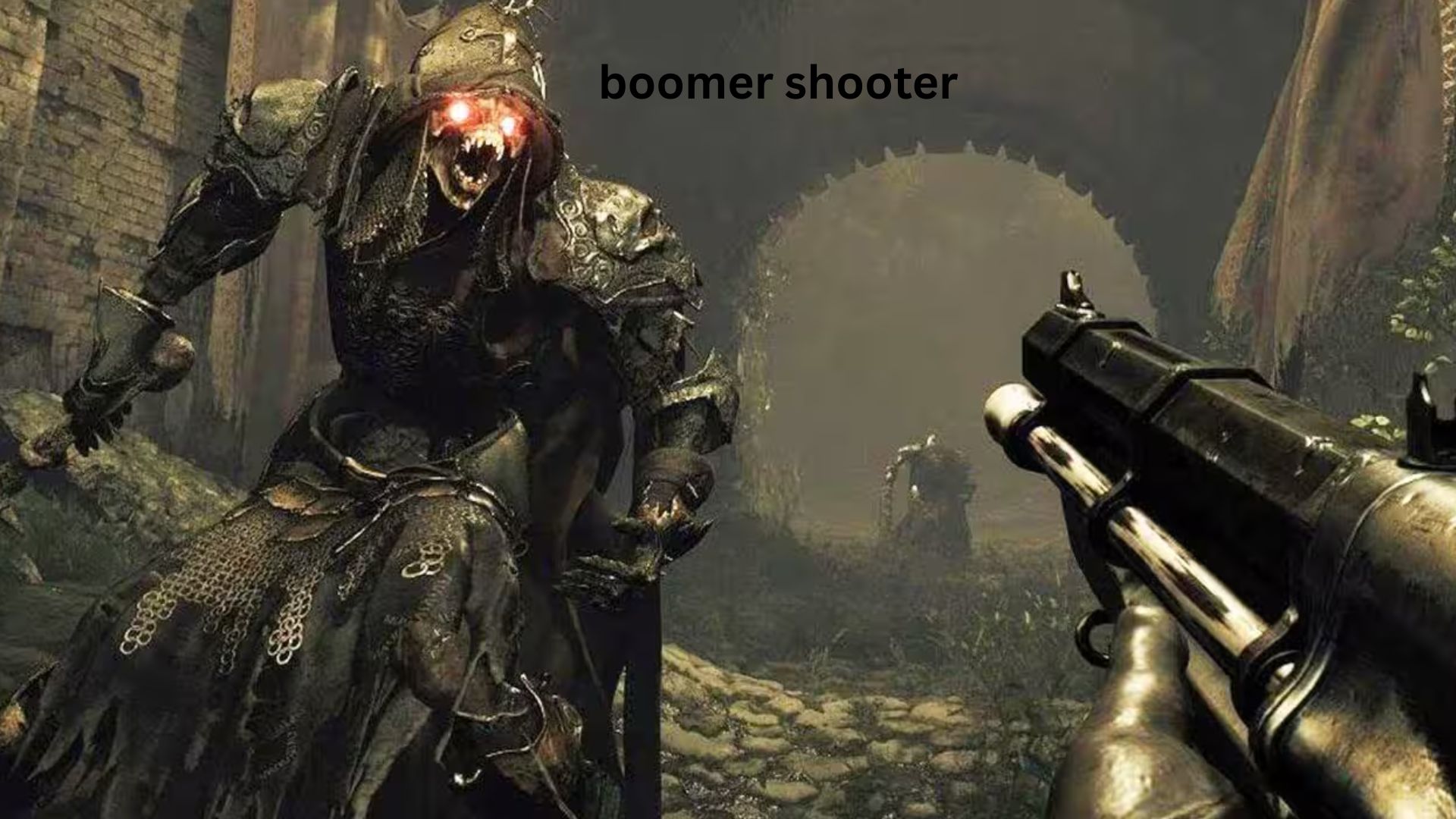
If modern first-person shooters sometimes feel overloaded with battle passes, progression systems, weapon attachments, matchmaking rules, and carefully controlled encounters, you are not alone. That is exactly why the boomer shooter has made such a strong comeback. These games take inspiration from classic 1990s first-person shooters and rebuild their most exciting ideas for modern players: fast movement, aggressive enemies, powerful weapons, maze-like levels, and immediate action.
But calling a game a boomer shooter simply because it looks old-fashioned misses the point. The best examples understand why classic shooters were so satisfying and deliberately preserve those design principles while adding modern controls, visuals, sound, and quality-of-life features.
This guide explains what a boomer shooter actually is, where the genre came from, how it differs from modern FPS games, which mechanics define it, and how to approach one if you are new to the style. It also explores several less obvious reasons these games feel so rewarding—and why their design lessons remain relevant today.
What Is a Boomer Shooter?
A boomer shooter is a modern first-person shooter designed around the fast, challenging, weapon-focused gameplay associated with classic FPS games of the 1990s.
The name is playful rather than literal. You do not have to be a “boomer” to enjoy one. The term generally refers to games influenced by the era of titles such as Doom, Quake, Duke Nukem 3D, Blood, and Unreal.
Typical characteristics include:
- Fast movement
- Large weapon arsenals
- Powerful guns with distinct roles
- Aggressive enemy encounters
- Health and armor pickups
- Limited or unusual regeneration
- Secrets hidden throughout levels
- Keycards and locked areas
- Vertical or maze-like environments
- Minimal reliance on cinematic storytelling
- High replay value
- Challenging difficulty
The important distinction is design philosophy, not simply visual style. A game can have pixelated graphics and still fail to capture the boomer-shooter experience. Conversely, a game can use modern graphics while following the same principles.
Where Did the Boomer Shooter Come From?
The roots of the genre stretch back to the early PC FPS revolution.
Doom established many of the fundamentals players now associate with classic shooters: speed, explosive weapons, enemy variety, secrets, environmental navigation, and combat that rewarded quick reactions.
Quake pushed movement and 3D environments further, while games such as Duke Nukem 3D experimented with interactive environments and personality.
Another important influence was the philosophy of older shooters in which the player was rarely expected to hide behind cover for long periods.
Instead, survival depended on movement.
You strafed around projectiles, changed weapons according to enemy type, managed ammunition, searched for resources, and learned the layout of the level.
Modern boomer shooters borrow that foundation rather than simply copying the graphics.
What Makes a Good Boomer Shooter?
Not every retro-inspired FPS succeeds. The strongest games usually get several interconnected systems right.
1. Movement Is Part of Combat
In many modern shooters, movement primarily helps you reach cover or reposition between encounters.
In a boomer shooter, movement itself can be a weapon.
You may need to:
- Circle dangerous enemies
- Strafe around projectiles
- Jump across platforms
- Move backward while firing
- Dodge attacks at close range
- Maintain momentum through an arena
This creates a very different mental rhythm.
You are not simply asking, “Where should I shoot?”
You are asking, “Where should I move so that I can keep shooting without becoming an easy target?”
2. Weapons Should Feel Different
A good arsenal does not simply provide ten versions of the same gun.
Each weapon should solve a different problem.
For example:
- A shotgun may dominate at close range.
- A rapid-fire weapon may handle weaker enemies.
- A rocket launcher may control groups.
- A precision weapon may reward accurate targeting.
- A powerful special weapon may eliminate dangerous enemies quickly.
The interesting part is weapon switching.
Strong players do not necessarily use their favorite weapon all the time. They choose the tool that fits the situation.
3. Enemies Create Problems, Not Just Targets
One underappreciated feature of classic FPS design is enemy behavior.
A strong enemy roster creates different tactical questions.
A fast melee enemy forces you to maintain distance. A ranged enemy may pressure you from another direction. A heavily armored opponent can encourage you to conserve ammunition or use a particular weapon.
The result is combat that feels like a moving puzzle.
That is one reason boomer shooters can remain engaging even when their basic gameplay loop is extremely simple.
Boomer Shooter vs Modern FPS
The difference becomes clearer when the two approaches are placed side by side.
| Feature | Boomer Shooter | Typical Modern FPS |
|---|---|---|
| Movement | Fast and highly important | Often more controlled |
| Health | Frequently uses pickups | Often regenerates |
| Weapons | Large, specialized arsenal | Smaller or progression-based |
| Levels | Exploration and secrets | Often more linear |
| Combat | Constant aggression | Frequently cover-oriented |
| Progression | Often minimal | Commonly extensive |
| Story | Secondary in many games | Often central |
| Difficulty | Frequently demanding | Often adjustable and accessible |
| Replayability | Secrets, mastery, speed | Unlocks, multiplayer, progression |
Neither approach is automatically better.
They simply solve different problems.
A modern military shooter may want to create a cinematic, realistic experience. A boomer shooter is more interested in making the player feel powerful, fast, clever, and constantly engaged.
Why Are Boomer Shooters So Fast?
Speed is more than a nostalgic feature.
It changes how players think.
When enemies attack quickly and projectiles travel across an open arena, standing still becomes dangerous. The player has to process information continuously.
You begin recognizing patterns:
Enemy appears → identify threat → select weapon → move → attack → reposition → collect resources → repeat.
This creates a satisfying feedback loop.
One useful way to understand the genre is that movement replaces cover.
Instead of surviving because a wall protects you, you survive because you are difficult to hit.
That small difference produces a dramatically different FPS experience.
Why Health Pickups Matter So Much
Health and armor pickups may appear primitive compared with automatic regeneration, but they create an important strategic layer.
Suppose you have 35 health and see a health pickup worth 50 points.
Should you take it immediately?
Maybe not.
If you can survive the next encounter and return later, the pickup becomes a resource to manage rather than a simple reward.
This creates something modern regeneration systems often remove: spatial resource memory.
You remember where useful resources are.
You might think, “There was armor around the corner. I can take one more risk.”
That means the level itself becomes part of your survival strategy.
Secrets and Exploration Are More Important Than They Look
Secret areas are another defining characteristic.
A hidden wall, unusual switch, suspicious corridor, or hard-to-reach platform may lead to:
- Extra ammunition
- Health
- Armor
- Weapons
- Power-ups
- Collectibles
- Alternative routes
The best secrets do not merely reward obsessive searching. They teach players to pay attention.
You begin noticing environmental clues that you would otherwise ignore.
This is one of the genre’s cleverest design tricks: it turns curiosity into a gameplay skill.
A Practical Approach for New Players
If you are accustomed to slower modern FPS games, your first boomer shooter can feel chaotic.
That is normal.
Use these habits to adapt.
Keep Moving
Do not wait until you are being attacked to start moving.
Develop the habit of strafing while firing.
Learn Enemy Priorities
Not every enemy deserves equal attention.
Ask:
- Which enemy can kill me fastest?
- Which enemy restricts my movement?
- Which enemy can I eliminate efficiently?
- Which threat can safely be ignored for a few seconds?
This makes difficult encounters much more manageable.
Switch Weapons Frequently
Do not treat weapon switching as an emergency action.
Think of weapons as different tools.
If one weapon is consuming too much ammunition or taking too long to kill a particular enemy, experiment with another option.
Learn the Arena
When you enter a large combat room, quickly identify:
- Open spaces
- Escape routes
- Elevation changes
- Ammunition
- Health
- Armor
- Dangerous enemy positions
This information can be more valuable than immediately firing.
Do Not Fear Difficulty
Boomer shooters often expect failure.
Dying is frequently part of learning enemy patterns and level layouts.
If a particular arena destroys you repeatedly, do not simply attempt the same strategy faster. Change your route, weapon selection, target priority, or movement pattern.
Common Mistakes Beginners Make
Standing Still While Shooting
This is probably the biggest mistake.
Accuracy is not enough if you are an easy target.
Saving Every Powerful Weapon
Players often finish a level with ammunition for their strongest weapons because they were afraid to use them.
That defeats the purpose.
Powerful weapons exist to solve dangerous situations. Use them when they provide a meaningful advantage.
Fighting Every Enemy Immediately
Sometimes the smartest decision is movement.
You may be able to reposition, collect resources, separate enemies, or create a better angle before committing to the fight.
Ignoring the Environment
Classic-inspired levels often contain valuable information in their architecture.
Look for unusual walls, switches, elevated platforms, locked doors, and alternate routes.
Treating Every Death as a Reflex Problem
Some deaths happen because you reacted too slowly.
Others happen because your strategy was wrong.
Learning to distinguish between the two is an important part of improving.
Three Overlooked Design Lessons in Boomer Shooters
The First Is That Speed Can Improve Decision-Making
It sounds contradictory, but fast gameplay can sometimes make decision-making clearer.
Because encounters move quickly, weapons and enemy roles need to be readable. You learn to recognize threats almost instinctively.
The player develops a practical mental vocabulary: this enemy means dodge, that enemy means prioritize, this weapon means crowd control.
Speed therefore does not necessarily create mindless action. Good speed can create rapid strategic thinking.
The Second Is That Limited Resources Can Increase Freedom
It may seem that ammunition limits restrict players.
In practice, they can encourage experimentation.
If you have unlimited ammunition for one weapon, there is little reason to learn another. Limited resources force you to understand the entire arsenal.
The restriction creates variety.
The Third Is That Level Design Can Replace Traditional Progression
Many modern games motivate players through unlocks, levels, experience points, cosmetic rewards, and skill trees.
Boomer shooters can achieve progression without all of those systems.
The player themselves becomes more capable.
You learn:
- Enemy patterns
- Weapon combinations
- Movement techniques
- Secret locations
- Efficient routes
- Arena layouts
The character may barely change, but the person holding the controller does.
That is one of the genre’s most powerful ideas.
Who Should Play a Boomer Shooter?
This genre is particularly appealing if you enjoy:
- Fast-paced FPS combat
- Difficult games
- Exploration
- Retro-inspired design
- Large weapon arsenals
- Minimal progression systems
- Secrets and collectibles
- Skill-based gameplay
- Replayable levels
- Learning through experimentation
It may be less suitable if you primarily want a realistic military simulation, slow tactical combat, heavily scripted storytelling, or extensive character progression.
Is a Boomer Shooter Only a Nostalgia Genre?
No.
Nostalgia certainly helped create interest, but nostalgia alone cannot explain the genre’s continued appeal.
A player who never touched a 1990s FPS can still understand the pleasure of fast movement, powerful weapons, clear enemy behavior, and rewarding exploration.
The underlying principles are timeless.
In fact, some modern players prefer these games precisely because they remove systems that can distract from the central action.
The appeal is not necessarily, “I remember games like this.”
It can simply be:
“This game respects my time and lets me play.”
FAQ
What does boomer shooter mean?
A boomer shooter is a modern FPS inspired by classic first-person shooters from the 1990s. It usually emphasizes speed, aggressive combat, powerful weapons, exploration, secrets, and resource management. The term is humorous and does not refer to the player’s actual age.
What are the main features of a boomer shooter?
Common features include fast movement, weapon variety, health and armor pickups, challenging enemies, nonlinear or exploratory levels, hidden secrets, and relatively simple progression. Many games also use retro-inspired graphics or sound, although visual style is not required.
Are boomer shooters difficult for beginners?
They can be, especially if you are used to modern shooters with regenerating health and cover-based combat. The key is to learn movement and enemy priorities rather than relying only on aiming accuracy. Starting on an easier difficulty can help you understand the game’s systems without removing the core experience.
Why are boomer shooters becoming popular again?
Their popularity comes partly from renewed interest in retro game design, but the bigger reason is gameplay. They provide fast, direct action without requiring players to manage extensive progression systems, seasonal content, or complicated loadouts. Many players find that focused design refreshing.
What is the difference between a boomer shooter and a retro FPS?
The terms overlap, but “retro FPS” can describe older games or modern games deliberately designed to resemble them. “Boomer shooter” usually refers specifically to modern games that revive the mechanics and design philosophy of classic FPS titles. A game can therefore be retro-inspired without necessarily fitting every boomer-shooter convention.
Do boomer shooters require good aim?
Good aim helps, but movement, positioning, weapon choice, enemy recognition, and resource management can be equally important. Some games emphasize projectile dodging and arena control so heavily that mechanical accuracy is only one part of success. Improving your movement can sometimes produce a bigger improvement than simply trying to aim faster.
Final Thoughts
The enduring appeal of the boomer shooter is not really about pretending it is still 1996. It is about rediscovering a design philosophy in which movement, weapons, enemies, levels, and player skill work together without unnecessary layers between the player and the action.
The best games in the genre understand that simplicity does not mean shallow gameplay. A small arsenal can offer enormous depth when every weapon has a purpose. A simple health system can create meaningful decisions. A compact level can become memorable when exploration and secrets reward careful observation.
Most importantly, boomer shooters give players something increasingly valuable: the feeling that improvement comes from understanding the game rather than simply unlocking something inside it.
If modern FPS games have started to feel more like services than games, trying a well-designed boomer shooter can be a surprisingly refreshing change. You may discover that sometimes the most sophisticated approach is simply to give players great weapons, dangerous enemies, interesting spaces, and the freedom to figure out how to survive.