


Need for Speed Heat: A Practical Guide for New Players
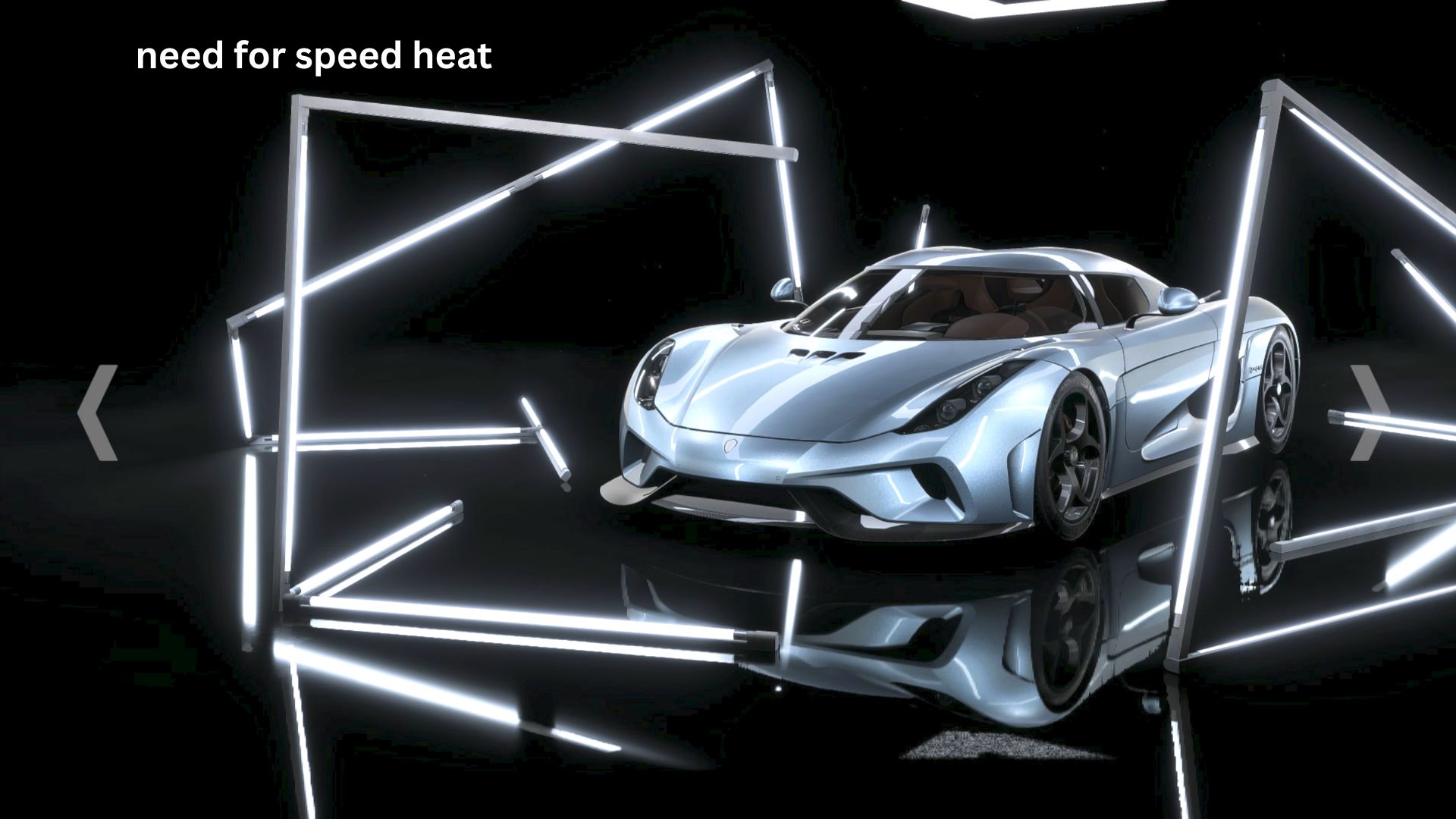
If you have just started Need for Speed Heat, it can be surprisingly easy to lose money, wreck a good car, or spend an entire night building REP only to get busted a few streets away from the garage. The game looks simple on the surface—race during the day, take bigger risks at night—but its progression system rewards players who understand when to push and when to quit.
This guide explains how Need for Speed Heat actually works, including Bank, REP, Heat levels, car upgrades, police pursuits, racing events, and multiplayer. It also covers several mistakes that can slow progression and practical strategies that make the early and middle game much easier. The game’s core structure is built around a deliberate risk-and-reward loop: daytime racing earns Bank, while nighttime racing builds REP and Heat, with your Heat multiplier increasing the potential reward.
Whether you’re returning to Palm City after years away or playing for the first time, the most useful lesson is simple: you do not need to take every risk the game offers you.
What Is Need for Speed Heat?
Need for Speed Heat is an open-world street-racing game set in Palm City. It combines legal daytime events with illegal nighttime racing, car customization, police pursuits, progression through REP levels, and online multiplayer.
The important distinction is that the two halves of the game serve different purposes:
- Day: primarily earn Bank.
- Night: earn REP and build Heat.
- Garage: spend money, upgrade cars, change builds, and safely end a night.
- REP: unlocks higher-level progression, cars, parts, events, and rewards.
- Heat: increases the danger and potential nighttime rewards.
This division is more important than it first appears. A player who spends all their time racing during the day may have plenty of cash but still lack the REP required to access better equipment. Conversely, repeatedly taking huge risks at night can leave you with less money after getting busted.
How Day and Night Work
The day/night system is the heart of Need for Speed Heat.
Daytime is your money-making phase
During the day, you can enter Speedhunters Showdown events and earn Bank, which is used for cars, performance parts, customization, and other purchases. Police are present, but daytime pursuits are generally something you can avoid rather than something you need to actively seek.
A useful routine is:
- Start the day with a clear spending goal.
- Complete several suitable races.
- Upgrade your main car.
- Keep some Bank available rather than spending everything immediately.
- Switch to night when you are ready to pursue REP.
This prevents a common beginner problem: buying an expensive car and then having insufficient money for the upgrades that make it competitive.
Nighttime is where progression accelerates
At night, illegal events give you REP and increase your Heat. The longer you stay out and the more Heat you accumulate, the greater the potential REP payout becomes.
However, there is a catch: you only secure that night’s progress by reaching a garage safely.
Getting busted resets your Heat multiplier and costs you some Bank.
That creates an interesting decision:
Do you take one more race, or do you bank what you already earned?
Good players learn to answer that question before the situation becomes desperate.
Bank vs. REP: Understand the Difference
One of the most important Need for Speed Heat mechanics is the difference between Bank and REP.
Bank is money. REP is progression.
You need Bank to purchase things, but REP determines what becomes available to you. EA’s manual specifically notes that having plenty of Bank does not compensate for insufficient REP when higher-ranked cars, parts, or races require a particular REP level. (EA)
Think of it this way:
| System | Main Purpose |
|---|---|
| Bank | Buy cars, parts and customization |
| REP | Unlock progression and higher-level content |
| Heat | Increase nighttime risk |
| Heat Multiplier | Increase potential REP payout |
This distinction explains why alternating day and night activities is much more efficient than repeatedly doing only one type of event.
How the Heat Multiplier Really Changes Your Strategy
The Heat multiplier can reach 5x. Higher Heat means tougher police pressure, but successfully returning to a garage converts your accumulated nighttime REP with the multiplier applied.
This creates a temptation to stay outside longer than you should.
Imagine you have already earned a solid amount of REP and reached a high Heat level. You notice another nearby event with a good payout. It is tempting to say, “I’ll just do one more.”
That final race is often where the problem begins.
A better approach is to establish personal stopping points.
For example:
- Low Heat: continue if your car is healthy and you’re comfortable.
- Medium Heat: evaluate your route back to a garage.
- High Heat: only continue if the additional reward is genuinely worth the risk.
- Bad car health + high Heat: go home.
This is one of the most useful habits you can develop because the objective isn’t to maximize the theoretical payout. It’s to maximize the amount you successfully keep.
The Best Early-Game Strategy
New players often try to build one car that does everything. That sounds sensible, but Need for Speed Heat’s handling system makes specialized builds more useful.
EA recommends considering a car’s Handling Profile when selecting it for an event. Cars can be tuned toward Race, Road, Offroad, and Drift characteristics, and different events favor different setups.
A practical early setup is:
1. Build a dependable race car
Your first priority should be a car that feels predictable rather than one that simply has impressive numbers.
A car that consistently turns, accelerates, and stays stable is generally more useful than a difficult-to-control machine with a slightly higher rating.
2. Upgrade strategically
Don’t automatically purchase every available part.
Instead, ask:
- Does this upgrade improve the event type I actually play?
- Does it solve a weakness in my current car?
- Am I spending Bank that I need for something more important?
3. Add specialized cars later
As your garage grows, having separate cars for race, off-road, and drift events becomes more practical.
EA’s official game manual specifically recommends having cars suited to different event types rather than treating every vehicle as equally suitable for every race.
Why Car Performance Rating Isn’t Everything
A common mistake is assuming the highest Performance Rating automatically means the best car.
It doesn’t.
Need for Speed Heat combines performance rating with handling characteristics, event type, driving style, and the driver’s ability to control the vehicle.
For example, a car that looks superior on paper may feel terrible on tight corners. Another car with a slightly lower rating might be easier to drive consistently and therefore produce faster race times.
When choosing upgrades, judge the car by what happens on the road, not just what happens in the garage menu.
That is particularly important when moving into faster cars. More speed magnifies mistakes.
How to Handle Police Chases
Police pursuits are one of Heat’s defining features, and they become increasingly dangerous as Heat rises.
Your car has a health system. Crashes, impacts, obstacles, and rollovers can damage it. Gas stations can restore health, although nighttime healing is limited to three uses per night.
That limitation changes how you should drive during a long pursuit.
Don’t treat every crash as harmless
A small collision during a race might seem irrelevant. During a high-Heat chase, several small impacts can turn into a serious problem.
Instead:
- Avoid unnecessary traffic.
- Don’t repeatedly smash into obstacles.
- Use the environment intelligently.
- Watch your health before starting another event.
- Know where you are going before Heat becomes extreme.
Know when the chase is already won
There is no reward for proving that you can survive an unnecessarily long pursuit.
If your Heat is already valuable and your car is damaged, your best move may simply be reaching a garage.
This is one of the biggest differences between playing for entertainment and playing efficiently.
Gas Stations Are More Important Than They Look
Gas stations aren’t just decorative locations.
They can restore your vehicle’s health, which makes them valuable during long sessions and police pursuits. EA confirms that daytime restoration is unlimited, while nighttime restoration is limited to three uses.
A practical habit is to mentally note nearby gas stations when entering unfamiliar areas.
That gives you an emergency option if:
- your health drops during a pursuit,
- you accidentally hit heavy traffic,
- a race leaves you damaged,
- or you need to survive long enough to reach a garage.
Learning Palm City is therefore more than learning race lines. You are also learning escape routes and recovery points.
Common Need for Speed Heat Mistakes
Spending Bank too quickly
Buying a new car feels rewarding, but an unmodified car may not help you much.
Keep enough money for meaningful performance upgrades.
Staying out too long at night
The multiplier creates a psychological trap: once you’re earning more REP, stopping feels like wasting an opportunity.
But getting busted can erase the advantage.
Using one car for everything
A setup optimized for one discipline may perform poorly in another.
Ignoring handling
A powerful car that you cannot consistently control is not necessarily an upgrade.
Treating police chases as the main objective
Police encounters are part of nighttime progression, but the ultimate goal is to return safely with your rewards.
Forgetting the garage is a strategic tool
The garage isn’t simply where you customize your car. It is your safe point and the place where you secure your night’s progress.
A Better Nighttime Routine
If you want a simple system that works reliably, try this:
Step 1: Enter the night with a healthy car.
Step 2: Complete a few events and build Heat gradually.
Step 3: Watch your car’s health and your surroundings.
Step 4: Avoid unnecessary collisions.
Step 5: Once your REP reward becomes substantial, start thinking about the garage.
Step 6: If the police pressure becomes too high, prioritize escape over another race.
Step 7: Return to the garage and secure your progress.
The key idea is that a successful night is not necessarily the night with the biggest multiplier. It’s the night where you bank the most useful progress without losing it.
Multiplayer and Cross-Play
Need for Speed Heat supports cross-play between PC, PlayStation 4, and Xbox One. EA added the feature through the June update, allowing players on different platforms to race together when cross-play is enabled.
EA’s current support documentation also explains that cross-play can be enabled or disabled through the game’s privacy settings.
There are, however, some limitations. Cross-platform players cannot join the same Crew, and certain profile, wrap, and screenshot features are restricted between different platforms.
So if you’re planning a session with friends, don’t assume that “cross-play” means every social feature works identically across platforms.
Three Less-Obvious Insights That Make Heat Easier
1. Your garage is part of your progression strategy
Many racing games treat the garage as a menu. Heat makes it part of the risk system.
Because returning to a garage secures nighttime progress, your knowledge of garage locations affects how aggressively you can play.
The map is therefore also a risk-management tool.
2. A slower car can sometimes be the faster choice
This sounds contradictory, but consistency matters.
If one car allows you to brake later but frequently loses control, while another lets you maintain clean lines through corners, the second car can produce better real-world results.
The best car is not always the one with the most impressive statistics. It is the one you can drive repeatedly without fighting it.
3. The smartest way to use Heat is to treat it as a budget
Think of Heat like money you’re carrying around.
At low Heat, you have little to lose.
At high Heat, you are carrying a valuable but vulnerable reward.
Once you start thinking this way, the decision to return to the garage becomes much easier. You’re not “giving up”; you’re depositing your earnings before something goes wrong.
Is Need for Speed Heat Still Worth Playing?
Yes, particularly if you enjoy an arcade-style open-world racer built around customization, police pursuits, progression, and the contrast between legal daytime racing and dangerous nighttime driving.
Its strongest idea remains the day/night risk-reward system. Daytime gives you a relatively controlled way to build Bank, while nighttime gives you the opportunity to accelerate REP progression by accepting increasingly dangerous police pressure.
It is also worth knowing that EA described the June update as the final update for Need for Speed Heat, while that update introduced cross-play across PC, PlayStation 4, and Xbox One.
That means you should approach Heat as an established, finished game rather than expecting a continuing stream of major gameplay updates.
FAQ
Is Need for Speed Heat free to play?
Need for Speed Heat is a paid game rather than a free-to-play title. Availability and pricing can vary by platform and storefront, so check the store associated with your system before purchasing. The game itself includes both single-player progression and online multiplayer features.
What is the fastest way to earn REP in Need for Speed Heat?
Nighttime racing is the primary way to build REP, with Heat and the Heat multiplier increasing the potential reward. The important part is successfully returning to a garage because getting busted can reset your Heat multiplier and cost Bank.
What is the difference between Bank and REP in Need for Speed Heat?
Bank is the game’s spending currency, while REP controls progression and unlocks. You generally use Bank to purchase cars, parts, and customization, while REP determines when higher-level content becomes available.
How does Heat work in Need for Speed Heat?
Heat represents the level of police attention you have generated during nighttime activity. Increasing Heat can improve the potential REP reward through the Heat multiplier, but it also brings more intense police pressure. The maximum Heat multiplier is 5x, so pushing farther always involves greater risk.
Can you play Need for Speed Heat with friends on different platforms?
Yes. Cross-play allows PC, PlayStation 4, and Xbox One players to race together when cross-play is enabled. However, EA notes that some cross-platform social features, including joining the same Crew, have limitations.
How do you escape police in Need for Speed Heat?
The most reliable approach is to avoid unnecessary damage, use your knowledge of Palm City, manage your vehicle’s health, and prioritize reaching safety once your reward is worth protecting. Gas stations can restore health, although nighttime use is limited.
Conclusion
Need for Speed Heat becomes much easier once you stop treating it as simply a game about driving fast. Its real strategy is about managing resources and risk.
Use the day to build Bank, the night to build REP, and your garage to secure your progress. Build cars around the events you actually drive, pay attention to handling rather than Performance Rating alone, and don’t let a high Heat multiplier convince you to risk everything unnecessarily.
The best players aren’t necessarily the ones who take the biggest risks. They’re the ones who know exactly when the reward is no longer worth the risk.