

Sea of Solitude: A Deep Dive Into Its Story
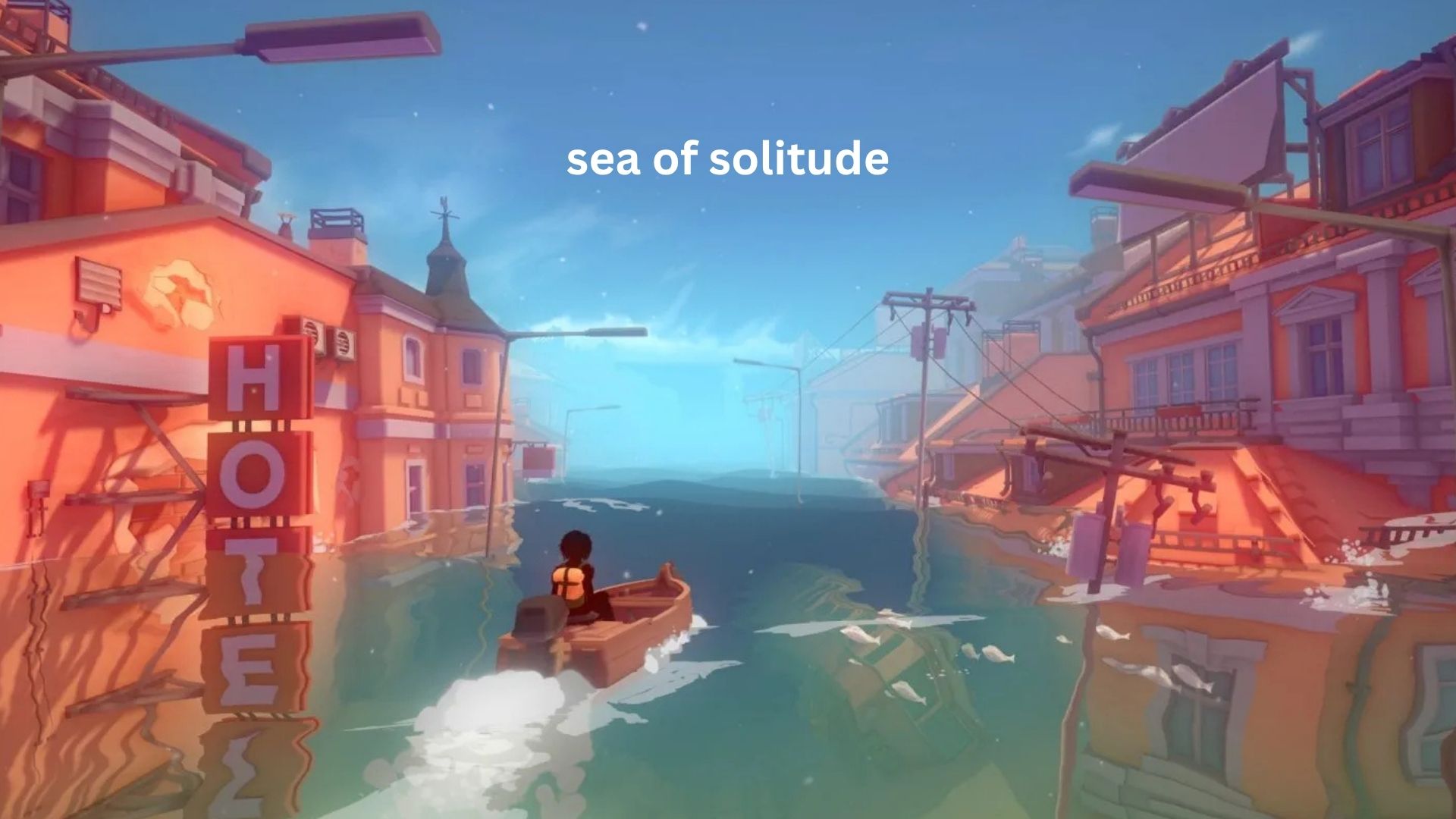
Imagine waking up alone in a small boat, surrounded by a flooded city, with no clear idea where you are or why the creatures beneath the water seem to know you better than you know yourself. That is the unsettling starting point of Sea of Solitude, a narrative adventure from Jo-Mei Games that turns loneliness, fear, family conflict, bullying, and emotional pain into a physical world.
At first glance, it looks like a stylized exploration game about monsters. In practice, it is much more personal. Kay, the protagonist, moves through a drowned world where monsters represent emotional struggles and difficult relationships. The game asks an uncomfortable question: what happens when loneliness becomes so powerful that you begin to see yourself as the monster?
This article explains what Sea of Solitude is really about, how its gameplay works, what the monsters symbolize, why the game received mixed reviews, and whether it is still worth playing today. It also looks at several details that are easy to miss if you focus only on its surface-level story.
What Is Sea of Solitude?
Sea of Solitude is a single-player adventure game developed by German studio Jo-Mei Games and originally published by Electronic Arts in 2019. It follows Kay, a young woman traveling through a flooded city populated by mysterious creatures.
The game’s central idea is simple:
Emotional problems become monsters that Kay must confront rather than simply destroy.
Kay travels by boat, swims through flooded areas, explores buildings, climbs across rooftops, solves environmental puzzles, and avoids dangerous creatures. The game does not use conventional combat as its primary solution. Instead, light, movement, exploration, and understanding are more important than defeating enemies.
The official description emphasizes loneliness, depression, abandonment, and fear as the emotional forces represented by the game’s creatures.
That distinction matters because Sea of Solitude is less interested in asking, “How do I beat this monster?” than it is in asking, “Why does this monster exist?”
Who Is Kay in Sea of Solitude?
Kay is the emotional center of the entire game.
She begins her journey in a monstrous form, which immediately establishes one of the game’s most important ideas: Kay does not merely encounter monsters. She sees something monstrous in herself.
Her journey gradually connects the strange world around her with experiences involving:
- loneliness
- self-loathing
- family conflict
- bullying
- abandonment
- unhealthy relationships
- anger
- guilt
- emotional dependence
Rather than presenting these experiences as completely separate problems, the game connects them through Kay’s relationships with the people around her.
This is one reason the story can feel more complicated than its basic premise suggests. The monsters are not simply representations of “bad emotions.” They are connected to people, memories, relationships, and the ways those experiences shape how Kay understands herself.
The game’s creative director and writer, Cornelia Geppert, drew on personal experiences when developing the project, which helps explain why the emotional material feels unusually direct.
What Do the Monsters Represent?
The creatures in Sea of Solitude are symbolic rather than ordinary fantasy enemies.
Different monsters reflect different forms of emotional suffering or difficult human behavior. Some relate to loneliness and depression, while others connect to family problems, bullying, anger, insecurity, or destructive relationships.
This approach gives the game an unusual structure.
Instead of:
Character → problem → enemy → victory
the game often works more like:
Experience → emotion → monster → understanding
That difference is important.
The monsters are not simply villains
One of the game’s strongest ideas is that many of the creatures are not evil in the traditional sense.
They can be frightening, aggressive, or destructive, but their behavior often makes more sense once you understand what they represent.
This creates an important distinction between condemning a person and understanding their behavior.
Understanding does not mean excusing harmful actions. The game can acknowledge that someone is suffering while also showing how their behavior hurts other people.
That is a more mature idea than simply labeling one character “good” and another “bad.”
How Does Sea of Solitude Gameplay Work?
The gameplay is relatively straightforward and supports the narrative rather than competing with it.
You spend much of the game:
- Exploring the flooded environment.
- Traveling between locations by boat.
- Running and climbing across buildings.
- Swimming through sections of the city.
- Solving environmental puzzles.
- Avoiding or distracting monsters.
- Using light to remove corruption and progress.
- Following the story through conversations and encounters.
The original game is not a long action title. Reviews commonly described it as a short experience, with the emphasis placed much more heavily on atmosphere and storytelling than mechanical complexity.
Why there is little traditional combat
This is an important design decision.
Kay does not generally solve her problems by becoming stronger and killing everything in her path. Instead, she frequently survives by escaping, navigating, using light, or changing the environment.
That reinforces the game’s central message.
If the game had given Kay increasingly powerful weapons and encouraged her to destroy every monster, its metaphor would have become much simpler: pain is an enemy and strength eliminates it.
Instead, Sea of Solitude repeatedly suggests that some problems have to be recognized and confronted rather than violently eliminated.
What Is the Meaning of the Sea?
The flooded environment is more than a pretty setting.
Water creates a constant sense of instability. The city that should represent familiarity, safety, and everyday life has been partially swallowed by something uncontrollable.
That makes the environment a useful metaphor for emotional isolation.
A person can technically be surrounded by people and still feel completely alone. Likewise, Kay is surrounded by an entire world, yet much of her journey feels isolated.
There is another interesting layer here: the water is both a barrier and a route forward.
Kay cannot simply avoid it. She has to travel across it, through it, and sometimes beneath it.
That makes the sea feel less like a conventional hostile environment and more like an emotional condition she has to learn to navigate.
Why the Light Matters
Light is one of the game’s most recognizable mechanics and symbols.
Kay uses light to reveal, clear, or transform areas affected by darkness and corruption. Mechanically, this gives the player something concrete to do.
Symbolically, it represents awareness.
But there is an important nuance: the game does not ultimately argue that emotional suffering can be solved simply by “thinking positively.”
That would be an overly simplistic interpretation.
Instead, light can be understood as seeing something clearly enough to confront it.
This is particularly effective because the player is not merely watching Kay discover things. The player physically participates in the process of moving through darkness and finding a way forward.
The Director’s Cut: Is It Different?
Yes.
Sea of Solitude: The Director’s Cut was released for Nintendo Switch in 2021. It features a rewritten script, a new voice cast, additional cutscenes and animations, and gameplay refinements.
This is significant because one of the major criticisms of the original release concerned its dialogue and voice performances.
The revised version was specifically intended to address some of those weaknesses. Cornelia Geppert later explained that the team used the opportunity to refine elements of the original game, including the script and voice acting.
Original version vs. Director’s Cut
| Feature | Original | Director’s Cut |
|---|---|---|
| Release | 2019 | 2021 |
| Developer | Jo-Mei Games | Jo-Mei Games |
| Publisher | Electronic Arts | Quantic Dream |
| Main platform additions | PC, PS4, Xbox One | Nintendo Switch |
| Script | Original | Rewritten |
| Voice acting | Original cast | New cast |
| Cutscenes | Original | Expanded/refined |
| Gameplay | Core experience | Refined |
So if you have access to the Director’s Cut and are choosing between versions, it is the more polished presentation of the story.
Why Did Sea of Solitude Get Mixed Reviews?
This is where the game becomes especially interesting.
Most criticism was not directed at its ambition.
Critics generally recognized that the game was attempting something unusual. Its visual identity, emotional themes, and personal origins were often praised. The disagreement centered on execution.
The Guardian praised its willingness to tackle depression and its focus on the causes of emotional suffering, while also criticizing some of its visual metaphors as overly direct.
PC Gamer similarly praised the game’s understanding of mental-health themes but argued that its gameplay did not always communicate those themes effectively.
That criticism reveals one of the game’s biggest weaknesses.
The story sometimes explains what the player already understands
A sophisticated visual metaphor can make you feel something before you can explain it.
Sea of Solitude sometimes does the opposite.
It creates an interesting situation, then has a character explain exactly what the situation means.
For some players, this makes the story accessible. For others, it reduces the emotional impact.
This is probably the single most important reason reviews differed so much.
Three Less-Obvious Insights About Sea of Solitude
1. The game is partly about relationships, not just loneliness
It is tempting to describe Sea of Solitude as a game about depression and stop there.
That misses something important.
A substantial part of Kay’s emotional journey involves other people and the responsibilities she feels toward them. One contemporary analysis even interpreted parts of the game through the idea of Kay acting as a caretaker for people around her. (VICE)
That changes how you interpret her loneliness.
Sometimes loneliness is not caused by being physically alone. It can come from feeling responsible for everyone else while having nowhere to put your own emotional needs.
2. “Understanding” is not the same as “fixing”
The game repeatedly resists the idea of a perfect solution.
A difficult relationship may not become healthy simply because you understand why someone behaves badly.
A painful memory may remain painful even after you understand it.
And accepting something does not necessarily mean approving of it.
This makes the game’s emotional message more realistic than the usual “defeat your fears and everything becomes perfect” formula.
3. The monsters work best when you stop treating them as enemies
The most productive way to play the game is not to ask:
“How do I defeat this creature?”
Instead, ask:
“What human experience is this creature expressing?”
That shift makes the story considerably easier to understand.
It also explains why some encounters can feel more powerful after you learn the context behind them.
Is Sea of Solitude a Horror Game?
Not exactly.
It contains frightening creatures, threatening situations, dark environments, and disturbing themes, but Sea of Solitude is better described as a narrative adventure with psychological and horror elements.
The objective is not primarily to scare you.
Its purpose is closer to emotional discomfort and reflection.
If you enjoy atmospheric games such as Hellblade: Senua’s Sacrifice, Celeste, or other story-driven experiences dealing with difficult psychological subjects, you may find its approach familiar, although its gameplay is much simpler.
Is Sea of Solitude Worth Playing?
For the right player, yes.
You should consider playing it if you enjoy:
- short story-driven games
- emotional narratives
- symbolic storytelling
- exploration
- atmospheric worlds
- games about relationships
- psychological themes
- games that prioritize story over combat
You may want to skip it if you primarily want:
- deep combat systems
- difficult puzzles
- a large open world
- extensive character customization
- dozens of hours of gameplay
- constant action
The critical consensus reflects this divide. The game’s visual design and subject matter attracted considerable praise, while its repetitive gameplay, dialogue, and sometimes-heavy-handed metaphors drew criticism.
Common Mistakes When Interpreting the Game
Mistake 1: Assuming every monster represents one simple emotion
The symbolism is more complicated than “monster X equals sadness.”
Characters and creatures can represent combinations of experiences, relationships, memories, and behaviors.
Mistake 2: Treating the game as mental-health advice
It isn’t.
The developers explicitly framed the project as an experience rather than professional guidance, and the game should be approached as a piece of storytelling rather than a treatment or diagnostic tool.
Mistake 3: Expecting a conventional video-game reward structure
If you expect increasingly powerful abilities, challenging combat, or complex progression, the game can feel underdeveloped.
Its real progression is narrative.
Mistake 4: Expecting every metaphor to have one official answer
Some of the game’s imagery is deliberately interpretive.
If a particular creature or scene reminds you of several related experiences, that does not necessarily mean you have misunderstood it.
What Kind of Player Will Appreciate Sea of Solitude Most?
The best audience is probably someone who enjoys short, emotionally focused games and is willing to accept simple mechanics in exchange for atmosphere and storytelling.
It is particularly interesting for players who want games to explore subjects that mainstream action titles often avoid.
The game’s impact also appears to extend beyond conventional game criticism. In an interview about the Director’s Cut, Geppert described receiving messages from players and families who found the game’s themes useful as a way of beginning difficult conversations.
That does not mean the game will affect everyone equally.
Some players will find its directness moving. Others will find the same directness heavy-handed.
Both reactions are reasonable.
FAQ
What is Sea of Solitude about?
Sea of Solitude follows Kay, a young woman traveling through a flooded city filled with monsters representing loneliness, emotional pain, difficult relationships, and other struggles. Her journey gradually reveals connections between the creatures and events in her life. At its core, the game is about confronting painful experiences rather than simply defeating them.
Is Sea of Solitude based on a true story?
It is not a literal retelling of one person’s life, but it draws heavily on personal experiences. Creative director and writer Cornelia Geppert used experiences with depression, loneliness, and relationships as inspiration for the game. Other experiences were also incorporated into its broader themes and characters.
How long does Sea of Solitude take to finish?
It is a relatively short game compared with large adventure titles. Contemporary reviews commonly described a playthrough as taking only a few hours, although your time can vary depending on exploration and collectibles. Its short length is part of its appeal for players who prefer a focused narrative experience.
Is Sea of Solitude scary?
It has frightening creatures and disturbing subjects, but it is not primarily a traditional horror game. Its strongest discomfort comes from themes such as loneliness, bullying, family conflict, self-loathing, and emotional abuse. If you are sensitive to those subjects, the game’s emotional content may be more significant than its actual horror elements.
What is the difference between Sea of Solitude and The Director’s Cut?
The Director’s Cut is a revised version of the original game released for Nintendo Switch in 2021. It includes a rewritten script, new voice actors, additional cutscenes and animations, and other refinements. If you want the most revised version of the experience, the Director’s Cut is the version to look for.
Is Sea of Solitude worth playing today?
Yes, particularly if you value storytelling and atmosphere more than complex gameplay. Its mechanics have aged less impressively than its central ideas, but its exploration of loneliness, relationships, and self-perception remains distinctive. The game is best approached as a short interactive story rather than a mechanically demanding adventure.
Final Verdict
Sea of Solitude is an imperfect game with an unusually sincere purpose.
Its biggest strength is the willingness to turn difficult human experiences into something the player can physically explore. Its biggest weakness is that it sometimes explains its metaphors too clearly instead of trusting the player to discover their meaning independently.
But that tension is also what makes the game worth discussing.
The drowned city, the monsters, the light, and Kay’s journey all point toward the same larger idea: emotional pain does not always disappear when you fight it. Sometimes progress begins when you are willing to understand where it came from.
If you approach Sea of Solitude expecting a deep action game, you may be disappointed. If you approach it as a compact, symbolic story about loneliness and human relationships, there is considerably more beneath its surface than its simple gameplay suggests.