

Ace Combat 5: Why It Still Feels Special
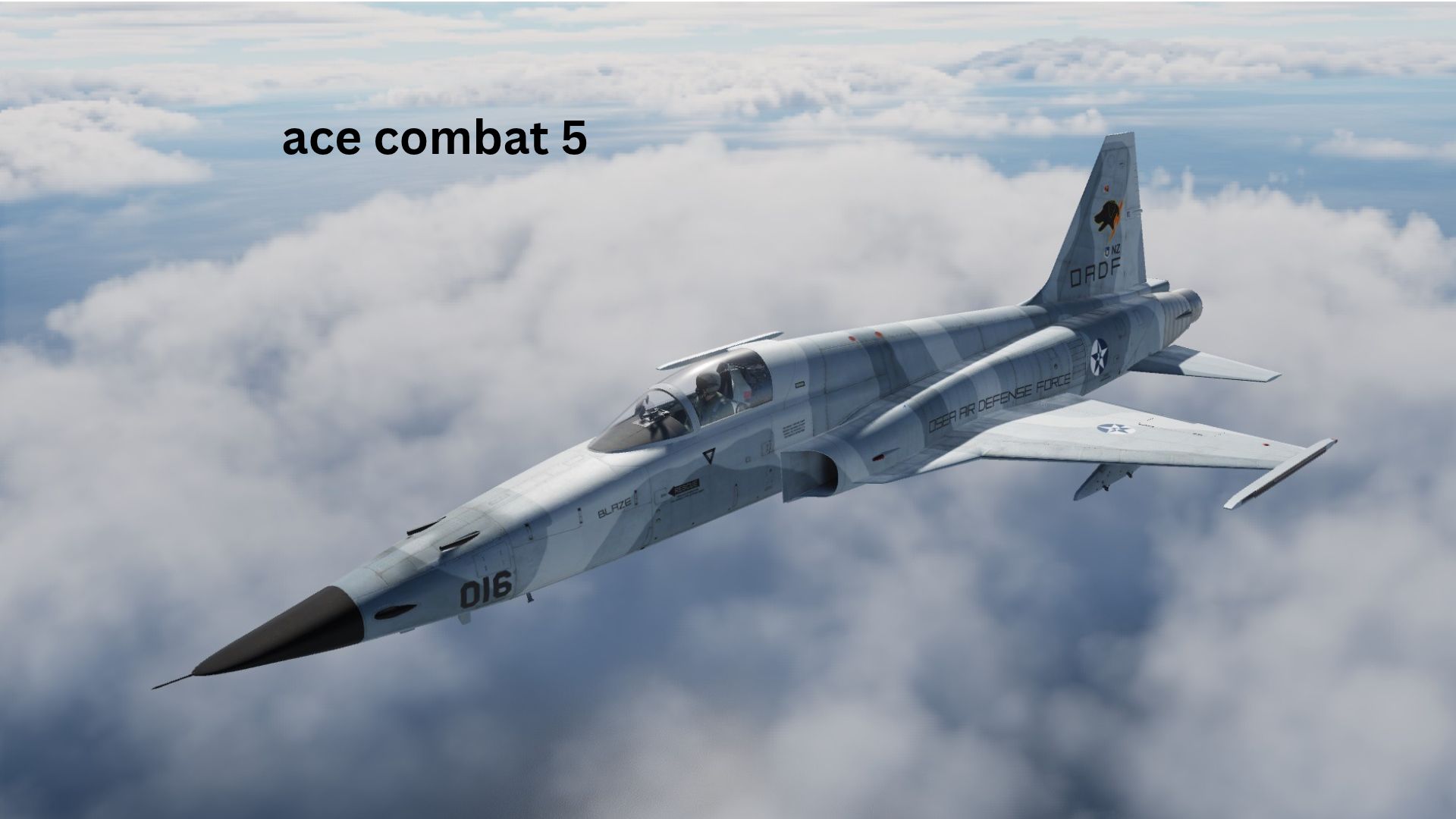
If you start Ace Combat 5 expecting a modern flight simulator, you may initially wonder why its controls feel so approachable. Then you get into a difficult mission, hear the radio chatter building around you, lose a wingman, and suddenly realize what this game does differently. It is not trying to simulate every technical detail of real aviation. It is trying to make you feel like a fighter pilot inside a dramatic military story.
Released for the PlayStation 2 in 2004, Ace Combat 5: The Unsung War combines arcade-style aerial combat, a surprisingly serious campaign, a large aircraft roster, and mission design that constantly changes what the player is expected to do. That combination is the reason the game continues to attract attention years after its original release.
This guide explains what makes Ace Combat 5 worth playing, how its campaign and aircraft systems work, which missions tend to cause problems, and what experienced players can do differently to make the game more enjoyable. It also looks at several details that are easy to miss if you only approach it as a straightforward jet-fighting game.
What Is Ace Combat 5?
Ace Combat 5: The Unsung War is a combat flight game developed by Namco for PlayStation 2. Unlike a hardcore flight simulator, it focuses on fast-paced aerial combat while keeping the controls accessible.
The player takes the role of Blaze, a fighter pilot serving in the fictional country of Osea. The story follows the outbreak and progression of the Circum-Pacific War, with Blaze becoming the leader of a small fighter unit.
The basic gameplay loop is straightforward:
- Select an aircraft.
- Equip suitable weapons.
- Enter a mission.
- Complete primary and secondary objectives.
- Earn money and progress through the campaign.
- Unlock additional aircraft.
- Adapt your aircraft and tactics as missions become more demanding.
The important distinction is that Ace Combat 5 is not simply about shooting down as many enemies as possible. Some missions reward patience, formation flying, target prioritization, or careful weapon selection.
That variety is a major reason the campaign remains memorable.
Why Ace Combat 5 Still Holds Up
A lot of older action games are remembered mainly because of nostalgia. Ace Combat 5 has something more substantial going for it: its individual systems support each other unusually well.
The campaign gives combat a purpose
The missions are connected by a continuous story rather than feeling like unrelated challenges.
Radio conversations, character relationships, mission briefings, and changing battlefield situations make individual sorties feel like parts of a larger conflict.
Even when the underlying gameplay is familiar—lock onto a target, launch a missile, evade, repeat—the surrounding context gives those actions more meaning.
The controls are easy to learn
You do not need extensive knowledge of aviation to begin playing.
The game teaches its fundamental mechanics naturally:
- Basic aircraft movement
- Missile locking
- Gun combat
- Target switching
- Missile evasion
- Weapon selection
- Formation commands
- Landing and takeoff
That accessibility is important because it lets players concentrate on tactical decisions instead of fighting the controls.
The aircraft roster encourages experimentation
One of the most satisfying parts of the campaign is gradually gaining access to better aircraft.
You can encounter fighters and attack aircraft ranging from relatively conventional designs to advanced machines with very different performance characteristics.
The key lesson is that the aircraft with the highest headline statistics is not automatically the best aircraft for every mission.
A plane with excellent speed may be inconvenient during a mission requiring precision. Another aircraft may carry weapons that are much better suited to destroying ground targets.
Understanding the Ace Combat 5 Campaign
The campaign is best approached as a progression rather than a sequence of isolated missions.
Early missions give you time to become comfortable with the controls. Later missions increasingly expect you to understand aircraft characteristics, special weapons, positioning, and target priorities.
Mission objectives matter more than kill counts
A common beginner mistake is assuming that destroying every enemy is always the correct approach.
It isn’t.
Some missions are primarily about:
- Protecting friendly units
- Destroying specific targets
- Intercepting aircraft
- Attacking ground installations
- Surviving for a particular period
- Reaching or defending an area
- Completing objectives under unusual restrictions
Before launching into combat, read the briefing carefully.
If the mission asks you to protect something, chasing an enemy halfway across the map can be a serious tactical mistake.
The Wingman System Is More Important Than It Looks
One of the distinctive features of Ace Combat 5 is the ability to issue commands to your wingmen.
You can generally think of your squadron as another resource rather than merely background decoration.
Depending on the situation, you can direct your teammates to focus on attacking, defending, or other tactical priorities.
This becomes particularly useful when the sky becomes crowded.
Instead of trying to personally destroy every target, you can delegate some threats while concentrating on the objective that matters most.
A practical rule for wingmen
When several enemy aircraft are present, ask yourself:
“What target is actually preventing me from completing the mission?”
That target should usually receive your attention.
Your wingmen can help reduce the pressure elsewhere.
How to Choose the Right Aircraft
Aircraft selection is one of the areas where new players often make things harder for themselves.
The fastest fighter is not necessarily the best choice.
Think about aircraft according to four practical characteristics:
| Factor | Why It Matters |
|---|---|
| Speed | Helps with interception and repositioning |
| Maneuverability | Useful in close-range dogfights |
| Payload | Determines how much damage you can deliver |
| Special weapon | Can dramatically change your effectiveness |
For example, a mission involving large numbers of ground targets can favor an aircraft carrying effective air-to-ground weapons.
A mission dominated by enemy fighters can make maneuverability and air-to-air weapons more valuable.
Don’t ignore special weapons
Special weapons are one of the easiest ways to make a difficult mission easier.
If your aircraft carries a weapon particularly suited to the mission, use it.
Players sometimes save special weapons because they feel they should be reserved for emergencies. In a campaign mission, however, unused ammunition has no value after the sortie ends.
The better approach is to use the weapon when it provides a meaningful tactical advantage.
Ace Combat 5 Dogfighting Tips
Dogfighting looks chaotic when you first encounter multiple enemy fighters, but a few habits make it much easier.
Don’t constantly turn
One of the most common beginner mistakes is holding a turn indefinitely.
Turning consumes speed and can leave you in an awkward position.
Instead:
- Identify the enemy’s direction.
- Turn toward the anticipated intercept point.
- Gain a firing opportunity.
- Fire.
- Extend away if necessary.
- Reposition for another attack.
This “attack and reposition” approach is often more reliable than endlessly circling.
Use missiles intelligently
You do not need to fire a missile every time the lock tone appears.
Consider the target’s movement and your angle.
A target flying predictably is easier to hit than one already maneuvering aggressively.
If you launch too early, the enemy may have enough time to evade.
Guns are not just a backup
The machine gun is particularly useful when you are close enough that missile expenditure would be inefficient.
It also provides a way to finish damaged targets without wasting valuable missiles.
The trick is learning to make small corrections rather than making huge movements while aiming.
Ground Attack Requires a Different Mindset
Air-to-ground missions can initially feel slower than dogfighting missions.
That is intentional.
When attacking ground targets, altitude, approach direction, weapon choice, and target grouping become more important.
Rather than diving randomly toward individual targets, look for clusters.
If several targets are close together and your special weapon can attack multiple targets efficiently, you can accomplish much more with the same amount of ammunition.
This is one of those small tactical improvements that becomes especially noticeable on higher difficulty settings.
Common Ace Combat 5 Mistakes
Even experienced action-game players can run into trouble because Ace Combat 5 sometimes rewards a different approach than expected.
Mistake 1: Ignoring the briefing
The mission briefing is not just story material.
It frequently explains what you actually need to accomplish.
Mistake 2: Chasing one enemy too far
A single enemy fighter can lure you away from the mission area.
If you’re supposed to defend something, abandoning it to chase a target is rarely worthwhile.
Mistake 3: Using the same aircraft everywhere
Aircraft specialization exists for a reason.
Change your selection when the mission demands a different capability.
Mistake 4: Saving every special weapon
Special weapons are tools, not collectibles.
Use them when they provide a real advantage.
Mistake 5: Forgetting your squadron
You are leading a team.
Use your wingmen rather than treating the game as a one-aircraft battle.
Three Less-Obvious Insights About Ace Combat 5
1. The game teaches situational awareness without calling it a simulator
This is one of the most interesting things about Ace Combat 5.
The game simplifies real aviation, but it still encourages habits that resemble practical tactical thinking: understand the mission, identify threats, manage positioning, and avoid unnecessary engagements.
It teaches those ideas through gameplay rather than technical lectures.
2. Aircraft progression changes how you think about missions
Unlocking new aircraft isn’t simply a reward for completing missions.
It changes your options.
A mission that previously required careful maneuvering can become much easier when you approach it with an aircraft whose weapons or performance characteristics better fit the objective.
That makes the aircraft tree part of the strategic layer of the campaign.
3. The story works because the radio chatter supports the gameplay
The extensive communications can initially seem excessive.
But they help establish the feeling that you are participating in a larger battle rather than simply fighting computer-controlled enemies.
When objectives change or the battlefield develops, the dialogue helps communicate that transition.
It is an older technique, but it remains effective.
What Makes the Story Memorable?
The story is more character-focused than you might expect from an arcade flight game.
Blaze begins as a relatively anonymous pilot, while other members of the squadron develop their own identities and relationships.
The narrative gradually increases the emotional importance of the squadron.
This works particularly well because the player’s actions take place alongside the story. You are not simply watching characters talk about a war; you are flying missions as that conflict develops.
The fictional setting also gives the developers freedom to create dramatic military situations without being restricted to recreating a specific historical conflict.
Is Ace Combat 5 Good for Beginners?
Yes, particularly for someone who wants to experience military aviation without learning the complexity of a dedicated simulator.
The basic controls are approachable, but the campaign gradually introduces more demanding situations.
A beginner should focus on three things first:
- Learn how to maintain control while turning.
- Understand missile locks and evasion.
- Read the objective before engaging enemies.
Once those become automatic, advanced tactics become much easier.
How to Make a First Playthrough More Enjoyable
If you’re playing Ace Combat 5 for the first time, avoid trying to optimize everything immediately.
Instead, use the first part of the campaign to learn what different aircraft and weapons feel like.
A useful progression is:
Early campaign: Learn controls and basic combat.
Middle campaign: Experiment with aircraft and special weapons.
Later campaign: Start choosing aircraft specifically around mission objectives.
Higher difficulty: Focus on positioning, ammunition management, and minimizing unnecessary engagements.
This approach is much less frustrating than constantly searching for the “perfect” aircraft.
Ace Combat 5 vs Modern Flight Games
The biggest difference is design philosophy.
Modern flight games can provide more sophisticated graphics, physics, online systems, or aircraft detail. Ace Combat 5, however, was designed around a tightly controlled single-player experience.
Its strengths are therefore different.
It emphasizes:
- Cinematic pacing
- Accessible controls
- Mission variety
- Character-driven storytelling
- Fast combat
- Aircraft progression
- Scripted battlefield moments
If you want a realistic training simulator, this isn’t what the game is designed to provide.
If you want an accessible combat-flight experience with a strong campaign, its design still makes sense.
Final Verdict on the Experience
Ace Combat 5 remains interesting because it understands something that many action games struggle with: accessibility does not have to mean shallow gameplay.
You can pick up the controls quickly, but mastering positioning, aircraft selection, weapons, objectives, and squadron management gives the game additional depth.
Its age is obvious in places, particularly compared with modern games, but the core design remains remarkably effective. The campaign provides a reason to keep progressing, the aircraft roster gives you something to experiment with, and the mission variety prevents the combat from becoming completely repetitive.
If you’re approaching the game today, the best advice is simple: don’t treat every mission as a dogfight. Read the objective, choose an aircraft that supports it, use your squadron intelligently, and resist the temptation to chase every enemy you see.
That mindset turns Ace Combat 5 from a straightforward arcade flight game into a much richer tactical experience.
FAQ
What is Ace Combat 5 about?
Ace Combat 5: The Unsung War follows Osean fighter pilot Blaze and his squadron during the fictional Circum-Pacific War. The campaign combines aerial combat with a character-driven military storyline. Missions include air-to-air combat, ground attacks, defense operations, interception, and other objectives.
Is Ace Combat 5 difficult for beginners?
The basic controls are relatively easy to learn, especially compared with dedicated flight simulators. The difficulty comes more from understanding objectives, positioning, aircraft selection, and enemy behavior. Beginners can make the game considerably easier by avoiding unnecessary dogfights and concentrating on mission objectives.
Which aircraft should you use in Ace Combat 5?
There isn’t one aircraft that is ideal for every situation. Fighters with strong maneuverability and air-to-air capability are useful for dogfights, while aircraft carrying effective air-to-ground weapons can be better for ground-attack missions. The best choice depends on the mission’s objectives and enemy composition.
How do you get better at dogfighting in Ace Combat 5?
Avoid holding a turn constantly because it can drain your speed and leave you poorly positioned. Instead, anticipate where the enemy is going, make controlled turns, attack when you have a good angle, and reposition afterward. Learning when not to chase an enemy is just as important as learning how to attack one.
Is Ace Combat 5 more of a simulator or arcade game?
It is much closer to an arcade-style combat flight game than a realistic simulator. The controls and physics are simplified so players can focus on combat and mission objectives. Nevertheless, the game incorporates tactical concepts such as positioning, target prioritization, ammunition management, and aircraft specialization.
Why is Ace Combat 5 still remembered?
Its combination of accessible flight combat, varied missions, aircraft progression, squadron mechanics, and a strong single-player narrative gives it an identity beyond its technical age. The game also succeeds at making individual sorties feel connected to a larger military story. Those design choices help explain why it continues to be discussed by fans of combat-flight games.
Conclusion
Ace Combat 5 is best understood as a story-driven combat-flight game rather than a conventional flight simulator. Its approachable controls make it easy to start, while its aircraft choices, special weapons, wingman commands, and varied objectives give experienced players plenty of room to improve.
The most useful lesson for a new player is to stop measuring success purely by the number of aircraft destroyed. Mission objectives, positioning, aircraft selection, and resource management matter just as much.
That combination of accessibility and tactical depth is what makes the game worth revisiting. Even years after its original release, Ace Combat 5 demonstrates how strong mission design and a focused campaign can remain effective long after the underlying technology has aged.