


When Does Blade Come Out in Marvel Rivals?
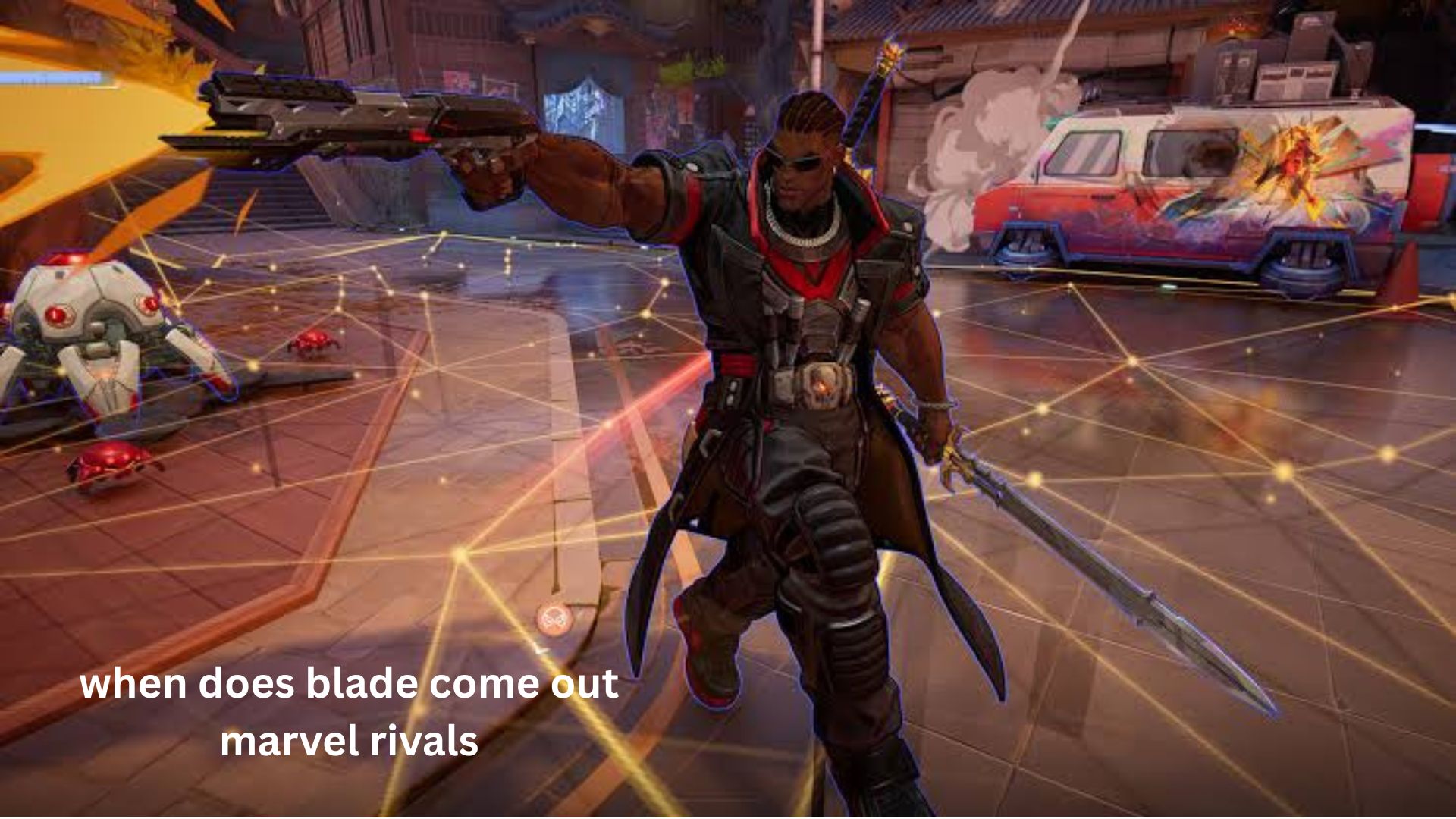
If you have been wondering when does Blade come out in Marvel Rivals, there is an important detail to clear up: Blade is already available. Marvel Rivals added the vampire hunter with Season 3.5 on August 8, 2025, at 09:00 UTC. NetEase confirmed the date and launch time in the official Season 3.5 patch notes.
That means players searching for Blade’s release date today do not need to wait for an upcoming launch. He is a playable Duelist on the current Marvel Rivals roster. The confusion is understandable, though, because Blade was teased for a long time before his official reveal, and early reports used different estimates for his arrival.
This guide explains exactly when Blade released, what happened around his launch, how his kit works, why his release timing mattered, and what players should know if they are picking him up for the first time.
Blade’s Marvel Rivals Release Date
Blade was released in Marvel Rivals on August 8, 2025, as part of Season 3.5.
The official update began at 09:00 UTC on August 8, 2025. Blade was introduced as the new hero for the mid-season update, alongside new story content, the Queen’s Codex event, cosmetics, system improvements, and balance changes.
For players in different regions, the exact local clock time was different because the game used a single global update time.
For example:
- UTC: August 8 at 09:00
- UK: August 8 at 10:00 BST
- Eastern US: August 8 at 5:00 AM EDT
- Pacific US: August 8 at 2:00 AM PDT
- Pakistan: August 8 at approximately 2:00 PM PKT
The important distinction is that August 8 was the official global release date, rather than a date that players had to wait several weeks for.
Why Was Blade Delayed for So Long?
Blade was one of the most talked-about unreleased characters in Marvel Rivals before his debut.
The character had been teased through the game’s lore and promotional material well before NetEase formally announced his arrival. That created a situation where players repeatedly expected Blade to become playable, only for other heroes and updates to arrive first.
Season 3.5 finally ended that waiting period.
The official Season 3.5 announcement described Blade as ready to join the fight, while the update also introduced a new Blade story called “Cut to The Chase.”
There was therefore a meaningful difference between:
- Blade being teased or referenced
- Blade being officially revealed
- Blade actually becoming playable
The third date is what matters if you simply want to play him: August 8, 2025.
Blade’s Role in Marvel Rivals
Blade joined Marvel Rivals as a Duelist.
That choice makes sense once you look at how his kit is designed. Rather than functioning like a traditional Vanguard who absorbs damage or a Strategist who focuses on team support, Blade is built around aggressive pressure.
His gameplay combines:
- Sword-based melee attacks
- A firearm for ranged pressure
- Defensive sword positioning
- Mobility
- Healing reduction
- A powerful ultimate
- Vampiric mechanics
This gives Blade a somewhat unusual identity compared with straightforward Duelists.
He is not simply a character who runs into an enemy team and swings a sword. Good Blade players have to decide when to stay at range, when to close the distance, and when to use his defensive tools before committing.
How Blade Actually Plays
One of the most useful things to understand about Blade is that his weapons encourage you to change ranges instead of constantly forcing close combat.
His sword is obviously strongest when enemies are within melee range. But his gun gives him another option when reaching a target would be dangerous.
That creates a simple practical rhythm:
pressure from range → find an opening → close distance → use sword attacks → disengage or continue depending on enemy health.
This is more reliable than treating Blade like a pure melee assassin.
His Sword
Blade’s sword is the centerpiece of his close-range damage.
When an enemy is isolated or already weakened, sword attacks can let him capitalize quickly. However, charging blindly into several opponents is one of the easiest ways to waste his strengths.
A common mistake for new Blade players is assuming that because the character is a vampire hunter with a huge sword, every engagement should begin with a direct melee rush.
It shouldn’t.
Blade is much more effective when the player creates a favorable engagement first.
His Gun
Blade’s firearm gives him an important alternative to melee combat.
This matters particularly against mobile targets or opponents positioned on high ground. Instead of spending your entire approach taking damage, you can apply pressure before committing.
That makes his weapon switching an important part of his skill ceiling.
A useful mindset is to think of the gun as an engagement tool, not merely a backup weapon.
Blade’s Defensive Option Is More Important Than It Looks
Blade also has a defensive sword stance that reduces incoming damage from the front.
This can look like a minor part of his kit when compared with his offensive abilities, but experienced players quickly discover why it matters.
The defensive mechanic can help you:
- Survive an enemy’s initial burst
- Cross dangerous sightlines
- Force an opponent to change position
- Buy time for an ability cooldown
- Prepare for a close-range counterattack
The key is timing.
Using the defensive stance randomly does little. Using it immediately before an expected burst can completely change an engagement.
This is one of those mechanics that separates a Blade player who knows the character’s abilities from someone who simply knows what the abilities are called.
Blade’s Healing Reduction Gives Him a Special Job
Another important part of Blade’s design is his ability to apply reduced healing.
That is particularly useful against teams that depend heavily on sustained healing.
Instead of viewing Blade exclusively as a damage dealer, think of him as a pressure character who can interfere with enemy recovery.
For example, imagine an opposing Duelist retreats behind a Strategist after losing half their health. Normally, the target might quickly recover and return to the fight.
Blade can make that recovery less effective.
This gives him value beyond raw damage numbers.
It also means that targeting the correct enemy can sometimes matter more than simply attacking whoever is closest.
Blade’s Ultimate
Blade’s ultimate is designed around his signature sword and aggressive area damage.
The ability lets him unleash a powerful attack while creating additional sword strikes around the area.
This makes positioning extremely important.
Rather than immediately pressing the ultimate whenever it becomes available, look for situations where several opponents are grouped together or where an important enemy cannot easily escape.
Good opportunities include:
- Enemies fighting around an objective
- Multiple opponents trapped in a narrow area
- A Vanguard protecting several teammates
- An enemy team attempting to retreat together
The ultimate becomes much more threatening when the opposing team has limited room to move.
Blade and Moon Knight: An Important Team-Up
Blade also has a Team-Up connection with Moon Knight.
The Team-Up system is particularly interesting because it changes how you should think about team composition. Blade does not necessarily need a team built entirely around him, but pairing him with a compatible hero can create additional tactical opportunities.
The Blade-Moon Knight combination provides an extra ability interaction that can help both characters apply pressure.
This is one of the more overlooked aspects of Blade’s arrival because players naturally focus on his sword, gun, and ultimate first.
However, in coordinated matches, Team-Up abilities can influence which target you attack and when you commit.
Is Blade Easy for New Players?
Blade is accessible to learn but difficult to master.
That distinction is important.
A new player can understand his basic gameplay quickly:
- Use the gun when approaching.
- Switch to the sword at close range.
- Use defensive tools against incoming damage.
- Look for weakened targets.
- Use the ultimate when several enemies can be affected.
The difficult part is making those decisions under pressure.
Blade has several competing choices. You constantly have to consider distance, enemy cooldowns, escape routes, healing, and whether another opponent is about to collapse on you.
That gives him a higher practical skill ceiling than his basic ability descriptions might suggest.
Three Blade Insights That Are Easy to Miss
1. Blade Should Not Always Be the First Player Into a Fight
This is probably the biggest misconception.
A strong Blade player often benefits from entering after the initial enemy cooldowns have been used.
If the opposing team has just spent major defensive abilities, Blade has a much safer window to attack.
In other words, patience can create more damage than aggression.
2. His Gun Changes His Engagement Philosophy
Blade’s firearm means you don’t have to think of every fight as “melee or retreat.”
You can soften an opponent first, force movement, and then switch to the sword.
That makes his effective range more flexible than his vampire-hunter theme initially suggests.
3. Target Selection Matters More Than Damage Numbers
Blade can become extremely frustrating to play against when he attacks the right target.
Rather than automatically chasing the enemy with the lowest health, consider attacking someone whose survival is important to the opposing team’s strategy.
A healing-dependent Duelist, isolated Strategist, or vulnerable backline player can sometimes be a better target than a heavily protected Vanguard.
Common Mistakes Blade Players Make
If you are learning Blade, watch out for these mistakes.
Diving Too Early
Entering before your team creates pressure can leave you surrounded.
Ignoring the Gun
Some players become obsessed with sword attacks and forget that Blade has another way to apply pressure.
Wasting Defensive Tools
Your defensive ability is most valuable when it helps you survive an important attack or create an opening.
Chasing Too Far
A target running away may be baiting you into an unfavorable position.
Using the Ultimate Without Considering Position
A powerful ultimate can still accomplish very little if enemies have plenty of space to escape.
When Should You Pick Blade?
Blade is especially attractive when the match rewards aggressive pressure and your team can help create openings.
He can be useful when:
- The opposing backline is vulnerable
- Enemies rely heavily on healing
- Your team has enough frontline pressure
- You are comfortable switching between ranged and melee attacks
- You can recognize when to disengage
He becomes more difficult when the enemy team can consistently keep him at range or punish every attempted engagement.
This is why simply asking whether Blade is “strong” is less useful than asking whether the match gives Blade opportunities to do his job.
Was Blade Released With Season 3 or Season 3.5?
Blade did not launch with the beginning of Season 3.
Season 3 began on July 11, 2025, with Phoenix as the new hero. Blade arrived later with the mid-season Season 3.5 update on August 8, 2025.
That distinction is important because older articles and early discussions sometimes referred to Blade as a Season 3 character without clearly explaining the mid-season release.
The simplest way to remember it is:
Phoenix = Season 3
Blade = Season 3.5
What Happened After Blade’s Release?
Blade’s arrival was part of a larger Season 3.5 update rather than an isolated character drop.
The update included Blade-related story content, the Queen’s Codex event, new store items, competitive changes, communication features, and other gameplay adjustments.
The game’s roadmap also continued beyond Blade’s launch, with additional Season 3.5 content arriving later.
So if you were waiting specifically for Blade, the wait ended on August 8, 2025. There is no upcoming Blade release date that players need to wait for.
FAQ
When does Blade come out in Marvel Rivals?
Blade came out in Marvel Rivals on August 8, 2025, as part of Season 3.5. The official update started at 09:00 UTC. He is therefore already playable rather than an upcoming hero.
What time did Blade release in Marvel Rivals?
The Season 3.5 update containing Blade began at 09:00 UTC on August 8, 2025. That corresponds to approximately 2:00 PM Pakistan Standard Time, 5:00 AM Eastern Time, and 2:00 AM Pacific Time. Local availability could depend on server maintenance finishing successfully.
Is Blade a Duelist in Marvel Rivals?
Yes. Blade was introduced as a Duelist. His playstyle combines sword combat, firearm attacks, mobility, defensive mechanics, and healing reduction, giving him more flexibility than a purely melee-focused character.
Was Blade released in Marvel Rivals Season 3?
Blade was released during Season 3.5, the mid-season update, rather than at the initial launch of Season 3. Phoenix arrived with Season 3 on July 11, while Blade followed on August 8.
Can you play Blade in Marvel Rivals now?
Yes. Blade became a playable hero on August 8, 2025. If you are returning to the game after missing Season 3.5, you do not need to wait for a future release window to use him.
Conclusion
So, when does Blade come out in Marvel Rivals? The answer is August 8, 2025, when Season 3.5 launched at 09:00 UTC. Blade joined the roster as a Duelist, bringing together sword combat, ranged attacks, defensive play, mobility, and healing reduction.
More importantly, Blade rewards players who understand when not to attack. His strongest plays often come from waiting for enemy abilities to be spent, choosing the right target, using ranged pressure to create an opening, and then committing with his sword.
If you are just starting with Blade, spend some time learning his weapon switching, defensive timing, and target selection before worrying about advanced combos. Those fundamentals will make a much bigger difference to your matches than simply trying to maximize damage every time you enter a fight.