

Battlefield 1: What Makes It Still Worth Playing?
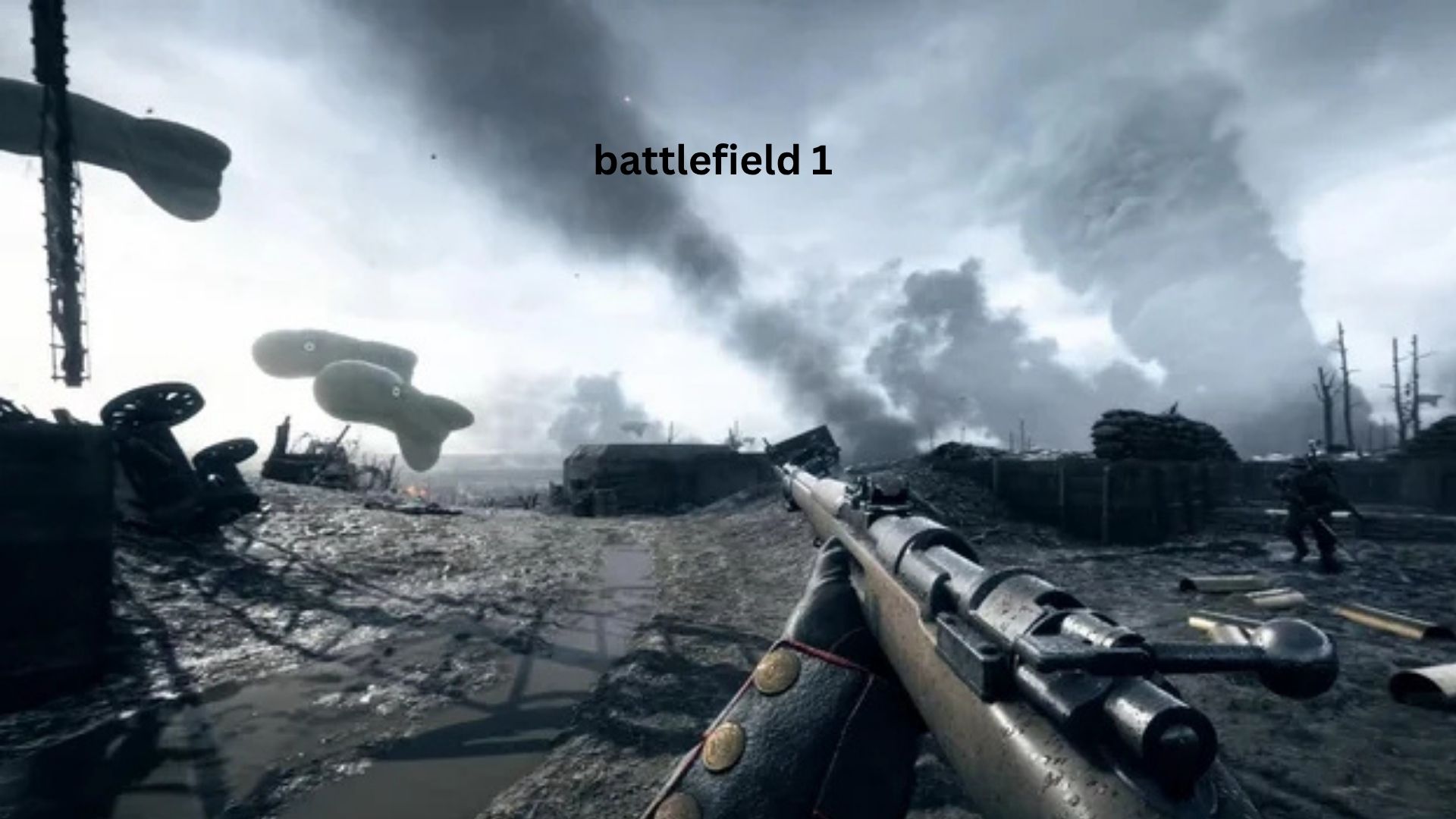
If you start Battlefield 1 expecting a typical modern military shooter, the first few matches can feel surprisingly slow. Weapons are less forgiving, visibility can disappear in fog or smoke, vehicles behave differently from their modern counterparts, and simply running toward an objective is often a quick way to die. The game makes much more sense once you stop treating it like a reflex-only shooter and start thinking about positioning, squad roles, terrain, and momentum.
Released in 2016, Battlefield 1 takes the series into World War I and combines large-scale multiplayer with a collection of single-player War Stories. Its signature multiplayer mode, Operations, connects several battlefields into longer offensive and defensive campaigns, while Conquest provides the classic Battlefield sandbox. EA and DICE built the game around 64-player battles, destructible environments, changing weather, infantry combat, aircraft, tanks, cavalry, and large Behemoth vehicles.
This guide explains what makes Battlefield 1 different, how its classes and modes actually work, where new players commonly struggle, and which strategies make the biggest difference when you move from simply getting kills to consistently helping your team win.
What Is Battlefield 1?
Battlefield 1 is a first-person shooter set during World War I, developed by DICE and published by Electronic Arts. It launched worldwide on October 21, 2016, for PlayStation 4, Xbox One, and PC.
Unlike many games that use World War I mainly as a visual theme, Battlefield 1 changes the way combat feels around the technology of the period.
You encounter:
- Bolt-action rifles and early automatic weapons
- Heavy machine guns
- Early tanks
- Fighter and bomber aircraft
- Cavalry
- Armored trains
- Airships
- Battleships
- Trench warfare
- Artillery and explosives
- Large-scale infantry battles
The result is deliberately different from a modern Battlefield game. The weapons generally encourage more deliberate engagements, while the maps create opportunities for flanking, vehicle attacks, defensive positions, and squad-based pushes. Contemporary reviews specifically praised the way the game’s relatively rudimentary weaponry slowed combat enough to make positioning and decision-making more important.
Is Battlefield 1 historically accurate?
Not completely.
Battlefield 1 uses real locations, armies, weapons, battles, and historical themes, but it takes substantial gameplay and narrative liberties. You should think of it as historically inspired rather than a strict simulation.
That distinction matters because the game needs to remain fun. Soldiers have access to combinations of weapons and equipment that would not necessarily reflect what a real individual soldier carried, while some events are compressed or fictionalized.
Its strongest historical element is often the atmosphere and broad context rather than exact military simulation.
Battlefield 1 War Stories Explained
The single-player campaign is divided into War Stories, rather than presenting one enormous continuous campaign with a single protagonist.
This structure is one of Battlefield 1’s smartest decisions.
Each story introduces different characters, locations, and styles of combat. You might be driving a tank in one chapter, flying an aircraft in another, and using stealth or infantry weapons elsewhere.
The campaign covers different theaters and perspectives, including the Western Front, the Middle East, Italy, and other parts of the conflict. Reviews noted that the anthology structure allowed DICE to show different experiences of the war without pretending that one character could represent the entire conflict.
Why War Stories are useful for beginners
If you are completely new to Battlefield, playing some of the campaign first is worthwhile.
It gives you a low-pressure introduction to:
- Infantry movement
- Vehicle controls
- Aircraft
- Weapon handling
- Capturing objectives
- Basic stealth
- Battlefield navigation
It won’t prepare you completely for multiplayer because human opponents are much less predictable than campaign AI, but it can remove the initial control-learning problem.
Battlefield 1 Multiplayer: Where the Game Really Shines
Multiplayer is the heart of Battlefield 1.
The game supports large battles where infantry, vehicles, aircraft, artillery, and environmental destruction interact simultaneously. EA described the game around battles of up to 64 players, while Operations was designed to connect multiple fronts into a larger battle sequence.
That combination creates an important difference from traditional arena shooters.
You don’t always need the highest kill count.
A player who revives teammates, destroys a tank, captures a sector, resupplies ammunition, or holds a critical position can have enormous influence without finishing at the top of the scoreboard.
Conquest
Conquest is the classic Battlefield experience.
Teams fight over multiple capture points distributed across a large map. Controlling objectives generates pressure on the opposing team’s ticket count and forces players to move around the battlefield.
The biggest mistake beginners make is treating Conquest like Team Deathmatch.
If you spend the entire match chasing enemy players, you can have an impressive kill/death ratio while contributing surprisingly little to victory.
A better approach is:
- Capture nearby objectives.
- Defend strategically important flags.
- Move with your squad.
- Attack weakly defended positions.
- Help destroy enemy vehicles.
- Avoid repeatedly attacking an objective that your team has no realistic chance of taking.
Conquest rewards map awareness more than raw aim.
Why Operations Is Battlefield 1’s Best Mode
If you only try one multiplayer mode, make it Operations.
Operations combines elements of objective-based modes with a larger campaign-like structure. Attackers advance through sectors while defenders attempt to stop them, with battles potentially continuing across multiple maps.
This creates something unusual: momentum actually matters.
A successful push can change the entire character of a match.
For example, imagine your team has captured two sectors. Instead of everyone immediately sprinting toward the next objective, a smart squad might:
- Secure the surrounding area.
- Eliminate defenders holding key buildings.
- Destroy anti-tank positions.
- Establish a spawn point.
- Bring up a tank.
- Attack from a different angle.
That preparation can be the difference between taking a sector in thirty seconds and losing the entire assault.
Behemoths change the psychology of a battle
Battlefield 1 introduced huge player-controlled Behemoths, including armored trains, airships, and battleships. They were designed partly as dramatic comeback mechanics for a team falling behind.
But here’s an important practical lesson:
A Behemoth is not an automatic win button.
A massive vehicle can destroy defensive positions, but it still needs infantry support. If the infantry stops attacking objectives because everyone is fascinated by the giant vehicle, the Behemoth may accomplish very little strategically.
That is one of Battlefield 1’s more interesting design ideas: enormous firepower doesn’t necessarily equal territorial control.
Understanding the Four Main Classes
Battlefield 1’s class system is straightforward, but playing each class effectively requires more than selecting the appropriate weapon.
Assault
Assault is primarily the anti-vehicle and close-to-medium-range combat class.
Use Assault when:
- Tanks are blocking your team’s advance.
- You need to clear objectives.
- Fighting is happening inside buildings.
- Enemy vehicles are heavily influencing the battle.
A common mistake is using Assault equipment exclusively against infantry.
If you see an enemy tank dominating a sector, your job may be more valuable than getting five infantry kills. Damaging or forcing away that tank can open an entire objective for your team.
Medic
Medic is one of the most important classes for coordinated teams.
The obvious job is healing and reviving, but good Medic play involves staying close enough to teammates to matter without dying alongside them.
Don’t revive someone simply because the revive icon appears.
First check:
- Is the area still under enemy fire?
- Is the teammate behind useful cover?
- Can you survive the revive?
- Will the revived player immediately die again?
A thoughtful revive is much more valuable than a reckless one.
Support
Support keeps squads functioning.
A good Support player supplies ammunition, uses suppression effectively, and helps maintain pressure during extended fights.
This becomes particularly useful during Operations because an assault can stall when attacking players repeatedly run out of ammunition or explosives.
Support is therefore less glamorous than a sniper streak but often more useful to a team.
Scout
Scout is the long-range class and arguably the easiest class for inexperienced players to misuse.
The temptation is obvious: find a distant hill, aim down the scope, and shoot everything you can see.
The problem is that a Scout sitting hundreds of meters away may have almost no influence over an objective.
Good Scout positioning means choosing sightlines that actually affect the battle.
A useful rule is:
If your position lets you get kills but cannot influence an objective, reconsider your position.
The Most Important Battlefield 1 Skill: Reading the Map
One of the less obvious lessons from Battlefield 1 is that the map often tells you what weapon you should be using.
Open desert?
Long-range weapons and vehicles become more valuable.
Dense urban streets?
Shorter-range weapons and aggressive infantry movement become more useful.
Forest?
Expect restricted visibility, ambushes, and close engagements.
Mountainous terrain?
Elevation can determine who controls an entire section of the battlefield.
This sounds simple, but many players select a favorite loadout and refuse to change it.
That’s backwards.
Choose your equipment based on the problem the map is presenting.
Three Overlooked Insights That Improve Your Game
1. Losing an objective isn’t always losing
New players often panic when an objective is being captured.
But sometimes the better tactical decision is to abandon it.
If six enemies are attacking a flag while your entire squad is dead, repeatedly spawning and running directly into them simply feeds the opposing team.
Instead, rotate toward another objective.
You may force the enemy to choose between defending the point they just captured and responding to your new attack.
This is how Battlefield’s large maps reward strategic movement.
2. Destruction creates temporary opportunities
Battlefield 1’s destruction isn’t merely cosmetic. Buildings, walls, and defensive positions can change during combat. DICE specifically emphasized destructible environments and weather as systems that could alter how players approached battles.
A building that provides excellent cover at the beginning of a match may become a terrible defensive position after artillery and explosives have damaged it.
Don’t memorize cover as something permanent.
Memorize routes and possibilities instead.
3. The best squad player isn’t always the best shooter
A squad leader who notices that the team is attacking the same entrance repeatedly can create more value by ordering a flank than by getting several kills.
Likewise, a Support player who keeps three teammates supplied or a Medic who maintains a push can influence the outcome more than a player chasing personal statistics.
Battlefield 1 works best when you think of your squad as a small military unit rather than five independent players.
Common Battlefield 1 Mistakes
Running directly toward objectives
Capturing objectives requires movement, but predictable movement gets punished.
Use cover, approach from unexpected directions, and avoid crossing open ground without a reason.
Ignoring vehicles
Even if you prefer infantry combat, enemy tanks and aircraft can completely change a match.
You don’t necessarily need to become a vehicle expert. You do need to recognize when a vehicle has become the biggest threat.
Staying on a losing position too long
If your team is being overwhelmed, rotate.
A tactical retreat can create a better counterattack.
Playing only for kills
Kills are useful, but Battlefield’s objective modes reward territorial control and teamwork.
Ask yourself after every death:
Did my previous action help my team achieve the objective?
If the answer is repeatedly no, change your approach.
Battlefield 1 vs Modern Battlefield Games
The biggest difference is the pace and technology.
Modern Battlefield titles generally provide more sophisticated weapons, faster movement options, advanced optics, and technology-heavy combat.
Battlefield 1 is more constrained.
That constraint is actually one of its strengths.
Because weapons and equipment are less technologically advanced, players have more opportunities to survive an engagement through movement, cover, positioning, and timing rather than simply being detected and eliminated instantly.
Contemporary reviews repeatedly identified this slower, more deliberate weapon handling as an important part of Battlefield 1’s identity.
Is Battlefield 1 Good for New Players?
Yes, but expect a learning curve.
The campaign provides a comfortable starting point, while multiplayer teaches you through much harsher lessons.
A sensible progression is:
- Complete several War Stories.
- Learn one infantry class.
- Play Conquest to understand maps.
- Try Operations.
- Experiment with vehicles.
- Start changing loadouts based on the situation.
- Focus on squad contribution rather than scoreboard position.
Don’t worry if your first multiplayer matches are rough.
Battlefield has a lot happening simultaneously, and understanding where to stand can be just as important as aiming accurately.
FAQ
Is Battlefield 1 still worth playing?
Yes. Battlefield 1 remains particularly appealing if you enjoy large-scale objective combat, World War I settings, vehicles, destruction, and slower weapon handling. Its Operations mode gives the game a distinctive identity that separates it from many conventional shooters. The main attraction is multiplayer, although the War Stories campaign is also worthwhile for newcomers.
Is Battlefield 1 a realistic World War I game?
It is better described as a historically inspired shooter than a strict simulation. It uses authentic historical settings, weapons, factions, and themes, but modifies equipment, encounters, and events to create entertaining multiplayer combat. The historical atmosphere is strong, but accuracy should not be confused with simulation-level realism.
What is the best Battlefield 1 multiplayer mode?
Operations is arguably the strongest choice if you want the mode that best represents Battlefield 1’s identity. Its interconnected battles, sector-based objectives, changing momentum, and large-scale combat create a stronger sense of progression than a standard deathmatch. Conquest remains the better option if you prefer a more open-ended Battlefield sandbox.
Which Battlefield 1 class should beginners use?
Medic is an excellent starting class because it teaches positioning, teamwork, and objective awareness while still allowing you to participate directly in firefights. Assault is another good choice if enemy vehicles are causing problems. The best class ultimately depends on the situation rather than a universally superior loadout.
Why does Battlefield 1 feel slower than modern shooters?
Its World War I weaponry and combat design reduce the emphasis on extremely fast, technology-driven engagements. Weapons generally encourage more deliberate positioning, while vehicles, terrain, destruction, and weather create additional variables. That slower rhythm is intentional and is one of the reasons Battlefield 1 feels distinct.
Is Battlefield 1 mainly about getting kills?
No. Its objective modes reward players who capture territory, defend positions, support teammates, destroy vehicles, revive squad members, and create opportunities for attacks. A player with fewer kills can still be one of the most valuable members of a winning team.
Final Verdict
Battlefield 1 succeeds because its limitations become its strengths.
The World War I setting isn’t simply a change of uniforms and weapons. It creates a slower, messier battlefield where visibility, terrain, vehicles, destruction, squad cooperation, and positioning matter enormously.
The biggest improvement you can make is to stop asking, “How do I get more kills?” and start asking, “What is preventing my team from taking this objective?”
Sometimes the answer is a tank. Sometimes it is a sniper. Sometimes it is poor positioning. Sometimes it is simply the fact that everyone is attacking through the same doorway.
Once you learn to identify that problem and change your role accordingly, Battlefield 1 becomes far more than a chaotic shooter. It becomes a game of battlefield management—one where the most memorable victories often come from a coordinated push, a perfectly timed flank, or a desperate defense that looked impossible a minute earlier.
If you’re returning to Battlefield 1 after years away, don’t try to master everything immediately. Pick one class, learn the maps, play the objectives, and let your understanding of the battlefield grow from there.